

Hemstitch Cocktail Napkins for Hosts and Gifts
You're setting out glasses before guests arrive, and the smallest detail suddenly feels worth reconsidering. A chilled glass sits neatly on a cloth square while the paper napkin beside it curls at the corners and clings to the base. Hemstitch cocktail napkins bring a more considered finish to that moment, but choosing well starts with size and fabric, not the prettiest motif.
The right set should suit what you serve, fit the way you entertain, and come with care requirements you're willing to follow. That's equally important when you're buying for your own bar cart or giving a host something they'll use.
What Hemstitch Cocktail Napkins Are and Which Size Fits
Hemstitch cocktail napkins are reusable cloth squares with a decorative openwork border. The border secures the hem while adding a delicate frame around the center. Think of them as beverage-service linens, rather than miniature replacements for everything a dinner napkin does.
Choose the finished size before choosing embroidery, color, or packaging. A square that looks generous beneath an espresso cup can feel surprisingly small when a guest is balancing a drink and an appetizer.
Cocktail napkin sizes and where each belongs
| Finished size | What it covers | Best setting | Trade-off |
|---|---|---|---|
| 6 x 6 in (about 15 cm) | One drink, espresso, or a single bite | Bar cart, favor, hostess gift | Easy to stack; less spill area |
| 10 x 10 in (25 x 25 cm) | Glass plus a few hors d'oeuvres | Appetizer table or bar | More coverage; still far smaller than dinner linen |
The smaller format is a tidy choice when each napkin has a specific job. Place it beneath a glass, offer it with a passed bite, or tuck it into a favor package. It won't provide much spare fabric once a guest adds food.
For broader beverage service, the Linen Owl napkin guide identifies approximately 10 × 10 inches, or 25 × 25 cm, as a practical cocktail size, with room for a glass, condensation, and small hors d'oeuvres. The guide also describes linen's compact folding, absorbency, and rapid drying, useful qualities when drinks keep coming.
Match the square to the guest's hands
Say you're passing sparkling drinks before dinner. A compact square works because guests aren't also collecting food from a buffet. If you're serving olives, cheese, and small pastries around a coffee table, a larger cocktail napkin gives them somewhere to manage crumbs and damp fingertips.
A seated meal calls for dinner linen with enough fabric for the lap. Don't buy cocktail squares expecting them to perform that role, even if the listing photographs them beside a full place setting.
Before ordering, try a paper template beneath your usual glass and appetizer plate. Our guide to choosing cocktail napkin sizes can help you think through the serving format rather than judging scale from a product photograph.
Buying rule: Choose the smallest napkin that comfortably handles the whole task, not merely the glass.
Compare packs on the same basis, too. Divide the pack price by the piece count, then consider fiber, finish, and care together. A lower price per square isn't especially useful if you dislike the fabric or won't maintain it.
How the Openwork Border Is Made
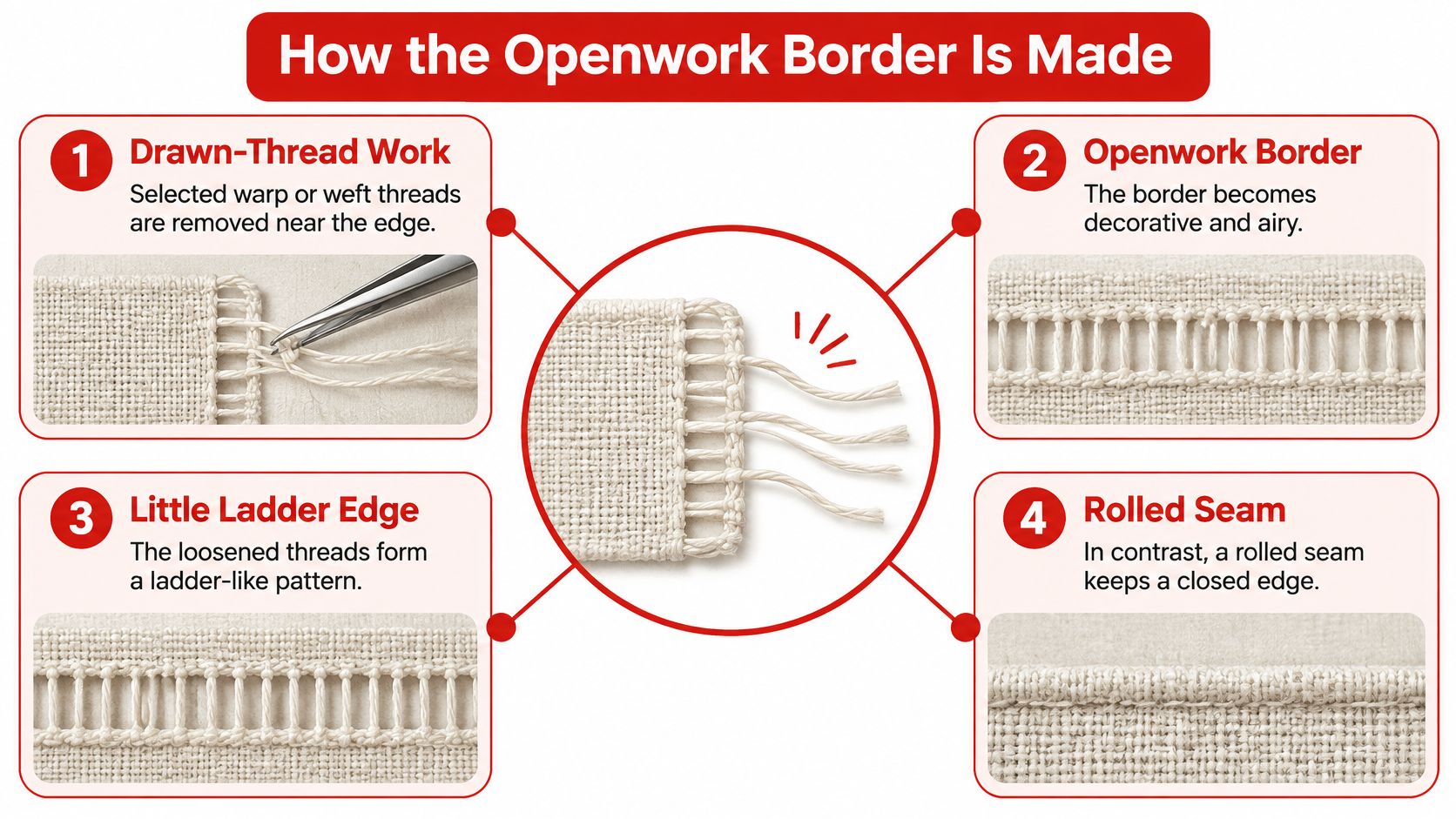
Think of a woven ribbon with a few threads carefully loosened near its edge. Instead of a closed strip of cloth, you begin to see a little ladder. Hemstitching turns that controlled opening into a finished decorative border.
The important word is controlled. A proper hemstitched edge isn't fabric left to unravel. The maker removes selected threads and secures the remaining groups with stitching so the open pattern has structure.
From woven cloth to a little ladder
Fabric contains threads running lengthwise and crosswise, called warp and weft. In drawn-thread work, selected threads near the hem are withdrawn, and the remaining threads are gathered into small bundles. The stitches hold those bundles in place and help secure the turned hem.
This visual shows how the open border differs from a closed, rolled edge.
Linen has a long association with table textiles because flax produces a strong, absorbent fiber. Its supply is comparatively small: Refashion's practical guide to linen and hemp puts flax at approximately 0.3% of global textile-fiber output in 2024.
That context helps explain linen's premium positioning, but fiber scarcity alone doesn't establish quality. The weave, finishing, and workmanship still matter. A beautifully executed border on an accurately described cloth is a better purchase than a vague luxury label.
Inspect the finish rather than the adjective
Hemstitch describes the construction detail, not the fiber content. Cotton, linen, and blended fabrics can all carry this border. A linen-look texture also doesn't establish that a napkin contains flax, so read the composition separately from the style description.
When examining a napkin or a close-up photograph, look for:
- Even thread groups. The ladder should look orderly rather than stretched open in isolated places.
- Secure finishing. Corners and stitched bundles shouldn't have dangling tails or obvious gaps.
- A deliberate border. Openwork should look decorative, not fuzzy, torn, or frayed.
Handmade pieces may have small differences in spacing. Those differences aren't automatically faults, but loose construction shouldn't be excused as character.
For a gift, turn the napkin over before wrapping it. A tidy reverse and secure corners matter just as much as the attractive face, particularly when the recipient will wash and reuse the cloth.
How to Wash Stains and Press the Border
Machine washable isn't a complete care plan. The openwork sits immediately beside the finished edge, so rough handling, unsuitable bleach, and repeated hard creases can shorten the useful life of an otherwise sturdy square.
Follow this care path before treating every napkin in the drawer alike.
- Identify the fiber and finish. Read the sewn label or care card before the first wash. Separate pure linen instructions from those for cotton, blends, colored motifs, or decorated fabrics.
- Blot fresh spills. Lift wine or food with a clean white cloth, then rinse the affected area with cold water. Don't scrub the ladder or begin with hot water.
- Treat greasy marks locally. Apply a small drop of clear dish soap or a suitable stain remover to oil, butter, or lipstick. Test an inconspicuous area first and rinse out dish soap before machine washing.
- Choose a restrained wash. Use cold or moderate water as permitted, separate whites from colors, and choose a chlorine-free product. Use oxygen-based treatment only when the fabric and decoration allow it.
- Remove before fully dry. Air-dry where suitable, or use low tumble heat if permitted. Take pieces out slightly damp rather than letting wrinkles bake in.
- Press and store gently. Use the appropriate fabric setting, work from the reverse around the openwork, and avoid fixing a permanent fold. Store loosely stacked or rolled.
Stain and fiber care for hemstitched napkins
| Situation | First move | Wash | Press and store |
|---|---|---|---|
| Red wine or juice on linen | Blot, then cold rinse; never hot water as the first treatment | Cold or moderate cycle, suitable oxygen-based treatment or chlorine-free detergent | Press while damp from the reverse, around the ladder |
| Oil, butter, or lipstick | Apply dish soap or a suitable stain remover to the spot | Gentle cycle; no chlorine | Appropriate low heat while damp; avoid a permanent crease |
| Cotton or cotton-poly used often | Check the care label | Choose chlorine-free washing | Low-stress pressing; rotate folds |
| Any hemstitched edge | Treat the border as a vulnerable line | Prompt pretreatment, no chlorine bleach | Iron beside the openwork; store rolled or loosely stacked |
There's a practical reason to be cautious with chlorine. An experimental textile-laundering study found that chlorine washing damaged cotton-fiber integrity faster than chlorine-free commercial washing, while cotton and 50/50 cotton-polyester showed strength losses of no more than roughly 20–30% after at least 100 chlorine-free cycles.
That isn't a guarantee for a particular napkin, decoration, or domestic washing machine. It supports a sensible preference for gentler chemistry rather than aggressive bleaching after every party.
Press the cloth without flattening the detail
Lay the napkin flat and ease it into shape without pulling the corners. For embroidered pieces, a clean towel beneath the face can cushion raised stitching. Lift and reposition the iron rather than dragging its point through the openwork.
If a label specifies professional care, understanding how the dry cleaning process works, explained by CleanOnline, North York's Premium Dry Cleaners, can help you distinguish that service from ordinary laundering. Don't assume professional cleaning is necessary because the border looks delicate.
Our cloth napkin storage guide offers practical ways to organize clean pieces without compressing them into hard folds. Linen will still look softly rumpled between pressings. That's a normal part of its appearance, not a defect you need to iron away after every drink.
Bar Carts Appetizer Trays and Place Settings
A good cocktail setup gives each object a job. Guests should see where to pick up a clean napkin, where to set a glass, and where to leave a used piece without asking.
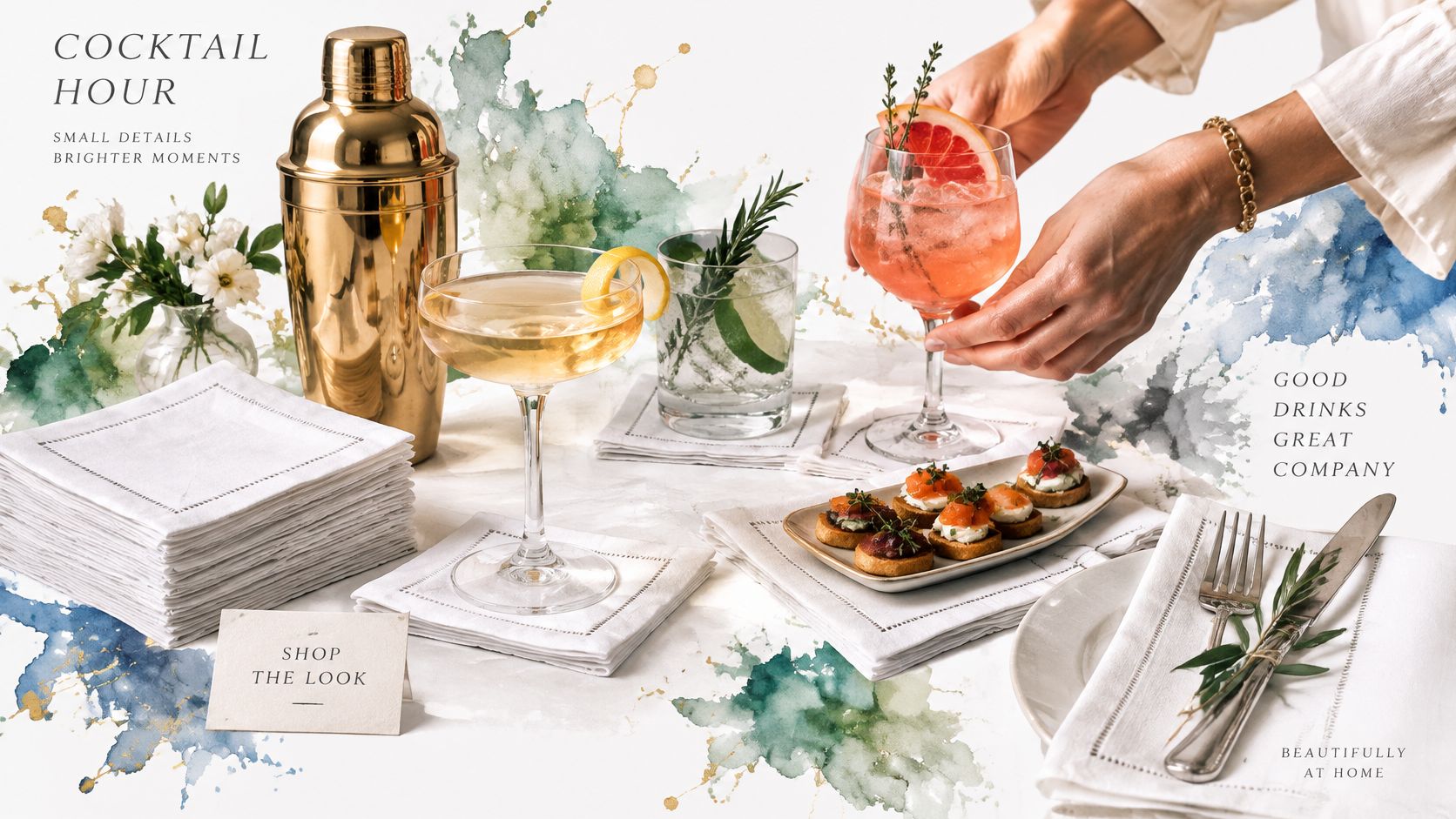
Start with a clear serving surface and a restrained arrangement like this one.
Give each setting a distinct job
At cocktail hour, place a stack beside the shaker, within reach but away from the wet preparation area. Slip a square beneath a finished drink and provide a small tray for used pieces. Keep clean and used linens visibly separate.
At a seated dinner, leave the dinner napkin at the place setting. Use cocktail squares at the welcome-drink station or beneath a small first-course plate where appropriate. Don't bury the openwork under a bundle of flatware.
For a larger gathering, plan guest movement before arranging the decorative objects. The examples of event layouts with BeeHive Mobile Bar are useful when thinking about access to drinks, serving space, and the route back to the food.
For a gothic or holiday table, let plain white or ivory borders stand against dark taper candles. Keep flames safely clear of fabric, greenery, and sleeves. The contrast can provide enough atmosphere without scattering decorations across every available surface.
For a daytime lunch, use a citrus, strawberry, or hydrangea motif against a pale cloth. Pull a color from the design into flowers or glassware rather than introducing an unrelated palette. A serif or script monogram offers a quieter alternative when you want a personal detail.
This video provides another visual reference for the entertaining mood.
Plan spares and leave breathing room
As a working hosting allowance, set out one clean square per guest, plus two spares for every four guests. That's a planning suggestion, not a sizing standard. Add a separate clean stack if dessert will be served away from the dining table.
- Loose fold. Drape a square into an empty glass for display, then remove it before pouring.
- Flat placement. Set it beneath a small plate while leaving part of the border visible.
- Ribbon roll. Roll gently and tie with thin ribbon for a prepared place or favor.
Let the border read as jewelry on the table, not another layer of clutter.
Before adding more objects, photograph a corner containing a glass, a napkin, and a candle. If that small composition already looks complete, the table probably doesn't need another decorative layer.
Hostess Gifts Holidays and Wedding Favors
Hosts are still gathering people, even when they're watching the budget. Deloitte's 2025 holiday survey found that one in four respondents planned to host a holiday gathering, approximately the same share as in 2024, while average planned gathering spending fell from $261 in 2024 to $252 in 2025.
That makes a reusable finishing detail an appealing gift. It can feel celebratory at the handoff without becoming something the recipient has to discard when the guests leave.
Match the format to the occasion
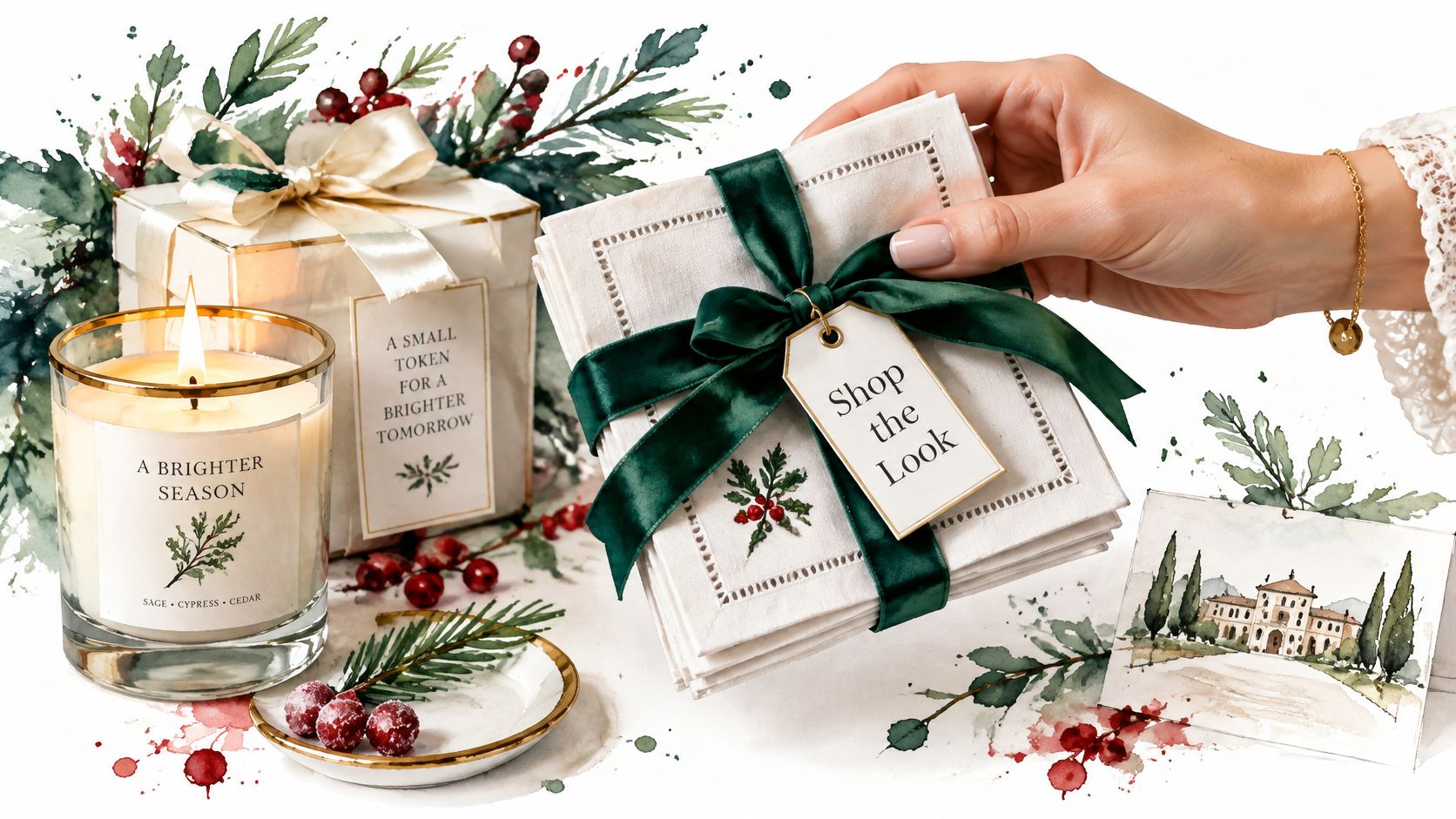
For a hostess gift, fold a set neatly and tie it with ribbon. Add a bottle or a separately wrapped bar of milled soap if that suits the recipient, but don't make the package so elaborate that opening it becomes a task.
A simple ribbon can make the cloth itself the focus.
For wedding welcome bags or a rehearsal dinner, choose a restrained border or meaningful monogram. A pair makes a manageable favor format, while a full set is more useful for the couple's own entertaining drawer. Avoid making the design so event-specific that it feels unusable afterward.
Holiday motifs work best for someone who enjoys bringing familiar decorations out again. New Year's, Christmas, Halloween, and Mardi Gras designs can become part of that recurring ritual rather than a purchase for a single evening.
Make the gift ready to use
- For a winter host. Pair the linens with an edible contribution such as Saporia's Christmas cheese selection, after checking the recipient's dietary preferences and keeping the food appropriately chilled.
- For a baby celebration. A welcome or hello motif can become a useful cup-side keepsake for the household, rather than another garment the child will outgrow.
- For newlyweds. Favor a design that belongs in their home, not only in photographs from the wedding.
- For a frequent host. Choose something that works with their existing glasses and serving pieces, instead of imposing an entirely new theme.
Write the occasion on a small card and include a brief, accurate care note. Keep scented soap wrapped separately from food and linens so the gift arrives as intended.
Our hostess gift ideas can help you choose a companion present without overfilling the package. The most thoughtful result feels ready to enjoy, not like a basket of unrelated extras.
When Reusable Napkins Earn Their Keep
Cloth isn't automatically the greener choice just because you can wash it. The practical case depends on how often you use it, how you manage laundry, and whether the set stays useful for years.
Textile disposal deserves attention: ADEME's textile-sector figures report 911,500 tonnes of apparel, household linen, and footwear placed on the French market in 2025, with 31.6% collected. Those figures don't compare cloth napkins with paper napkins, but they do underline why buying a textile isn't the same as keeping it in circulation.
Test the habit before buying the set
Consider how the napkins will fit your actual household, not an idealized version of your entertaining calendar.
- Name the occasions. Think about cocktails, holiday visits, afternoon coffee, and ordinary drinks at home. A versatile set needs opportunities beyond the party that prompted the purchase.
- Plan compatible laundry. Let used squares join an appropriate full load rather than creating a special small wash after every gathering.
- Choose restrained drying. Avoid unnecessary tumble-drying and use the lowest suitable temperature for the labeled fabric.
- Keep pieces repairable. Secure a loose stitch before it becomes a larger opening. When a napkin is no longer presentable, consider a suitable household cleaning use.
The honest comparison includes your time. Pretreating marks, sorting laundry, and pressing cloth are real tasks, even when the squares themselves are small. If those tasks mean the napkins will remain untouched in a cupboard, a decorative set won't deliver much value.
Long-term value comes from repeated use, not from the reusable label.
Buy for the drawer you actually open
Neutral or broadly usable designs often make it easier to reach for the same stack across different occasions. A specialized holiday set can also earn its place if you bring it out reliably and store it well between celebrations.
Picture the next few gatherings on your calendar. If the same squares belong at each, cloth makes a stronger practical purchase. If you expect to use them once and store them indefinitely, paper may be the more honest choice, without pretending that either option has a universal environmental advantage.
Choose a Set for the Next Gathering
Start with the next invitation on your calendar. A compact square for passed drinks, a motif that suits the recipient, and a care routine they'll accept are better buying criteria than an elaborate fantasy tablescape.
Choose something that will feel at home after the first celebration, too. The most useful entertaining gifts move easily from a planned party to an impromptu drink with a friend.
Shop the Look
Our Hemstitch Napkins collection includes sets of six, and our Decorative Hemstitch Cocktail Napkins measure 6 × 6 inches. They're handmade from linen-like textured fabric with a delicate hemstitch design, sized for cocktails, appetizers, or desserts. Linen-like describes the texture, so don't substitute pure-linen care assumptions for the product's instructions.
For a party edit, our Napkins Party collection includes New Year's Eve, Christmas, Halloween, Cinco De Mayo, Mardi Gras Mask, Champagne, and Sparkling Wine designs. For a more everyday mood, consider a lemon motif or a serif monogram. Custom hemstitch cocktail napkins are also available when a personal design matters.
Build a host gift around the napkins, then add a reusable canvas wine bottle gift bag and a French-milled soap bundle if those extras suit the recipient. Keep the bottle presentation playful or elegant according to their taste, and let the linens provide the quieter finishing detail.
For seasonal styling inspiration, browse Spooky Chic Halloween Hosting with Jolitee. For a broader introduction to the entertaining mood, visit Welcome to Jolitee Entertainment Haven.
Frequently Asked Questions
Can I give pairs as wedding favors and keep a full set for the couple?
Yes. Divide purchased sets into pairs for gifting if that suits your guest count, and reserve an intact set for the couple. Don't assume the retail packaging or selling format is already arranged as pairs.
Are party prints worth buying for a single night?
Usually not if you already know you won't use them again. Choose a recurring celebration motif or a less specific design that fits other gatherings.
Which party edit suits a mixed guest list?
A restrained celebratory design, such as a Champagne motif, can feel less narrowly themed than a holiday-specific print. Where alcohol imagery wouldn't suit the guests, choose a quiet border, botanical motif, or monogram instead.
Jolitee offers hemstitch cocktail napkins, reusable canvas bottle bags, and thoughtful companion gifts for hosts. Visit Jolitee to choose a set for your next gathering or assemble a ready-to-give thank-you for the person welcoming you in.