

How to Store Cloth Napkins for Lasting Freshness
After a dinner party, cloth napkins usually land in one of two piles. The first is the hopeful pile, still crisp enough to reuse soon. The second is the dangerous one: damp, lightly stained, folded over a chair, and easy to forget until a musty smell shows up days later.
That's why learning how to store cloth napkins matters just as much as choosing them. Cotton, linen, hemstitch, and specialty prints all reward good handling, and they all punish shortcuts. A pretty set can come back out looking fresh and polished, or yellowed, creased, and oddly stale.
The best storage routine also depends on the look you want. Some hosts want sharp, pressed corners for formal place settings. Others prefer softer texture and relaxed folds, especially with cheerful everyday sets like small cloth napkins vintage lemons, where a slightly casual finish suits the table.
Facing Cloth Napkin Storage Challenges
Most storage problems start before the napkins ever reach the drawer. A red wine splash, a butter mark, or simple dinner humidity can settle into fabric fast. If a napkin gets folded while even slightly damp, that trapped moisture tends to become a significant problem later.
Hosts run into the same frustrations over and over. White linen comes out with a yellow cast. Embroidered edges flatten awkwardly. Colored cotton loses some brightness after sitting in the wrong container. Hemstitch styles can pick up stubborn fold lines if they're packed too tightly.
Practical rule: A napkin shouldn't go into storage unless it's clean, fully dry, and folded with the final use in mind.
That last part matters more than people think. If you host often, you need access and speed. If you rotate seasonally, you need preservation. If you travel with linens for events or bring your own napkins to holiday gatherings, you need packing methods that protect edges and keep sets together.
A good system handles all of it:
- Freshness first: keep out moisture, odor, and dust
- Fabric protection: reduce crushing, hard creases, and fading
- Aesthetic control: store for either crisp elegance or relaxed texture
- Easy retrieval: organize by event type, color, or size
- Portable packing: make off-site entertaining simpler
Cleaning and Preparing Cloth Napkins
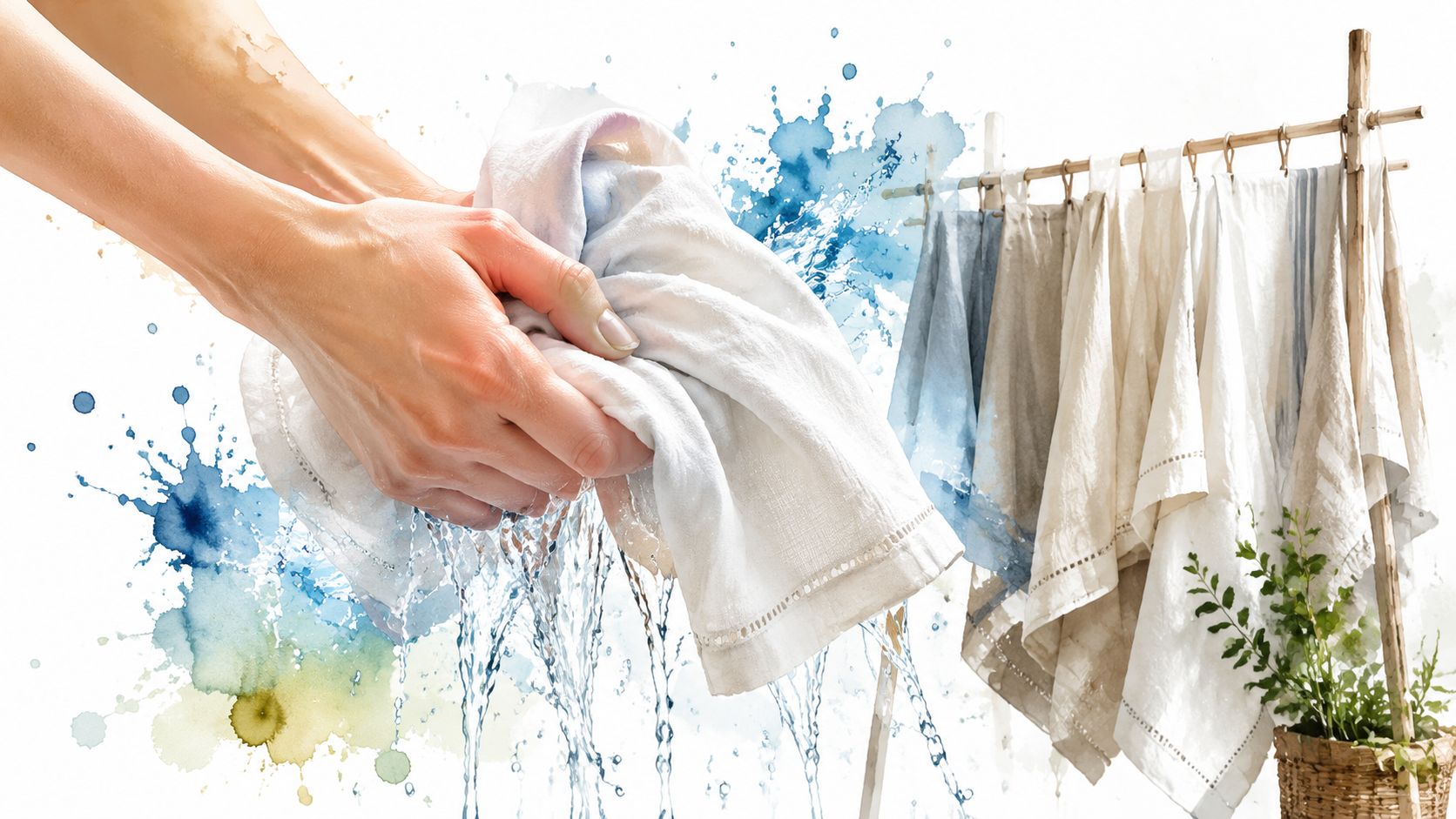
Clean storage starts with fully finished laundry, not half-done laundry. Napkins that look dry on the surface can still hold moisture deep in the folds, especially thicker cottons and layered embroidered styles.
Match the washing method to the fabric
Cotton napkins usually handle a standard wash well, but they still benefit from prompt stain treatment. Linen needs a gentler touch because the fibers crease easily and can stiffen if washed harshly. Hemstitch and monogrammed pieces are best handled with mild detergent, careful rinsing, and minimal abrasion.
For specialty napkins, especially ones with trim or decorative stitching, I'd avoid crowding the wash. Friction does as much damage as detergent when delicate edges rub against heavier items.
A practical prep routine looks like this:
- Treat spots early: food oils, wine, and sauce stains are easier to lift before they set
- Use a mild detergent: harsh formulas can dull color and stress fibers
- Rinse thoroughly: leftover soap can leave fabric feeling stiff in storage
- Dry completely: air-drying or a careful low-heat finish protects fabric strength
If you love refined linens, the care habits used for monogrammed linen napkins are a smart model for any distinguished table textile. Delicate details always benefit from patience before storage.
What to avoid before napkins go away
The biggest mistake is reaching for a plastic bag because it feels tidy. It isn't. As noted in this cotton cloth napkin care guide, instead of plastic bags which trap moisture and volatile organic compounds (VOCs), napkins should be stored folded in acid-free, lignin-free archival boxes or breathable fabric bags to ensure airflow and prevent mold growth, mustiness, and color fading from sunlight exposure.
If a napkin still feels cool from the dryer or from air-drying indoors, give it more time before folding it away.
That small pause saves a lot of re-washing later. Fresh, dry fabric is what keeps storage from turning into restoration.
Folding and Packing Cloth Napkins
Folding is where storage turns practical. The right fold saves space, protects the fabric, and preserves the look you want when the napkins come back out.
Choose the fold based on the final table style
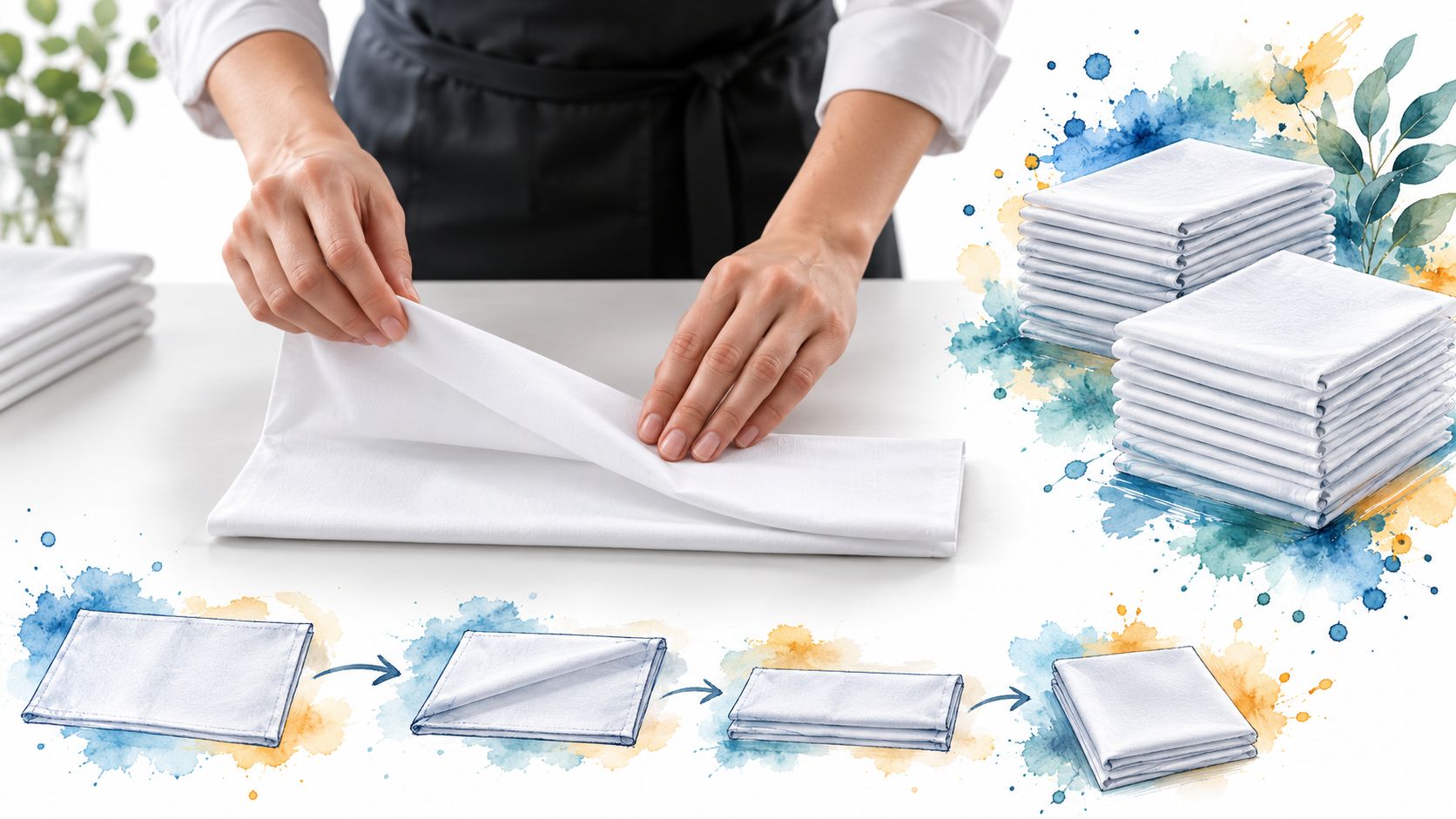
For formal dinners, I like a neat square stack or a tri-fold. Those methods keep edges aligned and make drawer storage efficient. They're also easier to grab in matching sets when you're setting a table quickly.
For relaxed entertaining, a loose roll or softer fold works better. The appeal is texture, not precision. According to this guide to storing cloth napkins for event planning, people rarely ask how to store cloth napkins without ironing to preserve wrinkles as a deliberate "rustic" aesthetic, yet existing content universally prescribes ironing before storage, ignoring the 28% increase in consumers seeking "unstructured" dining styles.
That shift makes sense. Not every table wants sharp hotel corners.
Two good folding approaches
| Storage goal | Best fold | Why it works |
|---|---|---|
| Crisp and formal | Tri-fold or square stack | Keeps edges clean and stacks neatly |
| Casual and lived-in | Loose roll or soft fold | Prevents deep creases and preserves texture |
If you're styling for a more sculpted table, decorative folds still matter at serving time. This tutorial on the crown fold napkin is useful once the napkins are out of storage and ready to dress the place setting.
Pack layers so fabric doesn't fight itself
When napkins sit pressed directly against each other, they can transfer creases and flatten embroidered details. For longer holding, place tissue between pieces so the fabric isn't bearing down on itself.
A helpful visual makes that easier to see in practice:
For long-term preservation, a textile care video recommends storing cloth napkins in a cool, dry area for no more than three months before redoing the storage process, and using acid-free tissue paper between each napkin, cut to about 9.5 inches by 5 inches, with tissue on both sides of each piece to reduce contact and creasing. That guidance appears in this linen storage video demonstration.
Cloth Napkin Storage Solutions for Short-Term and Long-Term
Saturday lunch is in an hour, and the napkins you want are trapped under holiday linens, a wrinkled runner, and a stack of placemats. Good storage prevents that kind of scramble. It also protects the look you want, whether that means sharply pressed linen for a formal table or softly textured cotton that feels relaxed and lived-in.
Best options for weekly use
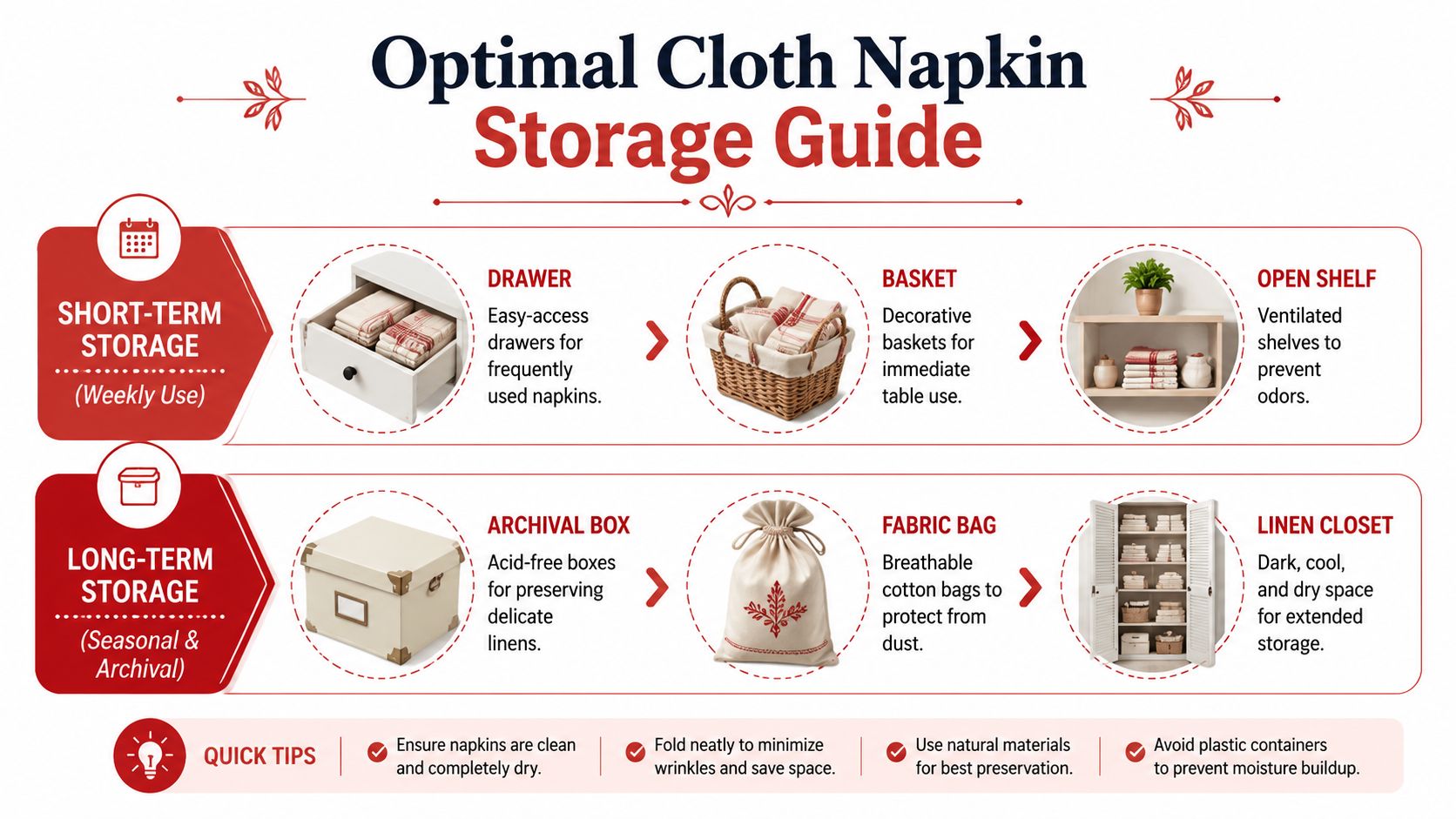
Short-term storage should make everyday sets easy to grab without crushing them between heavier linens. For cottons, washed linen, and other regular-use napkins, I prefer shallow drawers, shelf bins with open tops, or baskets lined with smooth cotton. They keep stacks tidy, let air circulate, and suit the way real hosts use napkins repeatedly through the week.
Open storage does have trade-offs. A basket on a dining room shelf looks charming for casual napkins, but it collects dust faster than a drawer. A drawer keeps fabric cleaner, but overfilling it leaves strong fold lines, especially on crisp hemstitch pieces.
Good short-term choices include:
- Lined drawers: best for everyday sets you use often, especially when separated by size or color family
- Open baskets: useful for relaxed cotton or textured linen in dry rooms away from sunlight
- Ventilated shelves: practical for quick access before dinner parties or family meals
- Travel pouches or zip fabric cases: smart for off-site dinners, weekends away, and event packing where you want a set to arrive ready to use
If your linen closet is crowded, it helps to find the best closet organization units so napkins are not wedged beside serving pieces and candle boxes. Extra shelf division protects pressed edges and makes it easier to keep formal and casual sets separate.
Better choices for seasonal and archival storage
Long-term storage needs a quieter setup. Light, moisture, and pressure do more damage than the container itself. Linen dinner napkins, hemstitch borders, monograms, and specialty fabrics hold up better in acid-free boxes or breathable fabric bags stored on a stable shelf.
Store by fabric and by mood. Everyday cotton can handle simpler storage. Fine linen and embellished pieces deserve more space, less stacking weight, and a spot where they will not be disturbed every weekend. Hosts who keep multiple table looks often do best with distinct groups, such as casual neutrals, formal whites, seasonal prints, and event-ready travel sets. If you are building or refining those groups, a curated selection of cloth napkins for entertaining is easier to manage when each set has a clear storage home.
A good rule is simple. The less often a napkin is used, the more protection it needs.
Environment matters as much as the container
A beautiful box cannot compensate for a bad storage spot. The cloth napkin preservation guide recommends storing cloth napkins in conditions with relative humidity of 45 to 55 percent and a temperature not exceeding 22°C to reduce fabric degradation.
That explains why some storage spots fail so predictably. Basements run damp. Attics trap heat. Laundry rooms swing between moisture and warmth. A bedroom closet or guest room cabinet is usually safer, especially for linen and specialty napkins you want to keep crisp for months.
A simple comparison
| Storage method | Best for | Watch out for |
|---|---|---|
| Drawer with liner | Frequent use | Overstacking creates strong fold memory |
| Breathable fabric bag | Specialty sets and travel | Needs a dry room |
| Acid-free archival box | Seasonal or delicate linens | Overfilling flattens details |
| Airtight container with moisture control | Homes with changing humidity | Fabric must go in fully dry |
For many households, the most practical system is two-tiered. Keep everyday cotton and relaxed linen within reach. Store formal, seasonal, hemstitch, and specialty sets with more protection so they stay ready for the next dinner party, holiday table, or packed event.
Labeling Rotation and Packing Cloth Napkins
A pretty collection becomes hard to use when nothing is labeled. People end up reaching for the same neutral stack, while holiday linens, cocktail napkins, and embroidered sets sit untouched until they've developed hard fold lines or that closed-closet smell.
Organize by occasion, not just by color
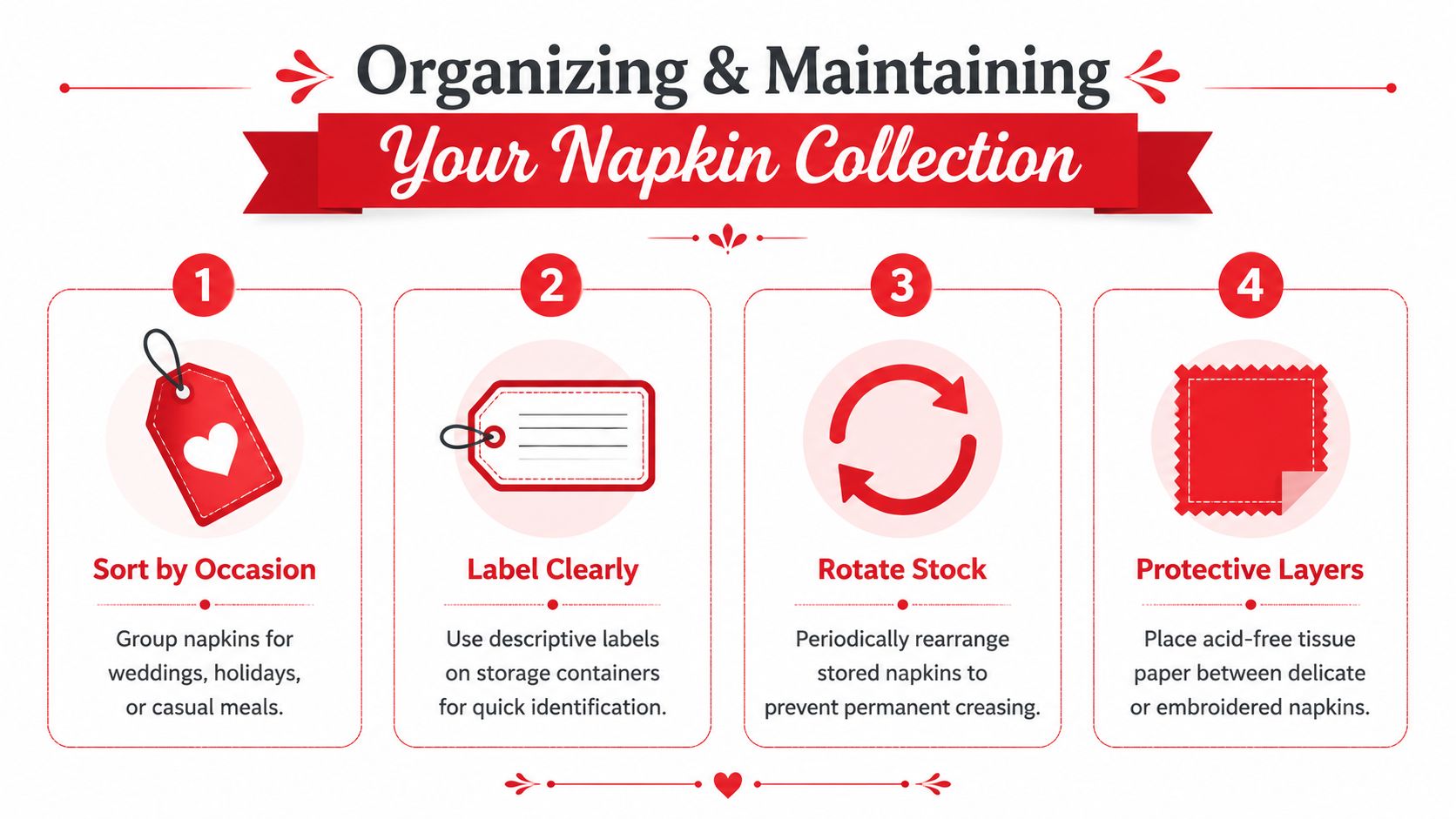
Sorting by color sounds logical, but sorting by use is more practical. Group cocktail napkins separately from dinner napkins. Keep holiday sets together. Pull travel-ready sets into their own pouch so you're not rebuilding a kit every time you leave the house.
A working system might separate napkins like this:
- Casual meals: everyday cottons and easy-care prints
- Formal dinners: linen, hemstitch, and monogrammed sets
- Seasonal hosting: holiday, spring, outdoor, or themed designs
- Off-site events: pre-packed sets for catering, weekends away, or hostess visits
Rotation prevents stale storage habits
Rotation is what keeps a collection alive. Textile care guidance notes that storing napkins vertically in labeled compartments or using silica gel packets within airtight containers can effectively absorb moisture and prevent humidity-induced damage during rotation.
That's especially helpful for homes where closet conditions shift through the year. Vertical storage also makes each set visible, which means you're more likely to use what you own.
A labeled system only works if you can see the sets at a glance and return them to the same place after washing.
Packing for travel and events
Travel storage needs a different mindset than home storage. You're protecting napkins from movement, not just dust.
For clean event packing:
- Fold or roll based on the final look you want on site.
- Place delicate napkins in breathable pouches.
- Add tissue between embellished or embroidered pieces.
- Keep each event set bundled with its matching table accessories.
- Unpack promptly on arrival so folds don't deepen under weight.
If I'm sending napkins to another room, another house, or a venue, I pack them as complete table kits. That saves time and prevents the rummaging that usually causes wrinkles.
Quick Refresh Methods for Cloth Napkins
Sometimes a napkin is clean but not quite guest-ready. It may have drawer creases, a faint closed-closet smell, or that flattened look fabric gets after sitting still.
A few light-touch refresh methods usually solve it:
- Linen spray: mist lightly, then let the fabric relax flat or on a hanger
- Damp-cloth tumble: a brief tumble with a slightly damp cloth helps loosen wrinkles
- Handheld steamer: best for linen, hemstitch, and napkins already folded for service
- Baking soda sachet nearby: useful for deodorizing the storage area, not for direct contact with delicate fabric
Use the least aggressive method that gets the napkin back into shape. If a napkin needs repeated heavy pressing after storage, the packing method probably needs adjustment more than the fabric needs more heat.
For pop-up dinners or holiday hosting, keep a small refresh kit nearby. A steamer, a soft cloth, tissue paper, and a clean pouch handle most last-minute problems quickly.
Wrapping Up Cloth Napkin Care
Good napkin storage protects more than fabric. It protects the mood of the table, the ease of getting ready, and the pleasure of pulling out something lovely that still looks as good as you remembered. Clean them thoroughly, dry them fully, fold for the look you want, and store them in conditions that support the fibers instead of stressing them.
That routine doesn't need to be fussy. It just needs to be intentional. The payoff is a collection that stays fresh, elegant, and ready for anything from weeknight dinners to polished celebrations.
Frequently Asked Questions
What's the best way to store colored cloth napkins?
Store colored napkins in a cool, dry cabinet or drawer out of direct sun. I prefer breathable cotton bags or lined bins over sealed plastic for everyday cotton and linen, especially when the goal is to keep color true without trapping stale air.
Can I store monogrammed or hemstitch napkins folded?
Yes, with a lighter hand. Place acid-free tissue between layers, avoid hard creases across embroidery, and keep openwork edges from bearing the weight of a full stack. For heirloom hemstitch or specialty pieces, rolling can be gentler than a sharp fold.
Should cloth napkins be ironed before storage?
Store them based on how you want them to look on the table. Pressed and folded works well for a crisp, formal setup. Loose folds or soft rolls suit a relaxed, lived-in look and usually leave linen looking more natural.
How do I store napkins in a humid climate?
Airflow matters more than appearance here. Use a breathable container, add moisture absorbers if the room tends to feel damp, and rotate the stack often enough that one set is not sitting untouched for a season. If you travel with napkins for holidays or events, unpack them soon after arrival instead of leaving them compressed in a tote or suitcase.
How often should long-stored napkins be checked?
Check them every few months. Refolding prevents permanent crease lines, and a quick inspection catches musty odor, trapped moisture, or yellowing before it spreads through the whole pile.
Good storage pays off when guests are on the way and the napkins you pull out still match the mood you want, whether that means sharply pressed white linen for a formal dinner or softly rumpled cotton for a casual lunch. If you are building out the rest of your hosting setup, explore playful canvas wine gift bags, browse entertaining accessories and gifts, or pick up fresh table ideas from the Eats & Sips blog.