
How to Print on Towels: A Gifting & Entertaining Guide
A custom towel usually starts with a familiar problem. You need a hostess gift that feels personal, but not fussy. Or you want something for your own kitchen, guest bath, or bar cart that looks considered instead of mass-produced.
That's where print on towels becomes surprisingly chic. A simple tea towel with a witty phrase, a neat monogram, or a restrained seasonal motif can land somewhere between useful and memorable, which is exactly where the best gifts live.
The category is also bigger than many people realize. The global market for kitchen towels is valued at approximately US$18 billion and is projected to reach US$28.6 billion by 2033, according to Everplush's towel market overview. That broad demand helps explain why personalized towel designs keep showing up in gifting, entertaining, and home styling.
Boutique-quality results are absolutely possible at home, but they depend on making smart choices early. Fabric matters. Artwork matters. The printing method matters even more than most beginners expect. If you already love the polished look of monogrammed linen napkins for entertaining, the same design instincts carry beautifully into custom towels.
The Art of the Personalized Towel
You are wrapping a warm loaf of cake for a dinner host, and the ribbon feels predictable. A well-printed tea towel does the job with more charm. It becomes part of the gift, then part of the home.
That dual role is why personalized towels hold up so well in real life. They are useful, washable, easy to store, and capable of looking surprisingly polished when the design is handled with restraint. For gifting and entertaining, that balance is hard to beat.
The best results sit in the middle ground between craft-project casual and commercial promo merchandise. A towel should still feel soft and domestic, but the print should look intentional. The same instincts that make monogrammed linen napkins feel polished on a table also work beautifully on towels.
Why towels make unusually good gifts
A personalized towel earns its keep. It can line a bread basket, sit neatly over an oven handle, soften a guest bath, or wrap a bottle of wine on the way to a party.
That practicality matters.
Large personalized decor can feel like homework for the recipient. Towels are easier. They add character without asking someone to rearrange a room, commit to a strong color story, or find wall space for a name that only makes sense during one season of life.
A good printed towel also has range. One design can read festive in December, fresh in spring, or suitable year-round, depending on the artwork and fabric you choose.
Where print on towels looks best
Printed towels shine in spaces that already invite a small decorative touch:
- Hostess gifts: Wrap bread, jam, candles, or a bottle in a custom tea towel instead of disposable wrap.
- Guest bathrooms: Add a monogram, crest, or quiet motif that feels personal without reading overly formal.
- Bar carts and coffee corners: Use a phrase, botanical illustration, or small graphic that adds wit and order.
- Wedding and shower gifts: Create a pair or set that feels personal, but still easy to use every day.
There is also a tactile pleasure to towels that paper goods and boxed gifts do not have. People unfold them, hang them, wash them, and keep reaching for them. That repetition gives a custom design more staying power than many novelty gifts.
The look that reads expensive
Boutique-looking towels usually share the same discipline. One idea. Clear placement. Enough breathing room around the artwork.
A graceful surname, a single line drawing, or a centered monogram often looks better than a crowded collage of clip art and tiny text. Scale matters too. Small designs can look timid on absorbent fabric, while oversized art can feel more intentional if the composition stays simple.
Method changes the finish as much as design does. If you have compared printing options for custom apparel, the same kind of trade-off applies here. Some methods give a softer hand feel, some hold sharper detail, and some suit certain fibers far better than others. Beautiful towels come from matching that technical choice to the mood you want on the table, in the kitchen, or in the guest bath.
Matching Your Fabric to the Right Printing Method
If a towel print disappoints, the problem is usually the marriage of fabric and method. A design can be lovely on screen and still print poorly if the towel's surface, fiber content, or absorbency fights the process.
Microfiber and polyester towels
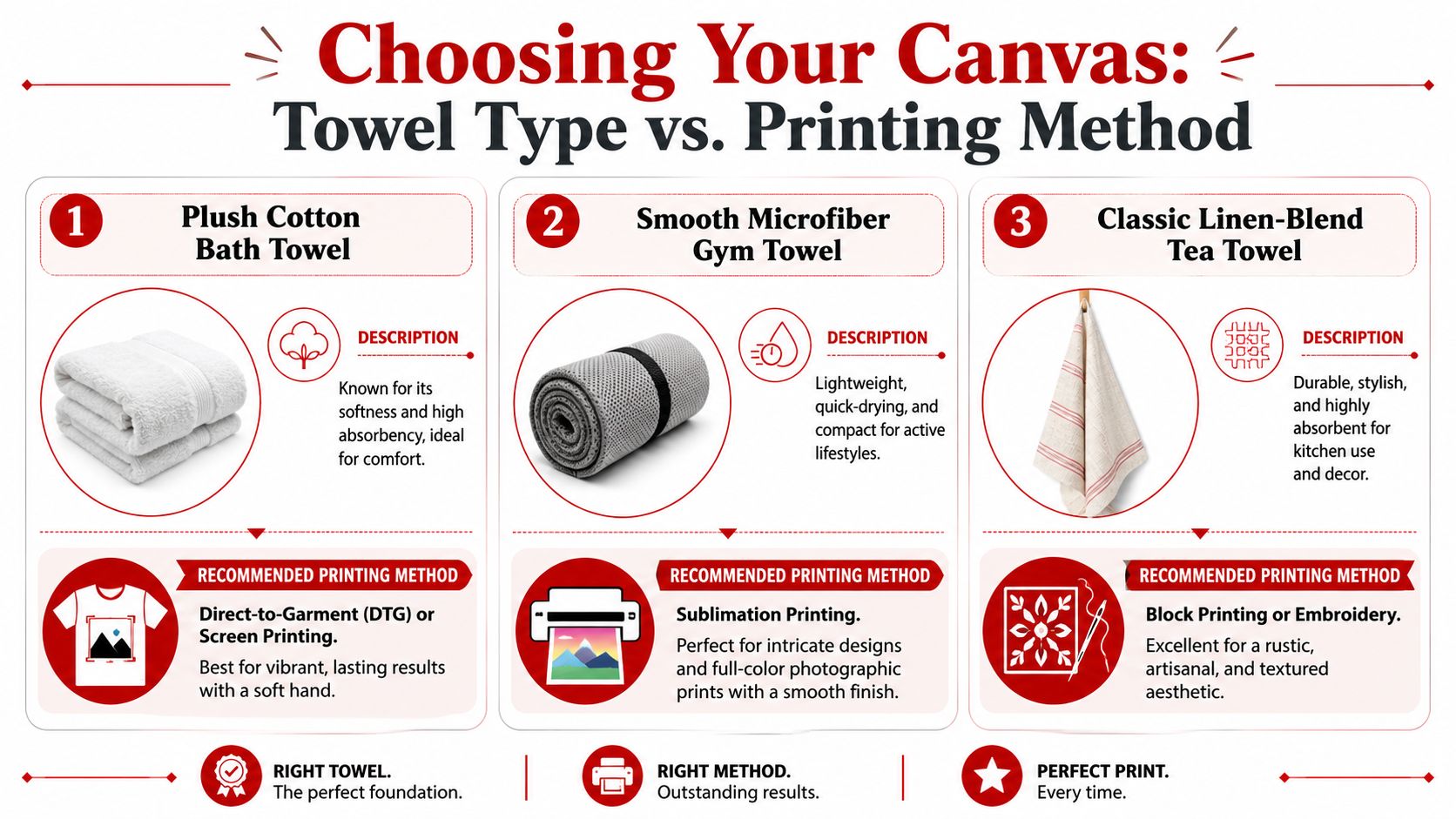
Synthetic towels behave very differently from cotton ones. For microfiber, the strongest results usually come from sublimation, especially when the fabric is at least 65% polyester, with 100% polyester described as the best-performing option in Aose Home Textile's guide to microfiber towel printing.
That same guidance recommends pre-washing, avoiding fabric softener, drying the towel fully, and running a corner test before full production. Skip those steps and you risk weak adhesion, steam issues, or dull results.
Practical rule: On synthetic microfiber, sublimation gives the softest and most integrated finish when the fabric composition is right.
DTF can work as a fallback for medium-size runs, but it tends to leave a thicker hand-feel. That can be perfectly acceptable for sporty towels or graphic pieces. It's less ideal when you want the print to feel almost invisible.
Cotton and cotton-rich towels
Cotton is where many home crafters run into trouble. It's familiar, absorbent, and charming, but it isn't always easy to print beautifully because the pile and texture can swallow detail.
For cotton or cotton-rich towels, screen printing remains a standard method. Rally Towels' guide to customization methods notes that thick towel pile often requires multiple passes and higher squeegee pressure to push ink down into the fabric. That explains why some cotton towel prints look crisp while others look patchy or superficial.
For boutique home projects, cotton works best when the design is bold enough to survive texture. Think monograms, icons, simple line motifs, and larger text.
The at-home choice most people actually use
Most hobbyists and style-focused DIYers won't set up a screen printing station or full sublimation workflow for one gift set. They'll use heat transfer methods, stenciling, or order custom textile printing.
That's fine, as long as the design suits the method. If you want a quick read on broader printing options for custom apparel, the comparison is useful because many of the same trade-offs apply here too. Surface feel, fabric compatibility, and image complexity matter just as much on towels as they do on tees.
A simple decision guide
| Towel type | Best use case | Usually works well | Watch out for |
|---|---|---|---|
| Microfiber or polyester | Full-color graphics, sporty towels, photo-heavy designs | Sublimation | Wrong fiber content, residual moisture |
| Cotton terry | Bold logos, simple text, graphic shapes | Screen printing or simple transfer methods | Fine detail getting lost in the pile |
| Linen-blend or flatter weave kitchen towel | Monograms, line art, elegant sayings | Light transfer work, fabric printing, hand-applied methods | Overly dense designs that stiffen the fabric |
If the towel is plush and textured, simplify the artwork. If the towel is smooth and synthetic, you can be more ambitious with color and detail.
Preparing Your Artwork for a Flawless Print
Most towel-printing mistakes begin before any ink or vinyl touches fabric. The file is usually the culprit. If the artwork isn't built for textile printing, the towel exposes every weakness.
Start with the cleanest file possible
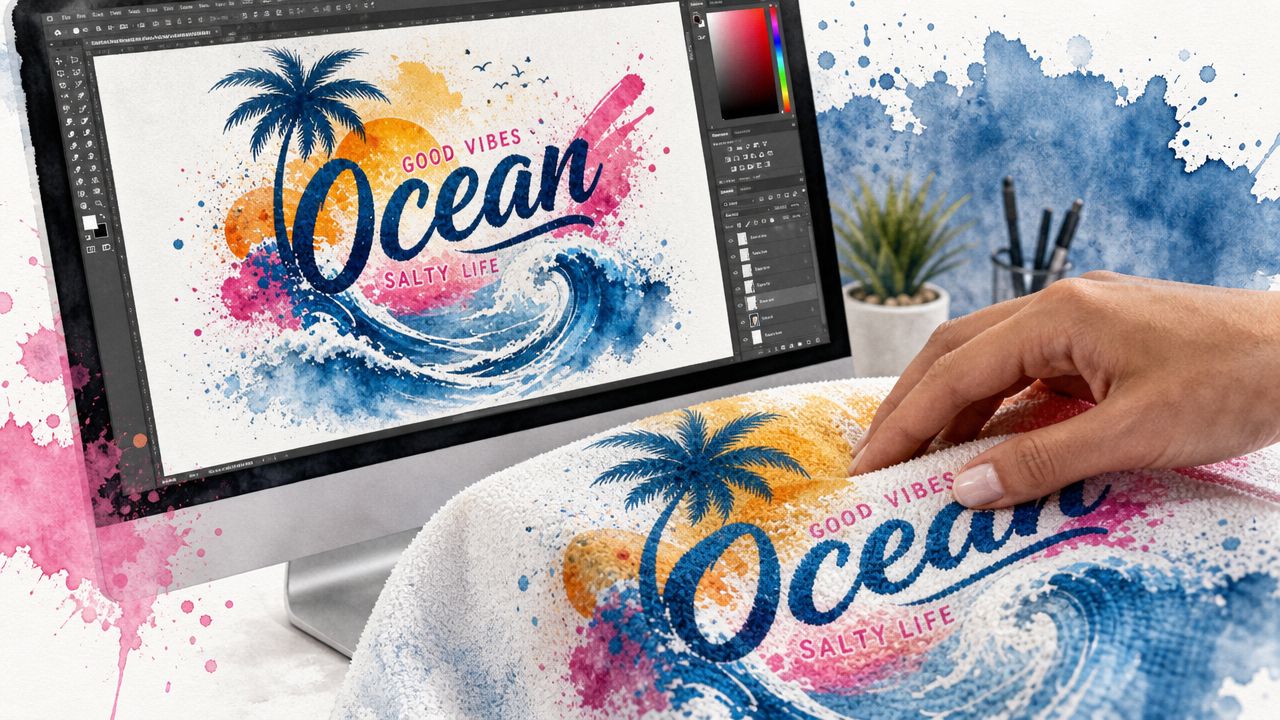
Industry guidance is very clear here. Vector files are ideal for textile printing, while low-resolution raster files often become unusable on absorbent, textured surfaces, as shown in this artwork guidance video on textile print quality.
That matters even more on towels than on smoother fabrics. The weave already softens edges. A weak file makes the problem worse.
Use vector artwork for:
- Monograms
- Short phrases
- Logos
- Simple botanical drawings
- Clean borders and motifs
Use raster artwork only when it's large, clear, and intentionally suited to fabric texture. A delicate phone screenshot or a tiny web image usually won't survive the process gracefully.
Design for the towel, not the screen
Text that looks refined on a laptop can vanish into terry loops or absorbent fibers. A good towel design needs stronger hierarchy than a digital mockup suggests.
Keep these principles in mind:
- Enlarge small type: Thin script and tiny taglines often print poorly.
- Limit detail: Dense florals, hairline illustrations, and miniature icons can turn muddy.
- Leave breathing room: Negative space helps the design feel upscale.
- Choose placement carefully: Centered prints and lower-corner motifs usually feel classic and intentional.
Small refinements in spacing and scale make a bigger difference on a towel than on paper.
Mock it up before you commit
Place the artwork on a photo of the actual towel shape before production. A design that feels balanced on a blank artboard may sit too high, too low, or too wide once folded, hung, or draped.
This is also the moment to decide whether your idea should become a finished custom order rather than a home experiment. If you want a polished textile piece based on your own art, monogram, or event concept, custom textile design options at Jolitee can help bridge that gap between concept and final presentation.
For anyone working with photographic imagery or brand visuals, this guide for clothing brand owners is also helpful for thinking through how images translate onto fabric surfaces.
The easiest way to avoid a muddy result
If you're unsure, simplify. Remove the smallest line. Thicken the lightest stroke. Increase the contrast. Shrink the ambition, not the style.
That's usually the move that makes print on towels look finished rather than homemade.
Bringing Your Custom Towel Design to Life
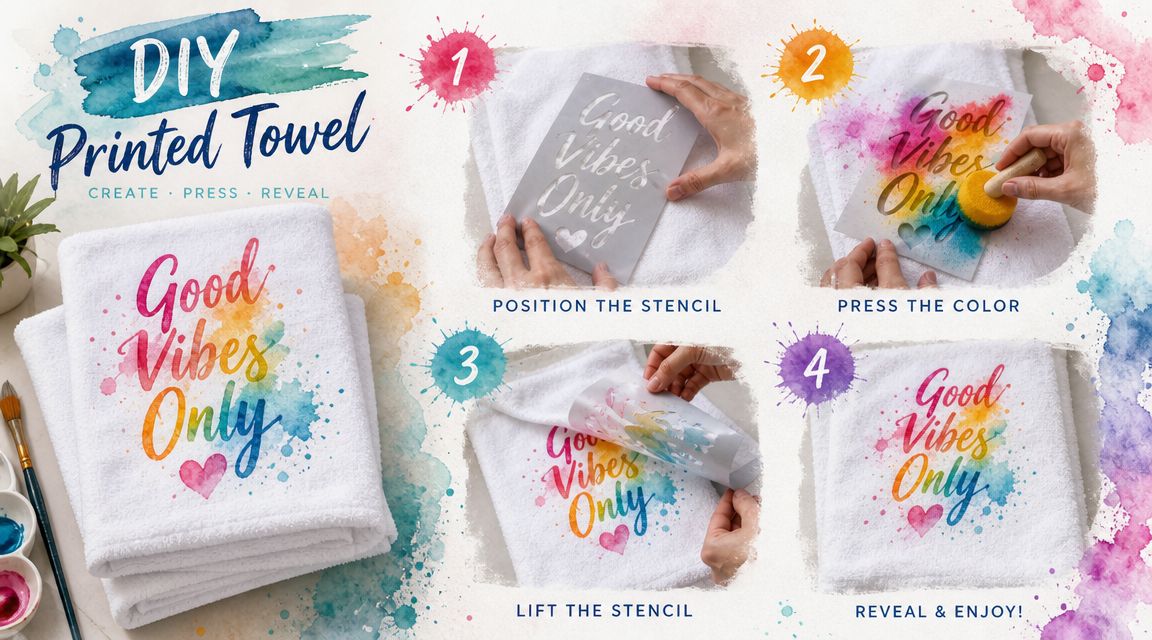
For home projects, heat transfer vinyl is often the most approachable route. It doesn't ask for a full print studio, and it can look neat when the design is simple, the towel surface is fairly flat, and the placement is precise.
Set up the towel properly
A wrinkled or damp towel won't reward you. Press it first if needed, and make sure the area you're decorating is fully dry and lint-free.
Then flatten the print zone on a firm surface. If the towel is thick, place a pressing pillow or folded pressing pad under the target area so seams and hems don't throw off the pressure.
Use a design that suits HTV
HTV is not the place for fussy detail on a textured towel. Clean shapes, monograms, initials, and short words are where it shines.
A strong beginner formula looks like this:
- Choose a simple motif with bold enough lines to cut and weed cleanly.
- Mirror the design before cutting, if your material requires it.
- Weed patiently so you don't pull up corners or narrow strokes.
- Test placement with the towel folded the way it will be gifted or displayed.
The more textured the towel, the more generous the artwork should be.
Press with discipline
A home iron can work for very small projects, but a heat press gives more even pressure and a more consistent finish. Follow the vinyl manufacturer's instructions first, because those details vary by material.
If you want a practical reference point for dialing in pressure and temperature logic, this roundup of Cobra DTF heat press advice is useful reading. Even when you're not applying DTF, the reminders about substrate, pressure consistency, and test pressing are valuable.
A few habits make a noticeable difference:
- Pre-press briefly: This removes residual moisture and smooths the print area.
- Use a protective sheet: A Teflon sheet or parchment barrier helps protect both towel and transfer.
- Apply steady pressure: Uneven pressing is a common reason edges lift.
- Respect peel instructions: Some materials want a hot peel, others a warm or cold peel.
Watch the process in motion
If you like to learn visually, this quick demonstration helps make the sequence easier to picture before you start.
Finishing touches that make it look store-bought
Once the transfer is down, let the towel cool fully if the material calls for it. Then inspect every edge. If a corner looks hesitant, repress before the towel is folded, wrapped, or washed.
For gifting, presentation matters almost as much as the print itself. A towel looks especially polished when tied with ribbon, paired with soap, wrapped around baked goods, or stacked with coordinating tabletop pieces.
A crisp custom towel also pairs nicely with entertaining staples such as hemstitch cocktail napkins, especially when you want a small gift bundle that feels thoughtful without becoming elaborate.
Quick Design Tips for Gifting and Entertaining
A custom towel earns its place when it looks beautiful in use. Fold one over a bread basket, drape one beside the sink before guests arrive, or tuck one around a bottle of olive oil, and the design needs to read clearly from a few feet away. That is the home-scale challenge. The towel has to feel polished, personal, and easy in the room, not like a sample from a print shop.
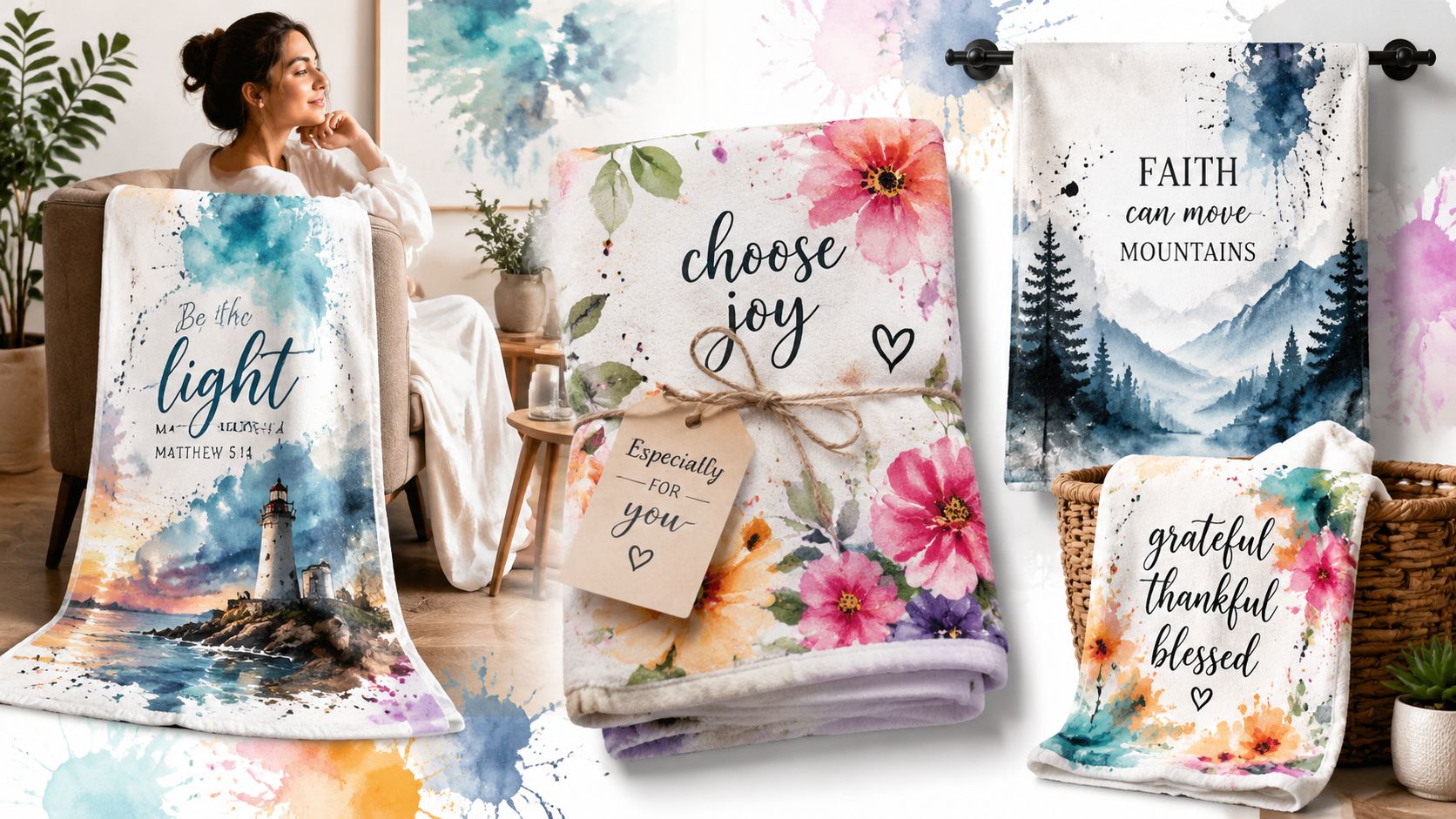
Boutique results usually come from restraint. On cotton and canvas towels, simple artwork almost always looks more expensive than crowded artwork because the fabric softens edges and absorbs a bit of detail. I keep gift designs edited down to one strong idea, then let placement and color do the rest.
Designs that always feel tasteful
Some motifs are reliable because they suit the fabric as well as the occasion.
- Monograms: Clean, classic, and easy to scale for weddings, guest baths, and housewarming gifts.
- Botanical line art: Olive branches, herbs, citrus, and loose florals print well and stay fresh year-round.
- Short phrases: One or two words, set in a readable font, feel far more refined than a long quote.
- Seasonal icons: Bows, evergreens, pumpkins, or stars work best with crisp shapes and a limited palette.
Match the mood to the occasion
A good gift towel does not need to announce the event in giant letters. It should hint at it.
For a hostess gift, I prefer a small motif with a useful color story, something that can live in the kitchen after the party is over. Bridal shower towels can carry initials, a date, or a crest-style mark if the couple likes tradition. Holiday entertaining usually looks better with one seasonal note and a restrained palette than with a busy novelty print.
If you want the whole table or gift bundle to feel connected, these personalized party favor ideas for entertaining are a good reference point for mixing custom details without making everything match too closely.
Keep the tradition, skip the fuss
Personalized towels feel natural because household textiles have carried initials, motifs, and decorative details for generations. That history still translates well today, especially for gifts that are meant to be used rather than stored away.
A few pairings work almost every time:
- For the bar cart: Initials, a crest, or a short phrase in a neat serif
- For the kitchen: Herbs, fruit, family names, or recipe-inspired illustrations
- For the guest bath: Monograms or a quiet border motif
- For wrapping a gift: A printed towel tied around wine, soap, or a loaf of bread
Useful pairings help the gift feel finished. Items such as canvas wine gift bags and French-milled soap gift sets keep the presentation practical and charming, which suits a custom towel far better than overdone packaging.
Frequently Asked Questions About Towel Printing
What's the easiest method for a beginner?
For one-off home projects, heat transfer vinyl is often the easiest place to start. You can cut simple text or shapes, apply them with a press or iron, and get a clean result without building a full print setup. It works best when the design is bold and the towel surface isn't too plush.
Can you print on dark towels?
Yes, but the method matters. Sublimation isn't a natural fit for dark fabrics because the dyes don't cover the base color. Opaque transfer methods, screen printing, or carefully chosen appliqué-style solutions are more practical when the towel is dark.
Why does my design look muddy on a towel?
Usually because the artwork is too detailed, too small, or not suited to the towel's texture. Towel fabric absorbs visual sharpness. Tiny script, thin lines, and low-quality files tend to soften further once printed.
If you want the result to look refined, edit the artwork more aggressively than you think you need to.
How should I wash a custom towel?
Gentle care helps preserve the finish. Cold water, mild detergent, and lower heat are the safest habits for most custom towel projects. It's also wise to skip fabric softener when the printing method or fiber content calls for it.
Where can I find more gift styling ideas to pair with custom towels?
Start with entertaining pieces that share the same visual tone. Cocktail napkins, bottle presentation, soap bundles, and small hostess extras all pair naturally with printed towels. The strongest gift bundles usually mix one personalized element with one or two useful finishing pieces.
If you're gathering ideas for your next hostess gift, housewarming bundle, or personalized entertaining detail, take a look at Jolitee. You'll find giftable tabletop accents, bottle bags, soap sets, and custom-ready options that pair beautifully with the refined, practical spirit behind print on towels.