

Elegant Monogrammed Wedding Handkerchiefs Guide
There's a moment in almost every wedding when all the polished planning gives way to something tender. A bride reads a note. A father sees his daughter dressed and ready. A groom steadies himself before the ceremony. In those small pauses, monogrammed wedding handkerchiefs make sense in a way inspiration boards never quite capture.
They're useful, yes. Beyond that, they feel personal without being loud. A neatly stitched initial in one corner can turn a simple square of linen or cotton into something that belongs to one person, one family, one day.
A Timeless Tradition for a Modern Wedding
A bride reaches for a note just before the ceremony, and suddenly the details that felt decorative become personal. The handkerchief tucked into her bouquet wrap or gift box is often one of the few accessories used in that exact kind of moment, then saved for years afterward.
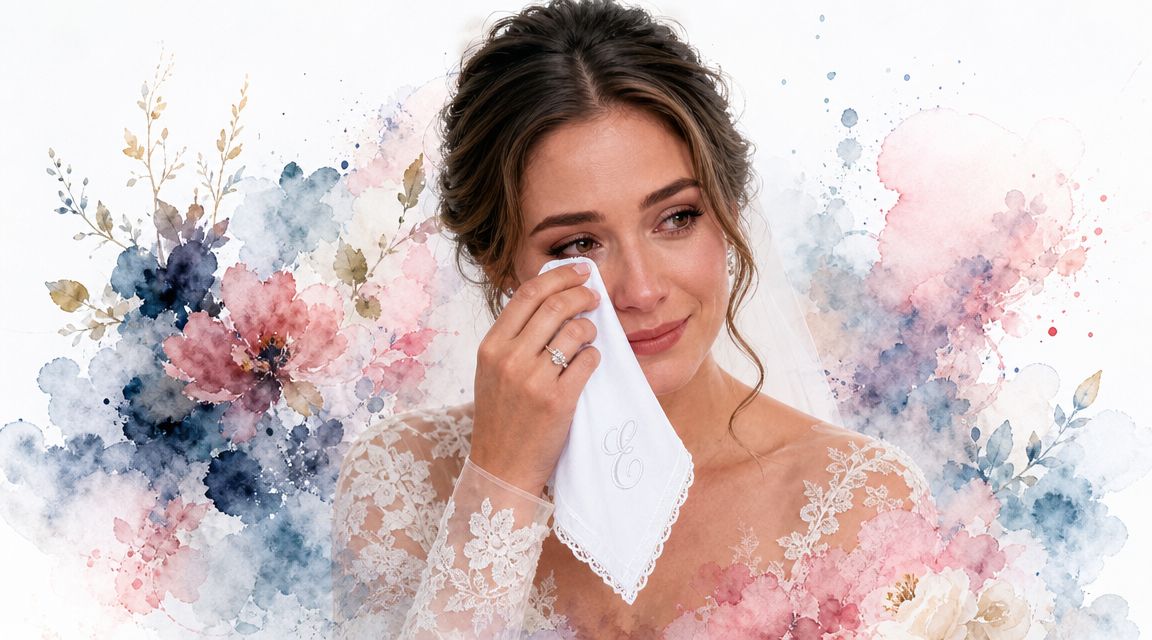
That staying power comes from a long textile tradition. Handkerchiefs have moved through court dress, gift customs, and family sewing for centuries, and personalization became part of their appeal early. Initials, stitched corners, and fine hems gave an everyday cloth a clear owner and a more intimate purpose.
Weddings kept that meaning and gave it sharper focus. In the American South, a bridal hankie was often passed through the family and sometimes chosen as a bride's “something old” or “something blue,” according to this overview of the bridal hankie tradition. I have seen the same instinct in modern weddings of every style. Couples want one object that feels useful in the moment but still belongs in a memory box, not the bin at the end of the night.
Practical rule: The strongest wedding keepsakes serve a real purpose on the day and still look worth keeping once the flowers are gone.
A monogrammed wedding handkerchief strikes that balance especially well. It carries sentiment without the weight or cost of jewelry, and it feels more lasting than paper goods or novelty accessories. It also gives you room to tailor the gift properly. A bride may prefer a soft corner monogram that reads delicately in photos. A groom may need an initial placement that still works if the handkerchief spends part of the day in a breast pocket. A parent or grandparent gift often looks better with a more traditional script, slightly smaller scale, and a placement that stays visible when folded for presentation.
Those details matter more than many guides admit. Monograms that are too large can overpower a fine linen square. Placement too close to a hem or lace edge can crowd the stitching or distort the fabric. The same questions come up in other table and heirloom linens too, which is why guides on monogrammed linen napkins are useful for understanding proportion, corner placement, and how embroidery behaves on different weaves.
That is what makes the wedding handkerchief feel current rather than old-fashioned. The tradition is familiar, but the best modern versions are chosen with a stylist's eye and a maker's discipline. The cloth, the scale of the initials, the thread weight, and the way it will be stored afterward all shape whether this keepsake feels graceful for one day or worthy of keeping for decades.
Choosing Your Canvas The Handkerchief Itself
The monogram gets the attention, but the fabric makes the decision. If the base cloth is wrong, even beautiful embroidery can look stiff, puckered, or underwhelming.
Start with use, not just appearance
A bridal handkerchief usually needs softness and drape. It should feel light in the hand and elegant in photos. A groom's handkerchief often benefits from a slightly more structured fabric, especially if it may sit in a pocket for part of the day.
Trim matters too. Lace edges feel romantic, but they reduce the usable field for embroidery. A clean hemstitch border gives the monogram more breathing room and tends to look more refined.
Wedding handkerchief fabric comparison
| Fabric | Best For | Embroidery Appearance | Care & Longevity |
|---|---|---|---|
| Linen | Brides, heirloom gifts, vintage-inspired weddings | Crisp, refined, slightly textured | Beautiful over time, but wrinkles easily and needs thoughtful pressing |
| Cotton | Everyday softness, bridal party gifts, classic monograms | Smooth and clean, especially for simple initials | Easy to live with, comfortable to handle, generally straightforward to maintain |
| Cotton with hemstitch detail | Traditional wedding styling, parent gifts, polished presentation | Balanced and elegant, with a clear edge for placement | A strong choice for keepsake use, especially when stored properly |
| Blend fabrics | Budget-conscious gifting, larger gift sets | Can look neat, but may feel less heirloom-like | Lower maintenance in some cases, though often less special in hand |
A professional listing for personalized bridal handkerchiefs notes that premium shops commonly work with 100% cotton or hemstitched cotton blanks, which is a useful clue for shoppers who want a classic result. It also reflects the kinds of fabrics that tend to behave well during embroidery.
What usually works best
For most weddings, these combinations are dependable:
- Bride's keepsake: Fine linen or soft cotton with a small monogram in one corner
- Groom's gift: Crisp cotton or hemstitched cotton with restrained lettering
- Parent gift: A traditional white handkerchief with a classic border and initials or a short message
- Bridal party set: Matching cotton handkerchiefs where the thread color changes by recipient or wedding palette
A handkerchief should feel lovely before it's personalized. The monogram should complete the piece, not rescue it.
If you already love monogrammed table linens, the same principle applies to wedding textiles too. The cloth determines how elegant the final stitching feels. That's part of why guides to monogrammed linen napkins for entertaining are so helpful. They train your eye to notice edge detail, weave, and how embroidery sits on the fabric.
Details shoppers often overlook
Three details deserve a closer look before ordering:
- Scale: A petite handkerchief can look precious in a bridal flat lay, but it may leave very little room for text.
- Edge treatment: Lace is beautiful, though it can limit corner placement and compete visually with ornate fonts.
- Opacity: Thin white fabrics can be lovely, but dense stitching may show through more than expected.
If you want the piece to feel heirloom-worthy, choose a fabric that looks graceful both folded and opened. That sounds simple, but it's often the difference between a novelty gift and something someone saves in a keepsake box.
The Art of the Monogram Styles and Etiquette
Once the fabric is settled, the next choice is the one people worry about most. Not whether to monogram, but how.
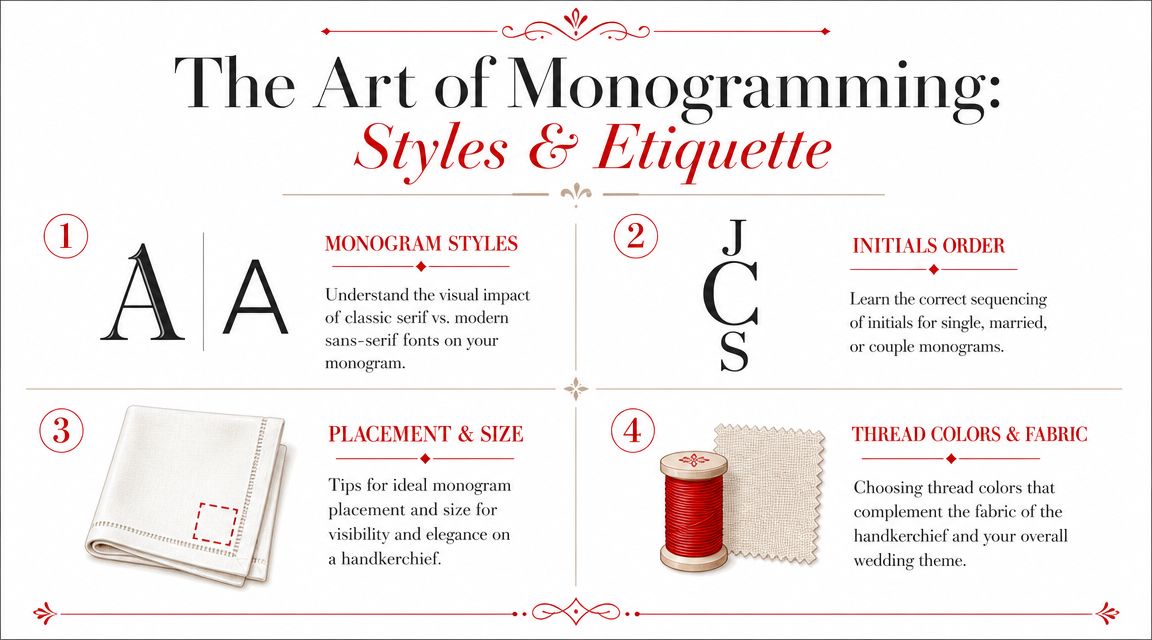
A good monogram looks effortless. In practice, it depends on style, scale, placement, and restraint.
Choosing a style that suits the occasion
Serif letters tend to feel formal and traditional. They're excellent for parent gifts, groom's handkerchiefs, and weddings with a classic dress code. Script monograms feel softer and more romantic, especially on bridal handkerchiefs, but they need enough space to stay legible.
Sans-serif styles can work beautifully for modern weddings, especially if the handkerchief itself is very minimal. The cleaner the font, the more contemporary the result.
Thread color should support the mood. White-on-white or ivory-on-ivory feels subtle and heirloom-like. Pale blue can nod to wedding tradition. Deeper contrast can be striking, but it shifts the handkerchief away from whisper-soft elegance and toward statement accessory.
Size and placement matter more than most people think
For delicate handkerchiefs, the smallest design is often the smartest one. Embroidery tests shown in this monogramming tutorial on handkerchief sizing and placement found that a 1/4-inch monogram looked right on a bridal handkerchief, while a 1/2-inch version appeared too large and could contribute to puckering. The same source notes that clean results depend on careful hooping, needle choice, and slow machine speed.
Sizing note: If the handkerchief is airy and fine, scale down first. A monogram that reads as delicate in the design stage usually looks more expensive once stitched.
That's also why experienced embroiderers rely on design software and testing tools before they ever stitch on the final piece. If you're curious how professionals preview lettering, spacing, and monogram arrangements, Brother BES 4 sewing tools offer a useful example of the kind of setup used to prepare embroidery and monogramming layouts.
A visual walkthrough helps too:
Monogram etiquette that keeps it polished
There isn't one universal rule for every wedding handkerchief, but these guidelines usually keep things elegant:
- For an individual gift: Use the recipient's own initials. This is often the cleanest choice for parents and attendants.
- For a bride before the wedding: Many people prefer her current initials if the handkerchief will be gifted and used on the wedding day.
- For a couple's keepsake: Shared initials can work, but only if the layout is readable and not overcrowded.
- For a groom's pocket square style handkerchief: Simpler is stronger. One initial or a restrained monogram often looks best.
If there's lace, scalloping, or a very narrow corner, don't force a complex three-letter design. That's where shoppers get disappointed. A single initial in the right font can look far more refined than a crowded traditional monogram squeezed into a tiny corner.
Ordering and Timelines for a Stress-Free Process
A week before the wedding is the worst time to discover that a monogram looks too large for the corner, the initials were entered in the wrong order, or the linen chosen for the bride needs a finer stitch setup than the one selected for the fathers' gifts. Custom handkerchiefs are small pieces, but the decision-making around them is not.
The stitching is only the final step. Good shops spend time confirming fabric behavior, monogram scale, placement, thread color, and proof approval before anything goes under the needle. Delicate cotton lawn, fine linen, lace-trimmed edges, and rolled hems all affect how much room an embroiderer has. A design that looks graceful on screen can feel crowded once it is stitched into a narrow corner.
That is why I always suggest ordering earlier than you think you need to. The extra cushion is not just for shipping. It gives you time to catch the details that matter most on a keepsake piece.
What usually slows an order down
Revisions are the biggest cause of delay, especially when they happen after the proof has already been prepared. A thread color swap is usually straightforward. Changing from a single initial to a three-letter monogram, shifting placement to avoid scalloped trim, or resizing lettering for a lighter-weight fabric often requires the design to be adjusted and reviewed again.
Multiple recipients can add complexity too. A set for the bride, groom, mothers, and fathers may share one visual direction, but the monogram should still suit each handkerchief individually. The nicest results feel coordinated, not copied.
A practical ordering sequence
-
Start with the recipient list
Decide who is receiving a handkerchief before choosing fonts or thread. That keeps the style choices tied to the person, not just the photo. -
Confirm the exact initials in writing
This sounds obvious, but initials cause more trouble than color choices. Double-check spelling, letter order, and whether the piece is meant for pre-wedding use or as a married keepsake. -
Ask for the monogram size and placement, not only a visual proof
A proof should answer practical questions. How large is the stitching area in inches. How far will the monogram sit from the hem. Will the placement interfere with lace, embroidery, or a rolled edge. -
Build in time for one round of revision
One thoughtful correction is normal. Several late changes can push a custom order into rush territory. -
Leave delivery margin
Wedding week is busy enough. Personalized linens should be packed and ready well before the dressing-day details come together.
For shoppers comparing styles, fabrics, and gift formats across one event, the monogrammed keepsake collection is a useful reference point for seeing how personalized pieces can stay visually consistent without making every item identical.
One final trade-off matters here. Rush ordering can get a gift finished, but it rarely leaves enough room to judge proportion properly. On a handkerchief, proportion is the difference between a monogram that feels heirloom-worthy and one that looks squeezed in as an afterthought.
Gifting and Preserving Your Wedding Keepsake
A monogrammed handkerchief is one of the rare wedding gifts that feels equally appropriate before, during, and after the ceremony. How you present it shapes the emotion just as much as the embroidery does.
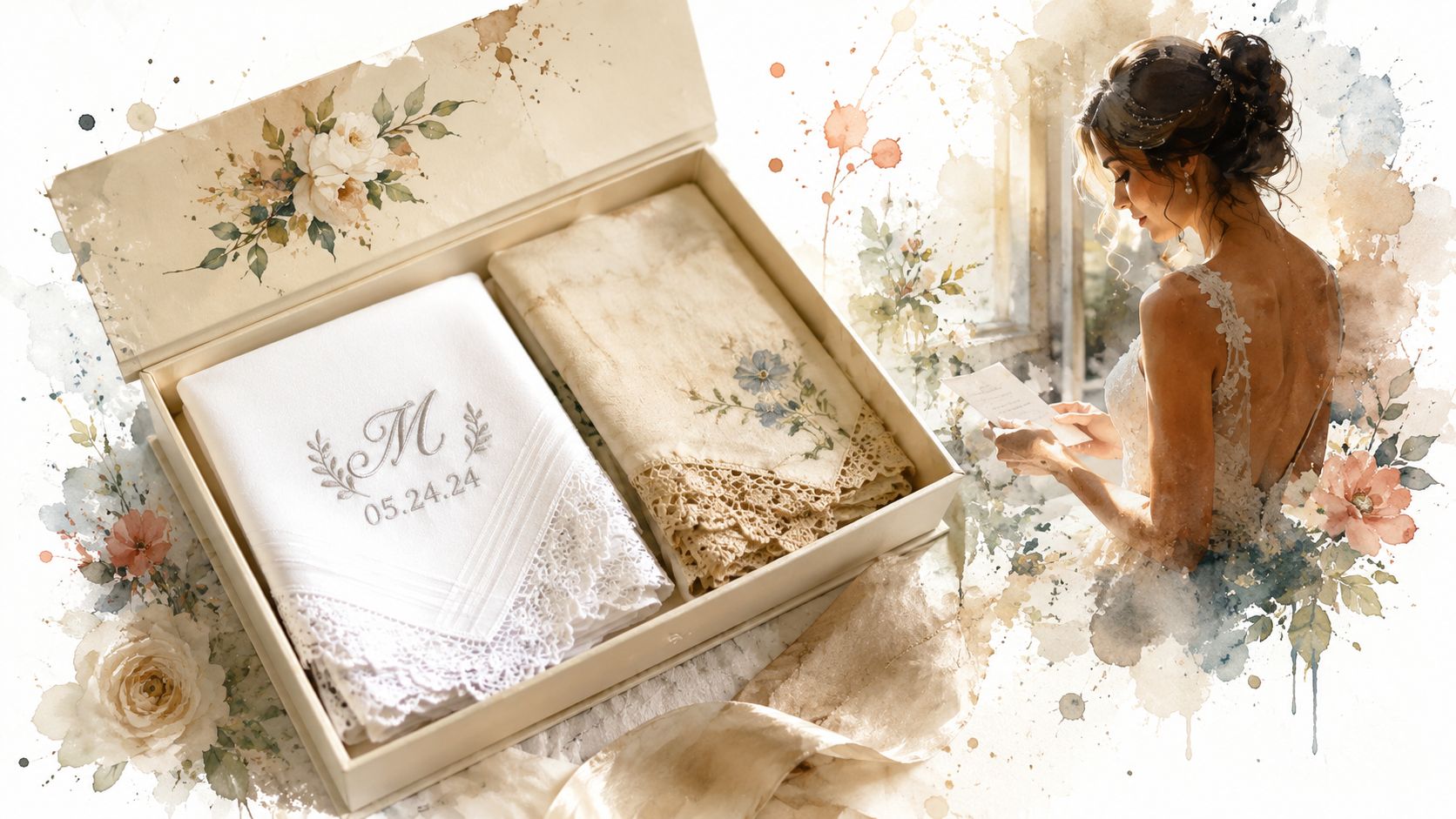
Thoughtful ways to present it
A few presentations always land well:
- Inside a letter box: Pair the handkerchief with a handwritten note from a parent, partner, or friend.
- Wrapped around a small gift: Jewelry boxes, vow books, or perfume feel more intimate with a textile layer.
- Tucked into dressing-day details: Brides often appreciate having it ready with their robe, accessories, or invitation suite.
- Given as a parent keepsake: This is especially moving when the monogram is understated and the message carries the sentiment.
If you enjoy presentation as much as the gift itself, these creative gift wrapping ideas for meaningful occasions offer lovely ways to make a keepsake feel finished without overdoing it.
Caring for it like an heirloom
One of the biggest gaps in wedding handkerchief shopping is care advice. Many retailers position them as heirlooms but don't explain what to do after the wedding. That gap is noted in this overview of the monogrammed wedding handkerchief market and care-content need.
The practical answer is simple. Handle the embroidery gently, clean it conservatively, and store it with intention.
- Wash gently: If cleaning is needed, use a mild approach and avoid rough agitation that can stress fine stitching.
- Dry flat when possible: That helps preserve shape and reduces tugging at the embroidered area.
- Press with care: Use a pressing cloth if needed, especially over the monogrammed corner.
- Store clean and dry: Don't put away a handkerchief with makeup, fragrance, or moisture still on it.
- Keep it out of harsh light: Long exposure can dull fabric brightness over time.
A keepsake textile lasts longer when it's treated like fabric, not paper. Fold it carefully, protect the stitched corner, and give it a place in the memory box that doesn't crush it.
For wedding memory boxes, I like handkerchiefs stored flat or gently folded with breathing room around the embroidery. They're meant to be kept, but they're also meant to be touched. That's part of their charm.
Complete the Moment with a Timeless Gift
On a wedding morning, the pieces people remember are often the quiet ones. A monogrammed handkerchief tucked into a gift box, passed to a bride, groom, parent, or grandparent, has a way of feeling personal without asking for attention.
That is what makes it such a strong finishing gift. The handkerchief carries the emotion of the day, and the details around it can echo that same sense of care. If you want the gift to feel considered rather than overly matched, pair it with one or two pieces that share its polish and restraint.
Jolitee's wedding gifts for meaningful celebrations are a natural place to look for that kind of pairing. Hemstitch cocktail napkins for showers and receptions also work well if you want to connect the keepsake to the wider celebration. A good pairing should feel related in tone, not identical in motif.
I usually advise clients to stop before the gift starts feeling themed. One embroidered keepsake, one useful entertaining piece, and a handwritten note is often enough. That combination feels generous, refined, and easy to keep long after the wedding weekend has passed.
Frequently Asked Questions
A good wedding handkerchief should be easy to choose and easy to keep. These are the questions I hear most often from brides, gift-givers, and family members who want the piece to feel right on the day and still look beautiful years later.
Can monogrammed wedding handkerchiefs be machine washed
Sometimes, but I rarely recommend it for a wedding handkerchief with fine embroidery. Cotton lawn and linen can tolerate more than silk, chiffon, or lace-trimmed styles, yet thread density, stabilizer use, and edge finish all affect how well the piece holds up. For heirloom care, hand washing in cool water with a mild soap is the safer choice, then lay it flat to dry and press it from the reverse side with a pressing cloth.
What initials should go on a wedding handkerchief
Use the initials that will still feel correct after the wedding day. For a gift to a mother, father, or grandparent, their own initials are usually the clearest and most timeless option. For a bride, some choose maiden initials for sentiment, while others prefer a first initial or a single-letter monogram to avoid dating the piece too narrowly. If the handkerchief is small, a simpler monogram often looks better than a full three-letter arrangement.
Are handkerchiefs a traditional wedding gift?
Yes. Handkerchiefs have a long history as personal, embroidered textiles, and that tradition carries naturally into weddings, where they are given for comfort, remembrance, and ceremony. The bridal hankie itself became popular later than the everyday handkerchief, but the idea behind it is consistent. A beautiful square of cloth, marked for one person and kept for years, has always made sense as a meaningful gift.
Is a lace edge better than a plain hem
It depends on the monogram and the fabric. Lace gives a softer, more romantic look, but it reduces clean space for embroidery and can crowd a script monogram if the handkerchief is small. A plain hem or hemstitch border usually gives better placement options, especially if you want initials in the corner at a readable size. For very delicate fabrics, I often suggest keeping the monogram modest so the cloth still drapes well in hand and folds neatly.
What else pairs well with a wedding handkerchief gift
Keep the pairing restrained. A handwritten note, a presentation box, or another linen piece for future hosting all work well because they support the keepsake without competing with it. I usually advise choosing one companion item, not several, so the handkerchief still feels like the heart of the gift.
If you're choosing a keepsake that feels personal, useful, and understated, Jolitee is a lovely place to continue. Browse thoughtful monograms, wedding-ready gifts, and elegant entertaining pieces that help every celebration feel a little more memorable.