

Housewarming Party Supplies: A Complete Guide
The night before a housewarming, the kitchen often looks less like a welcoming home and more like a staging area. There's an empty bar cart, a refrigerator full of cheese, unopened boxes near the sofa, and a host wondering whether anyone remembered ice, serving spoons, or a place to put the dirty glasses.
That's why housewarming party supplies deserve more thought than a last-minute sweep through the party aisle. The right mix should make guests comfortable, keep food safe, reduce cleanup, and give the new homeowner something useful after the last guest leaves. Treat the supplies as a small hosting system, and the party feels warmer, calmer, and far more personal.
Why Housewarming Supplies Deserve a Real Strategy
A housewarming has a different emotional job from a birthday dinner. The host isn't only entertaining. They're introducing people to a new kitchen, a new address, and often a new chapter of life. Every object on the table becomes part of that first impression, from the glass holding a welcome drink to the napkin that makes a plate feel finished.
I once watched a new homeowner prepare for a gathering with beautiful food, thoughtful music, and almost no serving equipment. The drinks crowded the kitchen sink, guests carried plates from room to room, and a stack of paper napkins disappeared before the first round of conversation had settled. The house looked lovely, but the host spent the evening managing logistics instead of enjoying the people who came to celebrate.
The practical test: If a supply only looks good for one evening, it needs to earn its place. If it serves the party and remains useful afterward, it's a smart housewarming choice.
A better approach starts with five questions:
- What will guests eat from? Choose plates, utensils, serving pieces, and napkins before decorative extras.
- Where will drinks live? A separate beverage station keeps the kitchen from becoming a bottleneck.
- How will food stay safe? Temperature control belongs in the plan, not in the host's memory.
- What creates atmosphere? Select a few strong details instead of covering every surface.
- What can the homeowner reuse? Favor washable textiles, practical bar accessories, and gift-worthy pieces.
If the move itself still feels unfinished, a practical resource such as this Boston renter moving checklist can help organize the essentials before the entertaining extras begin. A housewarming should reveal the character of the home, not hide it beneath frantic preparation.
The most successful setup is rarely the largest one. It's the one that gives guests an easy path through the home, gives food a sensible place to land, and gives the host enough breathing room to open the door with a smile.
The Origins of Housewarming and Why It Still Shapes What We Buy
Housewarming traditions began as practical acts of welcome. A historical account of English domestic life published in 1835 describes medieval housewarmings as limited to certain social ranks and records a 1397 celebration held by King Richard II for the rebuilding of Westminster Hall, which reportedly attracted approximately 10,000 people. Guests didn't arrive empty-handed. Firewood, bread, salt, food, or wine helped heat and provision a newly occupied home, making the celebration useful as well as festive.
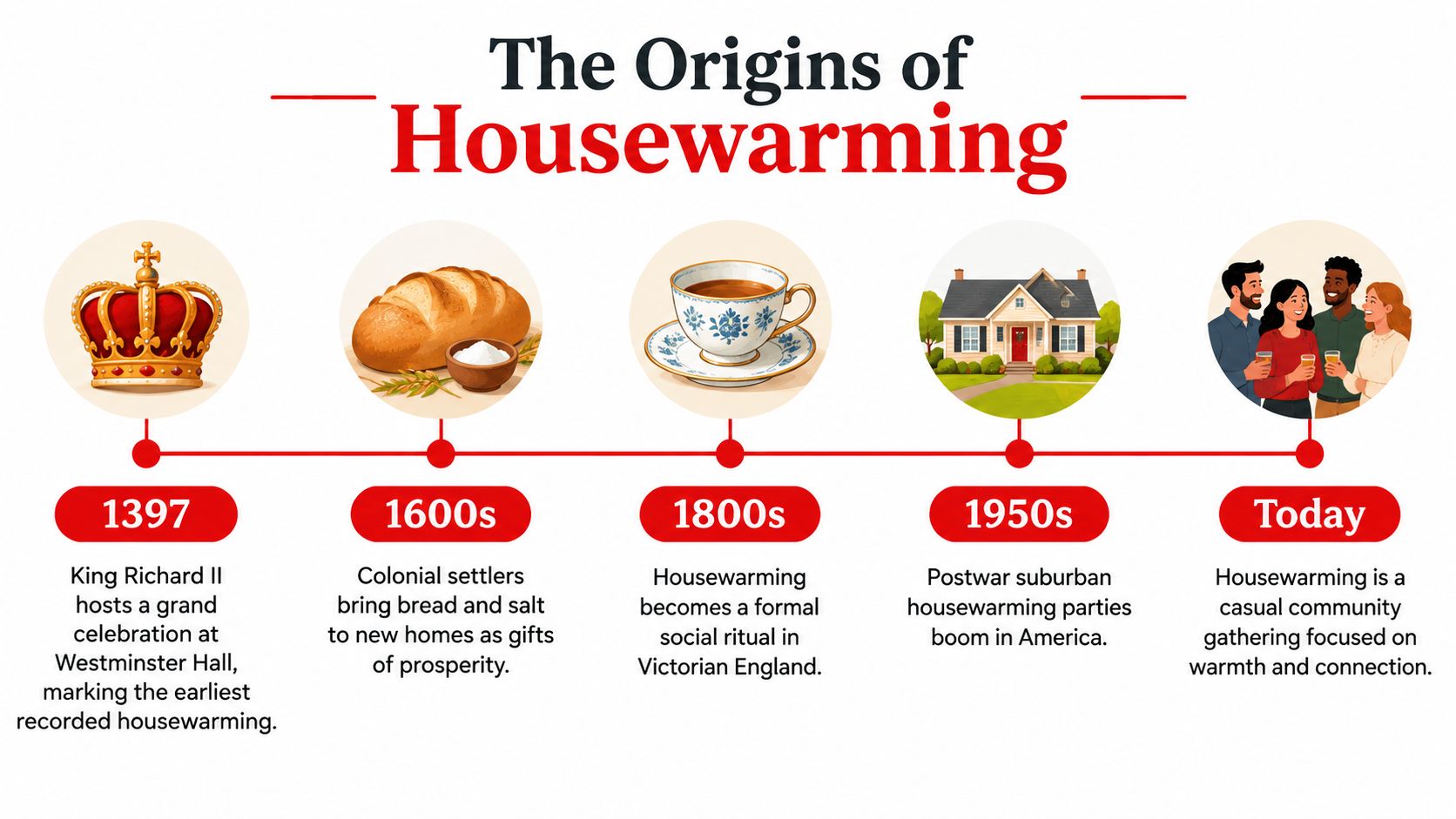
That history explains why modern supplies feel most appropriate when they combine hospitality and presentation. Table linens, drinkware, serving accessories, candles, gift packaging, and small decorative pieces all continue the older practice of helping establish a welcoming household. The object may be prettier now, but the underlying gesture remains practical: make the home ready for people.
Korea offers a parallel example through jipturi, a housewarming custom in which relatives and acquaintances visit a new home and share food. Documented gifts have included matches, candles, synthetic detergent, and noodles. The details vary by culture, but the pattern stays recognizable.
The three-part tradition
A housewarming still brings together:
- Welcoming guests, through a comfortable and inviting setting.
- Sharing food and drink, through a table or buffet that encourages conversation.
- Giving useful or symbolic household gifts, through objects that help the home feel established.
That's why a reusable canvas bottle bag can be more meaningful than a disposable gift wrap, and why refined cocktail napkins can function as both table décor and a practical hostess gift. They support the party in the moment, then continue working through dinners, drinks, and casual visits.
The best housewarming supplies honor that dual purpose. They should look considered without becoming precious, and they should help the recipient host again rather than commemorate one move.
The Five Core Categories Every Housewarming Needs
A useful shopping plan needs clear shelves. Sort every potential purchase into tableware, bar and drinkware, décor, gifts, or kid-friendly options, then remove anything that doesn't serve one of those jobs.
The category split reflects how people host at home. A 2024 consumer report cited by Grand View Research's party supplies market report found that 67% of consumers prepared food themselves, while 31% usually or always purchased drinkware for home gatherings and 26% purchased décor. Those figures make serving and beverage supplies more than decorative afterthoughts.
Tableware comes first
Start with plates, forks, knives, serving spoons, bowls, and napkins. If the menu includes a buffet, add trays or smaller serving vessels that allow food to move efficiently from kitchen to table.
Hemstitch cocktail napkins deserve special attention here. They bring texture and polish to a place setting, but they're also easy to reuse for future drinks, desserts, and informal dinners. Choose a color or monogram that works with the homeowner's existing style instead of matching one temporary theme.
Bar and drinkware create flow
Give beverages their own zone. Glasses, a pitcher, a bottle opener, cocktail tools, a water carafe, and a tray can turn a corner of the kitchen or dining room into a self-serve station.
You don't need a professional bar. You need enough clarity that guests know where to pour, refill, and place used glasses.
Décor should frame the home
Use candles, flowers, a small banner, or one visual centerpiece to add occasion without competing with the architecture. A new home already has plenty to look at, especially if guests are seeing it for the first time.
Gifts should outlast the party
The most useful host gifts are easy to store and easy to bring into everyday life. Consider a witty bottle bag, a candle, a French-milled soap bundle, or a serving accessory that feels personal without demanding a particular decorating style.
Kid-friendly options need function
For a mixed-age gathering, add non-breakable cups, simple activity kits, or a game that can live away from the food table. Keep the setup flexible so children can participate without putting delicate glassware or hot dishes at risk.
For more ideas that make favors feel useful rather than disposable, browse these unique party favor ideas for adults.
Quantity Guidelines, Temperature Rules, and a Printable Checklist
Buy supplies according to the way guests will use them, not according to an idealized tablescape. A seated meal needs more complete place settings. A relaxed open house needs enough plates, napkins, glasses, and serving tools to support movement and replenishment.
Use this planning table as a starting point, then adjust for the menu and the home's storage space.
| Category | Per-Guest Rule | For 12 Guests | Notes |
|---|---|---|---|
| Plates | One main plate, plus extras for a buffet | 12 main plates | Add smaller plates if dessert or multiple courses are planned |
| Forks and knives | One of each, plus serving utensils | 12 forks and 12 knives | Keep serving spoons with each dish |
| Cocktail napkins | Two per guest for drinks and small bites | 24 napkins | Reusable hemstitch napkins reduce reliance on paper |
| Drinkware | One drinking glass, plus backup pieces | 12 glasses and a few spares | Separate water from wine or cocktails when possible |
| Serving pieces | One vessel per major dish | Based on the menu | Small platters make replenishment easier |
| Beverage station | One pitcher or dispenser per main drink | At least one water vessel and one featured drink vessel | Add a tray to contain drips |
Food safety is not optional. Keep hot foods at or above 140°F (60°C) and cold foods at or below 40°F (4°C), as explained in the FDA's safe buffet guidance. Use an insulated carrier, chafing dish, slow cooker, food-grade ice tray, nested serving bowl, and probe thermometer where appropriate.
For outdoor or warm-room events above 90°F (32°C), the allowable unrefrigerated holding period falls from two hours to one hour. Label dishes with setup times, use smaller platters, and replace depleted dishes with refrigerated or heated backups rather than repeatedly topping up food in place.
Napkin placement without the fuss
Emily Post gives formal settings three accepted napkin locations: on top of the charger, in the plate's place when there's no charger, or to the left of the forks, as outlined in its formal place-setting guidance. For a relaxed table, fold the napkin or place it in a ring to the left of the forks or on the center of the dinner plate, following this informal place-setting advice.
Utensils should sit in order of use from the outside inward, with knife blades facing the plate. The simplest rule is still the most useful: place the napkin to the left of the fork or on the plate, as described in Emily Post's basic table-setting rules.
A polished shortcut: Fold the napkin once, place it where guests can find it, and let the fabric provide the visual finish.
Budget Tiers and Smart DIY Substitutions
A housewarming budget should prioritize repeat use over visual excess. A beautiful table doesn't require every category to be purchased new, and a modest setup can still feel generous when one or two details carry the personality.
A 2026 survey reported that 46% of consumers would be inspired to host more often by budget-friendly ideas, while 67% favored DIY and affordable options, according to The Shelby Report's coverage of the IHA survey. That supports a smart approach: spend on the pieces guests touch and reuse, then improvise the details that don't need to last.
Lean starter kit under $75
Put the money into basic plates, napkins, one table covering, a simple drink setup, and a small candle gift. A handwritten menu card can replace printed place cards, and a clean glass pitcher can replace a complete bar set.
Skip elaborate favors. One thoughtful bottle presentation or a small host gift will feel more intentional than a collection of disposable trinkets.
Polished mid-range setup around $150 to $200
This is the sweet spot for a host who wants a table that looks finished without buying a full entertaining collection. Choose reusable plates, glass drinkware, a small floral arrangement, a charcuterie board, and one decorative detail such as a themed banner.
Spend on napkins and serving pieces first. These create the strongest visual improvement while remaining useful for future dinners and drinks.
Generous gifting-and-hosting bundle at $300 or more
A larger budget can support premium ceramic tableware, a full glassware set, custom décor, a catering platter, a gourmet gift basket, and a decorative serving tray. Keep the composition edited. More pieces don't automatically create more warmth.
For a gift that looks considered before it's opened, use these creative gift-wrapping ideas to make the presentation part of the experience.
The best splurge is usually something the homeowner will reach for repeatedly. A reusable napkin, a well-made tray, or a canvas bottle bag earns more value than a one-night decoration that must be stored afterward.
The Low-Cleanup Setup That Beats a Pinterest Tablescape
A perfectly styled party that leaves the host with a kitchen full of sticky glasses is not a successful party. Cleanup was the biggest at-home entertaining challenge for 31% of respondents in a 2026 International Housewares Association survey, ahead of preparing everything simultaneously at 22%, cooking at 15%, planning at 9%, and keeping food warm at 7%, as reported by HFN's survey coverage.

Treat cleanup as a design constraint from the beginning. Washable hemstitch cocktail napkins look more refined than disposable paper, and they can go straight into a laundry basket after the gathering. Use trays beneath bottles, small bowls for olives or garnishes, and compact serving vessels that catch crumbs before they travel across the table.
Build two clear traffic zones
Put drinks away from the food. Guests naturally gather around the place where they need to make decisions, so separating the stations prevents one crowded counter from becoming the center of every conversation.
At the food table, serve smaller portions and replenish from the kitchen. That approach keeps dishes looking fresh while limiting temperature drift and reducing the amount of food exposed at once.
Make the ending easy
Place a discreet collection point near the kitchen for used glassware, bottles, recycling, and leftovers. Ask one trusted friend to help gather items during the final stretch, then pack remaining food before guests leave.
The better tablescape is the one you can clear without resentment.
A simple setup also gives the new home room to speak for itself. The goal isn't to create a photographically perfect scene. It's to help guests relax, find what they need, and leave the host with enough energy to enjoy the first quiet evening in the new space.
Shop the Look for Jolitee Bundles for Hosting and Gifting
A good housewarming gift can do double duty. It can arrive in the host's hands as a thoughtful present, then move directly onto the bar cart or dining table as part of the gathering.
The wine-night welcome
Pair a bottle of wine with a reusable canvas bottle bag. Choose witty or destination-inspired artwork when the recipient enjoys humor, or select an elegant design for a more classic home. Add hemstitch cocktail napkins so the bottle arrives ready for the first pour.
The polished cocktail corner
Build the table around hemstitch cocktail napkins, a bottle opener, a small tray, and a pitcher for water or a featured drink. Fold the napkins beside the glassware for an informal gathering, or center them on each plate when the party has a more finished dinner-party mood.
This combination works particularly well for a host who already owns the basics but needs the table to feel intentional. The napkins bring texture, while the bar accessories make the drink station easier to use.
The practical hostess gift
For a recipient who appreciates useful details, choose from Jolitee's entertaining accessories and gifts. A candle, French-milled soap bundle, small hand towel, or bottle bag feels personal without requiring knowledge of the entire home's décor.
For additional inspiration, the guide to top gifts for new homeowners keeps the focus on gifts that fit naturally into everyday life.
The family-friendly welcome
A new home with children needs a slightly softer setup. Pair non-breakable cups and a simple activity with a plush get-well teddy bear or another cheerful small gift for a young family member. Keep delicate napkins and glassware on the adult table, then create a separate low-pressure spot where children can snack and play.
The point of a bundle isn't to make every item match. It's to create a useful little story: something to carry the bottle, something to finish the table, and something that helps the new home feel lived in.
Frequently Asked Questions and a Soft Send-Off
How far in advance should I buy housewarming party supplies?
Buy reusable textiles, serving pieces, bottle bags, and gifts before the final week. Leave fresh flowers, chilled food, and any personalized finishing touches closer to the gathering, but don't make the host manage every decision on the day.
What supplies work best when children are attending?
Choose non-breakable cups, washable napkins, easy-to-hold snacks, and a simple activity away from hot food and glassware. A separate kid-friendly zone keeps the main table calmer without making children feel excluded.
How can a hostess gift become part of the table décor?
Bring wine in a canvas bottle bag and place it beside the beverage station, or fold hemstitch cocktail napkins directly onto the plates. The gift becomes useful immediately instead of waiting in a separate package.
What should I prioritize if my budget is tight?
Buy reusable napkins, one reliable serving piece, and a simple bottle presentation before decorative extras. Those choices improve the party now and remain useful for the next dinner, drink, or holiday gathering.
A housewarming doesn't need to look extravagant to feel memorable. It needs a welcoming drink, food served safely, a table with a little personality, and gifts that help the new home host many more good evenings.
Jolitee offers reusable canvas bottle bags, hemstitch cocktail napkins, and practical entertaining gifts that bring polish to a housewarming without making it feel overproduced. Visit Jolitee to browse gift-ready details for the table, bar cart, and new home, then explore the Eats & Sips inspiration for your next gathering.