

Heart Pillow After Surgery: Comfort & Recovery Guide
When someone you love is heading into heart surgery, the urge to help can feel almost physical. You want to send something that says, “I'm here,” but you also want it to be useful once the hospital flowers fade and the work of recovery begins at home.
That's where a heart pillow after surgery often enters the conversation. It's practical, familiar, and symbolic. It can be hugged during hard moments, kept close in the car, and tucked beside a resting body like a small promise of care.
The tricky part is that caregivers often get mixed messages. Patient education usually explains how to use the pillow, while some independent commentary argues there's no evidence it improves healing, pain, or complications after heart surgery, which leaves families wondering whether it's necessary or provides comfort (Encompass Health's overview of heart pillow use).
A Gift of Comfort for the Road to Recovery
Individuals shopping for recovery gifts aren't trying to play clinician. They're trying to solve a more human problem. They want to bring relief to a moment that feels scary, tender, and hard to fix with words alone.
A heart pillow works because it lives in that space between utility and affection. It isn't grand. It isn't flashy. It's a soft thing to hold when the chest feels vulnerable and the day feels long.
Practical rule: If a gift helps with daily discomfort and also makes someone feel cared for, it earns its place in recovery.
For many families, the question isn't whether a pillow will change the medical outcome. The better question is whether it can make ordinary moments feel more manageable. Coughing. Riding home from the hospital. Settling into a chair. Falling asleep after a tiring day.
That's why the best way to think about a heart pillow after surgery is not as a miracle item, but as a hug in pillow form. It offers emotional reassurance and a simple kind of practical support. If you're building out a care package, it fits naturally alongside other thoughtful ideas like the ones in these best get-well gift ideas.
Why this gift resonates
Some gifts entertain. Some decorate. A recovery pillow does something quieter.
- It gives the hands something to do: Holding the pillow can create a sense of steadiness during vulnerable moments.
- It softens the clinical feel of recovery: A comforting object can make home care feel less sterile.
- It keeps your care visible: Long after a text message disappears, the pillow is still there on the bed or chair.
What Exactly Is a Post-Surgery Heart Pillow
A post-surgery heart pillow is a small, firm pillow designed to be held against the chest after open-heart surgery or another procedure involving the sternum. It's less like a sleeping pillow and more like a hand-held support tool.
Patients usually hold it over the breastbone during coughing, deep breathing, or movement. The shape is often heart-like, though some versions are simple rectangles. What matters most is that it's easy to grip and easy to place where support feels helpful.

A familiar item with a mixed evidence base
Heart pillows have become a common part of cardiac recovery culture. A patient-facing explanation from Heart Valve Surgery described them as being given for sternum support, while later independent commentary noted there are “no evidence-based guidelines” for their use and suggested they may be more tradition than proven intervention (Heart Valve Surgery on the post-op pillow tradition).
That doesn't make the pillow meaningless. It just changes how to frame it. A heart pillow after surgery is best understood as a comfort-centered support item, not something to rely on as a clinically validated treatment.
If you're helping a family prepare a home setup, broader recovery equipment can matter too. This overview of a Family Caregiving Kit on medical equipment is useful for thinking through the bigger picture of what may support daily life after discharge.
What it does well
A good heart pillow can serve several quiet purposes at once:
- Chest splinting: It gives the patient something firm to hold against the chest.
- Emotional comfort: It becomes a reassuring object during a stressful recovery stretch.
- Movement confidence: Many people feel calmer standing, shifting, or traveling with something supportive in hand.
A heart pillow often matters because it gives a recovering patient a small sense of control.
How to Use a Heart Pillow for a Smoother Recovery
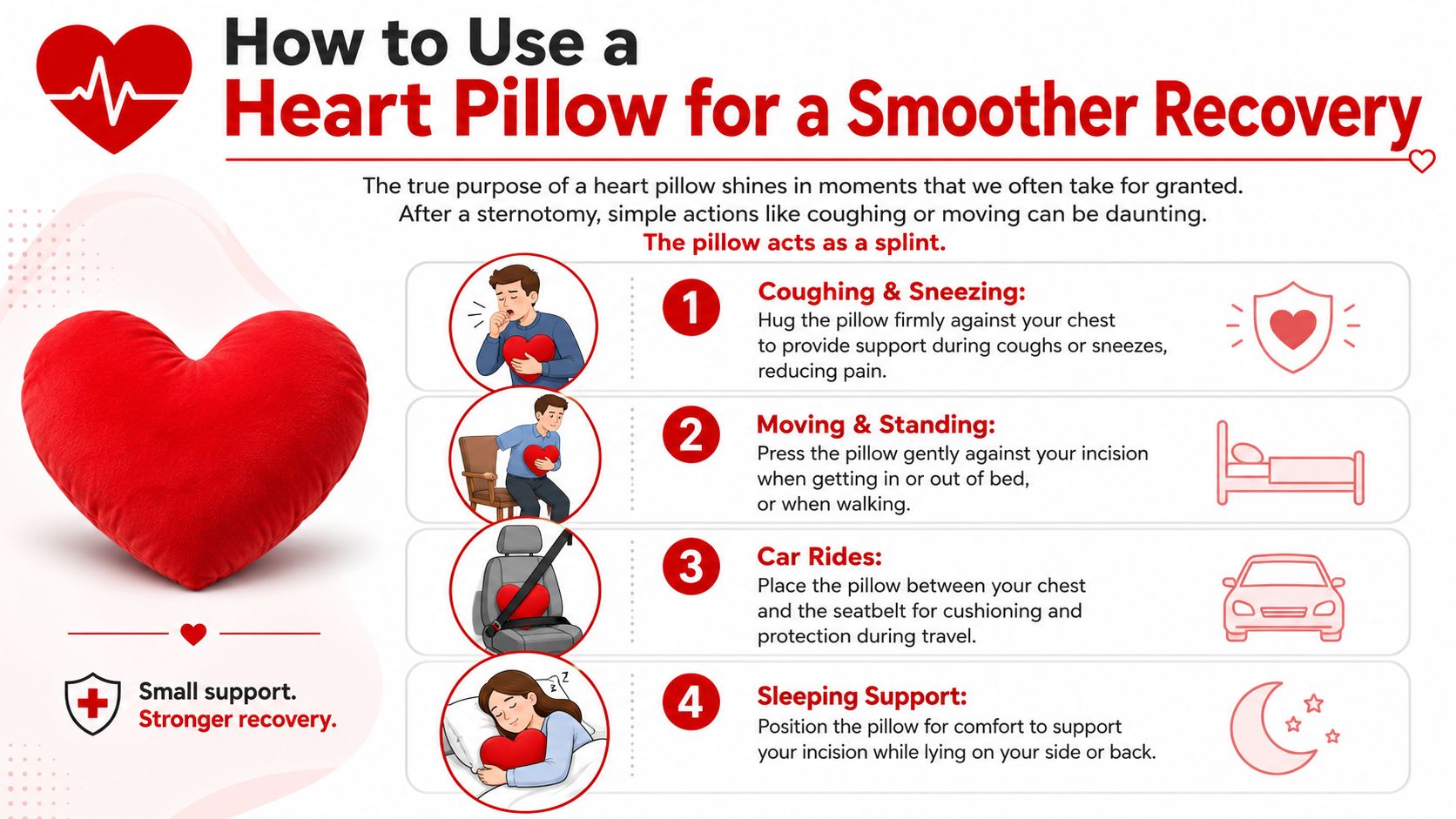
The most important thing to know is this. A heart pillow after surgery is mainly used as a splinting aid. The patient holds it firmly over the chest during moments that strain the sternum.
That matters because coughing after open-heart surgery isn't a tiny event. Genesis Health notes that a cough can create about 60 pounds of pressure against the sternum, which helps explain why chest splinting is so commonly taught in recovery education (Genesis Health on sternal pressure during coughing).
The core technique
Using the pillow is simple, but the timing matters.
- Place it over the center of the chest: Position it where it feels supportive over the healing area.
- Hold it firmly before the movement begins: Don't wait until the cough or shift is already happening.
- Keep steady pressure during the effort: The goal is support, not squeezing as hard as possible.
- Relax once the movement passes: Ease the pressure and reset.
When to use it most
A heart pillow usually earns its keep during ordinary activities that suddenly feel difficult.
- Coughing or sneezing: Hold the pillow snugly against the chest first.
- Deep breathing exercises: Some patients like the extra sense of support while focusing on full breaths.
- Standing up or sitting down: It can help during transitions that engage the upper body.
- Getting in and out of bed: This is often one of the more awkward moments at home.
- Car rides: Many people place it between the chest and seatbelt for cushioning.
Here's a visual guide many caregivers find helpful before discharge:
What helps and what doesn't
Practical expectations matter. The pillow may help someone feel more secure and more willing to cough, take deep breaths, or move carefully. It may also make travel and resting more comfortable.
What it doesn't do well is provide constant stabilization on its own. Because the patient has to hold it in place, support depends on timing, strength, and whether the pillow is close at hand.
Hold the pillow before the cough starts. That's when it's most useful.
If you're caring for someone with another chest-related recovery journey in your family or friend circle, this guide to mastectomy recovery and rehabilitation also offers thoughtful perspective on movement, comfort, and healing support at home.
A quick use guide
| Moment | How to use the pillow | Why it helps |
|---|---|---|
| Coughing | Hold firmly over chest before coughing | Adds supportive counter-pressure |
| Standing | Press gently during the transition | Helps reduce fear of movement |
| Car rides | Place between chest and seatbelt | Adds cushioning |
| Resting | Position for comfort nearby | Keeps support within reach |
Choosing the Perfect Pillow for Comfort and Care
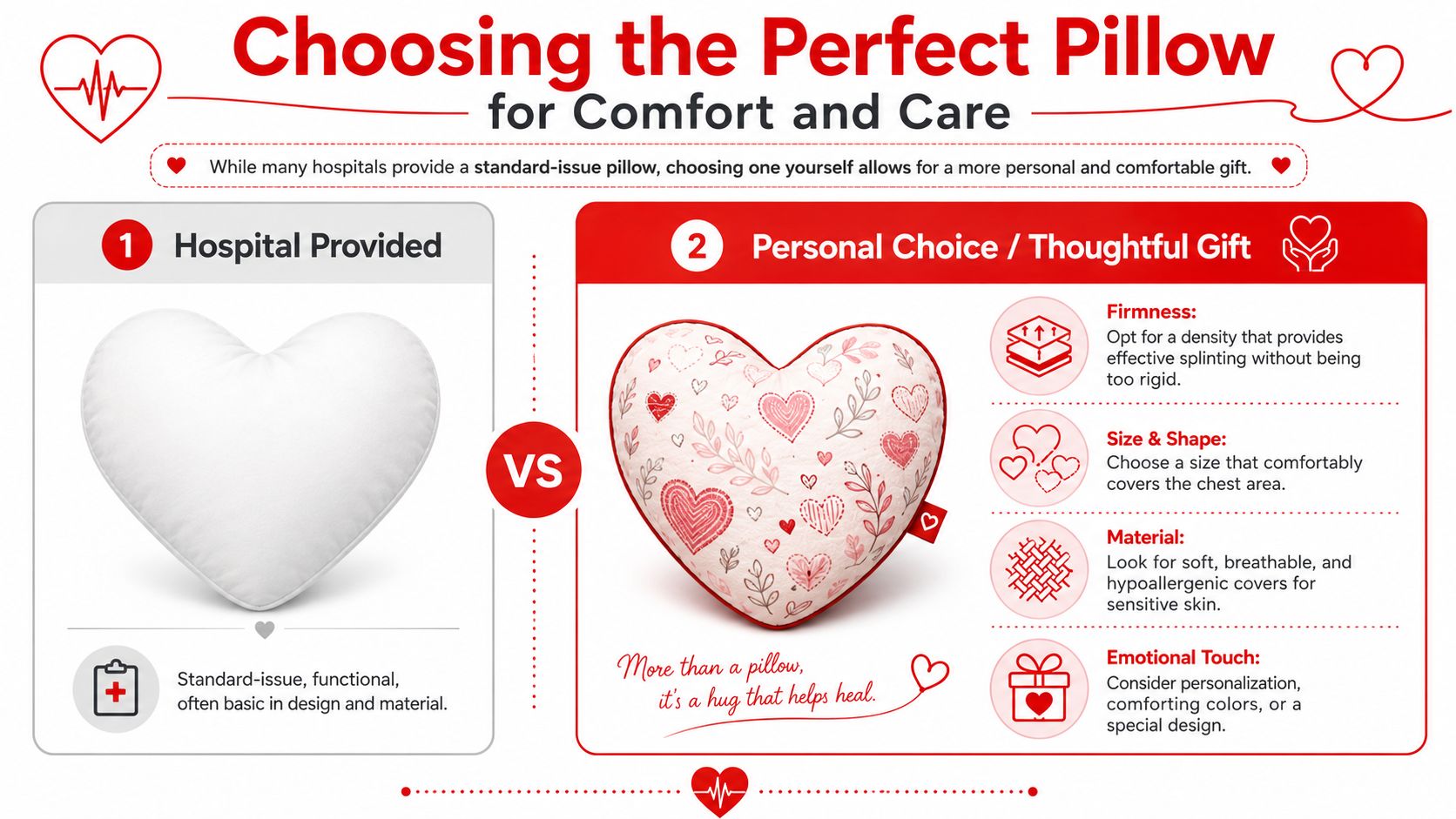
If the hospital provides a basic pillow, that's fine. If you're choosing one yourself, you have the chance to make it more comfortable, more attractive, and more personal.
The pillow's job is functional first. Liv Hospital describes the main purpose as using it as a splinting aid, with the patient holding it firmly over the chest during coughing or movement to reduce pain and limit chest wall motion (Liv Hospital on how the heart pillow is used).
What to look for
A pretty pillow that's too soft won't be nearly as helpful as one that feels right in the hands.
- Firmness matters most: Look for a pillow with enough structure to feel supportive when hugged.
- Size should be manageable: It should cover the chest area comfortably without feeling bulky.
- Shape should be easy to hold: Heart shapes are popular because they naturally tuck into the arms.
- The cover should feel gentle: Soft, breathable, washable fabric is worth prioritizing.
When a personal pillow is better than a standard one
Hospital versions are often utilitarian. They're there to be available, not to feel beautiful. A thoughtfully chosen pillow can improve the day-to-day experience by being softer, cleaner-looking, and more emotionally inviting.
For ideas on how support pillows differ by purpose, DME Superstore's bed support guide can help you think through comfort, positioning, and practical design choices.
A good rule is to skip anything floppy or oversized. If you want to pair the recovery pillow with something that adds warmth without looking clinical, soft companions from a plush gift collection can round out the bedside setup in a way that feels caring rather than medical.
The best recovery pillow is one the patient will actually keep within reach all day.
From a Practical Tool to a Thoughtful Gift
A heart pillow on its own is useful. A heart pillow presented well feels unforgettable.
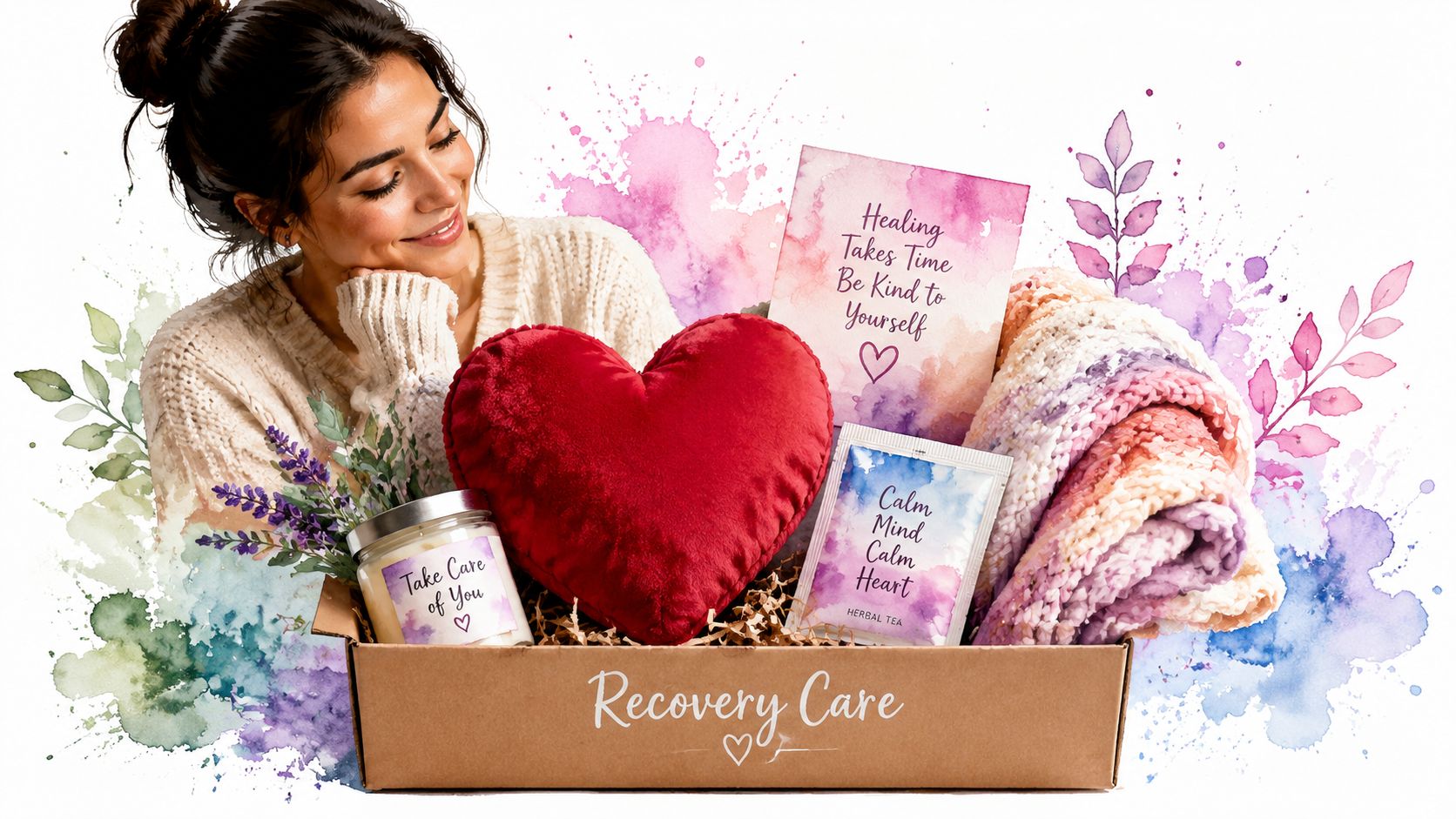
That difference matters. Recovery can feel stark. The room is full of instructions, pill bottles, water cups, and follow-up paperwork. A carefully assembled comfort package softens that environment and reminds the patient they're not going through it alone.
Build a recovery box that feels warm, not clinical
The heart pillow can be the anchor item. Around it, choose objects that support rest, small comforts, and a sense of normalcy.
A care package might include:
- A comforting plush companion: Something soft at the bedside can be surprisingly reassuring during long afternoons of rest.
- Gentle bath or hand care items: French-milled soaps or soothing wash products can make the first week at home feel a little more human.
- Soft napkins or cloths: Elegant cocktail napkins may seem unexpected, but they're handy for tea, medication trays, or a cool glass of water.
- A simple note: A short handwritten message often becomes the item people keep longest.
Shop the look for a comfort-forward gift
If you want one cheerful piece that instantly adds personality to a recovery basket, a Recovery Bear get-well teddy with cast and sling brings a little humor and tenderness to a hard season.
Related reading can help if you're styling the gift rather than just checking a box. A polished presentation, beautiful wrapping, and a few small indulgences can turn a support item into a memorable gesture. It's the difference between handing someone a pillow and giving them a moment of relief.
Caring for the Pillow and Important Safety Notes
Once the pillow is in use, keep it clean and easy to grab. Recovery items tend to travel from bed to chair to car and back again, so washable materials make life easier.
If the cover is removable, wash it regularly. If the pillow itself can be cleaned, make sure it dries fully before it goes back into use. A fresh cover also makes the whole setup feel more inviting.
Keep expectations realistic
A heart pillow after surgery can support comfort. It shouldn't be treated like a replacement for professional medical guidance.
If pain worsens, the incision changes, or movement starts to feel more difficult instead of less, the patient should contact their surgical team or rehabilitation clinician. The pillow belongs beside the care plan, not in place of it.
Safety reminders worth following
- Follow the hospital's instructions: If the surgeon or rehab team gives specific lifting or movement guidance, that comes first.
- Keep the pillow nearby, not buried: It's only helpful if it's easy to reach when needed.
- Don't treat it as proof everything is fine: Comfort can improve while a patient still needs careful medical follow-up.
Frequently Asked Questions About Heart Pillows
Can a regular bed pillow work instead
Yes, in a pinch. But it usually isn't ideal.
Bed pillows are often too large or too soft for targeted support. A firmer, smaller pillow is easier to hold close against the chest during movement or coughing.
Is a heart pillow after surgery medically necessary
Not always. One evidence-based critique says there is no proof heart pillows reduce complications or sternal wound infections, which suggests their clearest validated role is short-term comfort and perceived support rather than a hard clinical outcome (Heart Hugger's evidence critique on heart pillows).
Is it still worth gifting if the hospital already gives one
Yes. Hospital pillows are often basic. A more thoughtfully chosen one can feel softer, look nicer, and become part of a fuller recovery care package rather than just another supply item.
What makes a good gift version
Choose one that's firm enough to hold comfortably, soft against sensitive skin, and easy to wash. If it comes in a calming color or feels more personal than a standard hospital issue, that's a bonus.
If you're putting together a recovery gift that feels warm, polished, and useful, Jolitee offers playful plush, thoughtful get-well pieces, elegant napkins, and giftable comforts that help you care for someone beautifully.