
How to Fold Linen Napkins: A Guide to Elegant Tablescapes
Candles are lit, the glasses are polished, and dinner is almost ready. Then you look at the napkins and realize they're the detail that will either make the table feel finished or slightly unfinished.
That's why hosts keep coming back to linen. A folded cloth napkin does more than hold silverware or mark a place. It signals care. It softens the table. It gives even a simple meal the feeling of occasion.
Napkin folding also has a long pedigree. It became a marker of status in elite dining, and its commercialization was highlighted by the 1890 publication Serviettes and How to Fold Them, which promoted household linens. Earlier napkins could be as large as 35 by 45 inches, which helps explain why folding developed as a practical art as well as a decorative one, as noted in this history of napkin folding.
The Art of the Fold Elevating Your Table with Linen
A folded napkin changes the mood of a table with unexpected speed. Plates and glassware set the structure, but napkins bring personality. They can make a weekday dinner feel polished or make a holiday table feel ceremonial.
Hosts often overcomplicate this. You don't need a sculptural fold every time. What matters is choosing a style that suits the meal, the fabric, and the amount of time you have before the doorbell rings.
Why folded linen still feels special
Linen carries a certain visual confidence. It has body, texture, and enough structure to hold a clean line when it's pressed properly. Even a simple rectangle looks deliberate when the fabric is right.
Practical rule: If the rest of the table is already layered with flowers, candles, menus, or patterned china, keep the napkin fold simpler. The table will look more refined, not less.
There's also a hospitality element that paper can't quite match. A folded cloth napkin tells guests you considered their comfort and the overall experience. That's part of why formal dining continues to treat linen napkins as part of table etiquette and visual presentation.
What elegance actually looks like
Elegant doesn't always mean elaborate. Sometimes the prettiest table includes:
- A flat fold on the plate when the dinnerware already makes a statement
- A pocket fold when you want the silverware to look tidy and intentional
- A loose knot or ringed roll when the meal is relaxed and conversational
The secret is restraint. When you fold linen napkins with purpose, the table looks composed instead of fussy.
Preparing Your Linen for Flawless Folds
A beautiful fold starts before your hands make the first crease. If the napkin is wrinkled, skewed, or slightly damp, the finished shape will look tired almost immediately.
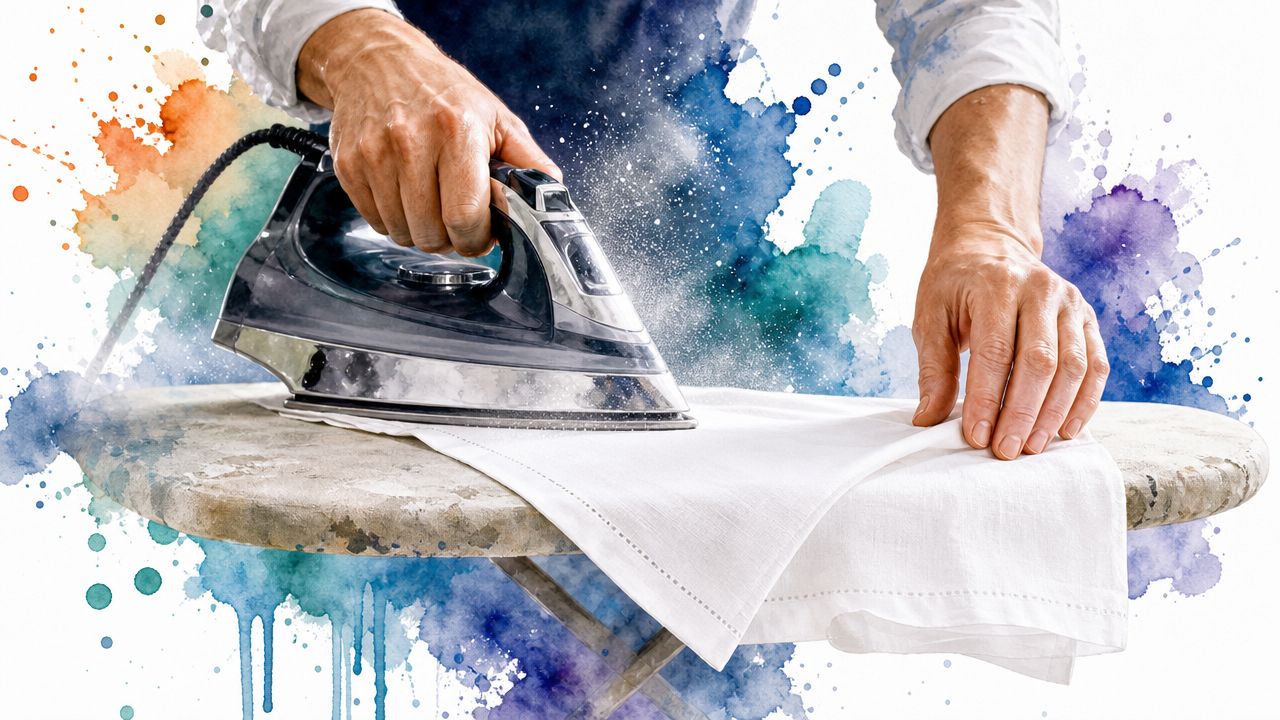
For the best results, start with a fully pressed square napkin laid with its good side facing down. That setup hides hems and decorative edges and keeps the finished fold more symmetrical. It also matters because even small misalignments compound with each fold, as explained in this professional guide to napkin folding basics.
Set up your workspace properly
Don't fold on a cluttered counter or a textured tablecloth. Use a clean, flat surface where you can align corners without fighting bumps or friction.
If your napkins have been stored for a while, press them again before folding. Hosts who want an especially crisp finish for formal dinners sometimes outsource that step. If you're short on time, a service that handles professional ironing on the Gold Coast can be a practical solution before a large gathering.
The prep routine that makes folds look professional
Use this sequence every time:
- Press the napkin fully so the fabric lies flat edge to edge.
- Lay the good side down to keep hems less visible in the final shape.
- Match the corners exactly before making the first crease.
- Smooth after each fold with your palm to set the line cleanly.
- Hide the hem on the final turn if you want a cleaner face-up presentation.
A napkin that's only slightly off at the first fold rarely recovers later.
What usually goes wrong
Most folding frustration comes from three issues:
- Uneven corners because the first fold wasn't squared up
- Soft, collapsing shapes because the linen wasn't fully pressed
- Visible hems or edges because the napkin was oriented the wrong way at the start
This is the part many tutorials skip, yet it's the difference between a napkin that looks restaurant-ready and one that looks handled too much.
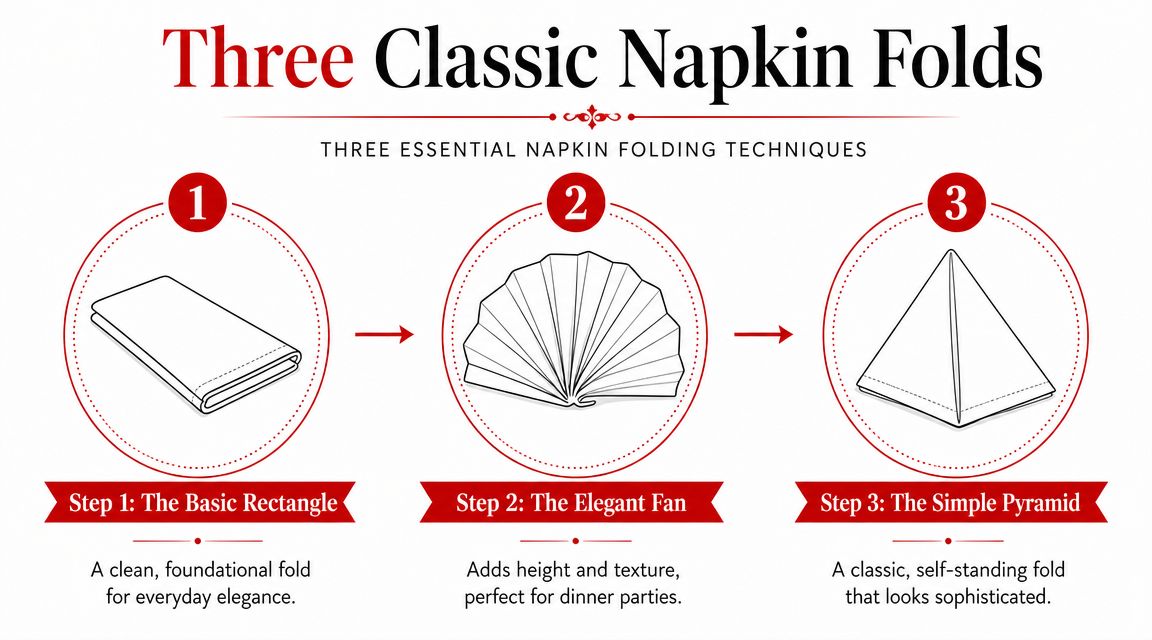
Three Classic Napkin Folds Everyone Should Know
Most hosts don't need a long repertoire. They need a few folds that work repeatedly and look good with different menus, plates, and moods.
This infographic gives a quick visual overview of timeless styles.
The pocket fold for silverware and place cards
The pocket fold earns its place because it solves a styling problem. It keeps flatware together, gives the place setting vertical interest, and works especially well for brunches, showers, and more formal plated dinners.
A practical way to make it:
- Fold the napkin into a smaller square.
- Bring one top layer down diagonally to create the front pocket.
- Turn it over and fold the sides inward to secure the shape.
- Flip it back and insert silverware or a menu card.
Use this when you want the table to feel organized. It's also useful when the place setting needs one compact, self-contained element.
The classic rectangle for understated polish
This is the fold I'd choose for the widest range of occasions. It's crisp, easy to stack or plate, and it doesn't compete with chargers, patterned china, or floral centerpieces.
Fold the napkin in half, then again into a neat rectangle sized to your plate or to the left side of the place setting. Keep the edges aligned and the top surface smooth. That's enough.
A rectangle fold looks especially sharp with hemstitch details because the border stays visible without asking for attention.
For readers who enjoy a more sculptural formal look, this crown fold napkin tutorial is a useful next step after you've mastered the basics.
The knotted fold for a relaxed modern table
The knotted fold feels less traditional and more personal. It suits casual dinners, outdoor meals, and tables where you want linen to soften the formality.
To make it, fold the napkin into a long band, then tie a loose single knot at the center or slightly off-center. Adjust the tails so they drape evenly.
What makes this fold work is restraint. Pull the knot too tight and the linen starts to bunch awkwardly. Leave it slightly loose and it looks easy in the best way.
The knotted fold works best when the napkin itself has attractive texture. The fabric does a lot of the styling for you.
A short demonstration can help if you're folding visually rather than from written instructions.
Choosing the right classic fold
A simple comparison helps:
| Fold | Best for | What it adds |
|---|---|---|
| Place cards, flatware, menus | Order and structure | |
| Rectangle | Nearly any setting | Clean elegance |
| Knotted | Casual chic tables | Softness and personality |
If you want to fold linen napkins with confidence, start with these three. They cover most entertaining situations without requiring complicated technique.
Creative Folds to Impress Your Guests
Once the basics feel easy, decorative folds become more enjoyable because you can judge whether the fabric will cooperate. That matters more than many hosts realize.
The success of a decorative fold often depends on the napkin itself. Linen's natural stiffness and crease retention make it ideal for pockets and fans, but different weaves and blends behave differently. This linen folding guide focused on fabric behavior makes the point clearly.
The standing fan for height and drama
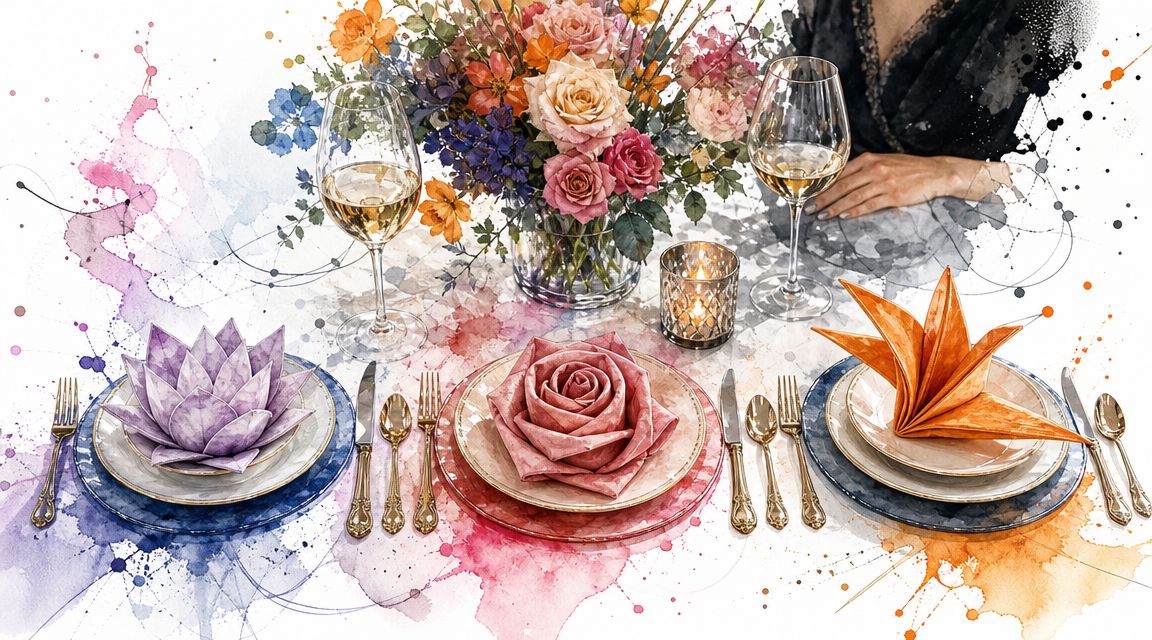
A fan fold adds architecture to the table. It works beautifully for holiday dinners, wedding tables, and any setting where you want the napkin to read as part of the decor rather than just a functional piece.
Choose a napkin with enough body to hold repeated accordion folds. If the linen is too soft, the fan opens unevenly or slumps once placed.
The rose fold for softness
Rose folds are more romantic and less structured. They suit bridal tables, spring lunches, and occasions with layered florals or candlelight.
Softer linen blends often behave better here than very stiff cloth. You want the folds to curl and nest rather than stand at attention.
Match the fold to the cloth
Use this rule of thumb:
- Structured linen or hemstitched styles suit fans, pockets, and standing forms
- Softer blends suit knots, roses, and looser wraps
- Embroidered napkins usually look better in simpler folds so the detail remains visible
If you're planning something seasonal or whimsical, this bunny napkin fold idea is a charming option for spring entertaining.
Decorative folds should look intentional, not labored. If the fabric fights you, switch folds instead of forcing it.
How to Style Your Folded Napkins
A napkin fold can be beautifully made and still look misplaced. Styling is what turns the fold into part of the whole table.
Formal etiquette places the napkin to the left of the place setting with the closed edge left, but many hosts also center a folded napkin on the plate for visual symmetry. The more interesting decision is often whether to fold at all. This napkin styling guide notes that the choice between a complex fold, a simple roll, or a napkin ring depends on formality, setup time, and the look you want.
Where placement changes the mood
Placement affects how guests read the table:
- On the plate feels formal, composed, and photo-ready
- To the left of the forks feels classic and etiquette-driven
- Under a menu card or name card makes the napkin part of the place setting design
If your dinnerware is patterned, placing the napkin to the side keeps the plate visible. If the dishes are simple, placing the napkin on the plate adds needed texture.
When not to fold
Many style guides fall short. Some occasions look better with less handling and less structure.
Skip intricate folds for:
- Outdoor meals where breeze and movement undo crisp edges
- Buffet or high-volume service where speed matters more than precision
- Very casual dinners where a ringed roll or flat fold feels more natural
- Heavily embroidered linens that deserve to be seen, not tucked away
A napkin ring is often the smartest choice, not the compromise. It keeps the linen neat, shortens setup time, and still feels dressed for company.
Shop the Look and Care for Your Collection
A good linen collection should work hard for you. Some napkins need to handle weeknight dinners, some should be giftable, and some are there for the table you only set a few times a year.
For a layered entertaining setup, pair folded dinner linens with hemstitch cocktail napkins for the bar cart, add a canvas wine gift bag for hostess gifting, and browse gift-ready entertaining accessories for the finishing details. If you're building a more personal table, this article on monogrammed linen napkins offers helpful ideas.
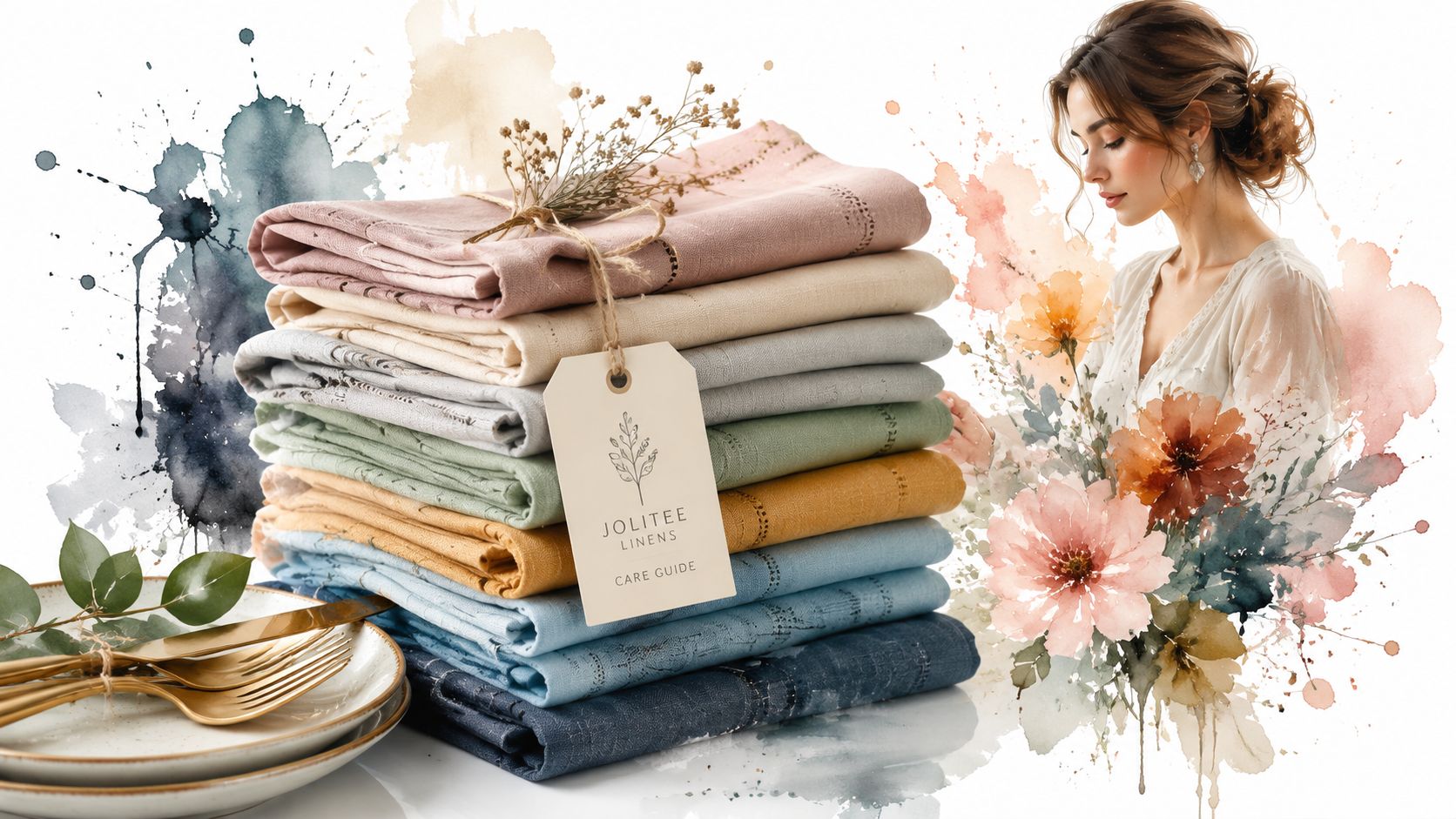
A simple care routine
Linen stays beautiful when you don't let stains sit too long and you store pieces thoughtfully.
- Wash promptly: Food oils and wine are easier to treat before they set.
- Press before storing or before the next event: Freshly pressed napkins are easier to fold cleanly.
- Store flat when possible: Deep creases from tight folding can create extra prep work later.
Build a collection with purpose
A practical collection usually includes neutral napkins for year-round use, a few seasonal or celebratory sets, and smaller cocktail napkins for drinks and passed bites. Jolitee also shares more hosting ideas on the Eats & Sips blog and seasonal inspiration in posts like Spooky Chic Halloween Hosting with Jolitee.
That mix gives you flexibility without overbuying pieces that only work once.
Frequently Asked Questions About Linen Napkins
Hosts usually have the same questions once they start folding regularly. The answers tend to be simple, but they make setup smoother.
FAQ on Linen Napkin Folding
| Question | Answer |
|---|---|
| Should linen napkins always be ironed before folding? | If you want crisp lines, yes. Decorative folds hold better when the napkin is fully pressed and square. |
| What's the easiest fold for beginners? | A rectangle fold is the most forgiving. It suits almost any table and doesn't require structural precision. |
| Which fold is best for holding silverware? | A pocket fold is the most practical option when you want utensils or a place card tucked into the napkin. |
| Are napkin rings better than folding? | Sometimes, yes. For casual meals, outdoor entertaining, or fast setup, a ring can look cleaner and feel more appropriate than an intricate fold. |
| Why do some folds collapse after I set the table? | Usually the napkin wasn't fully pressed, the fabric is too soft for the chosen design, or the fold relies on sharper creases than the cloth can hold. |
A few final hosting notes
If a fold takes too long to reproduce consistently, it's not your everyday fold. Save it for smaller dinners or occasions when the table is the event.
If your napkins have beautiful hemstitching, embroidery, or monograms, let those details show. A simpler fold often looks more luxurious because the fabric itself gets the attention.
The smartest host doesn't choose the fanciest fold. They choose the fold that still looks good when guests actually sit down.
A beautiful table doesn't need to feel intimidating. Browse Jolitee for giftable entertaining pieces, thoughtful accents, and linens that make gathering feel a little more special.