

Employee Appreciation Gift: Meaningful Recognition
Meta description: Build an employee appreciation gift system that feels personal, inclusive, and polished with practical ideas, smart budgeting, and elegant presentation.
You need an employee appreciation gift. Not a rushed mug order, not a bland gift card blast, and not another year of hoping “something nice” will somehow feel meaningful.
That's where many organizations get stuck. The intent is generous, but the execution turns messy fast. Different budgets, different personalities, remote employees, dietary restrictions, and timing issues can make appreciation feel like one more admin task instead of the culture-building opportunity it should be.
The strongest programs treat gifting like a system. They choose the moment, match the gesture to the person, and present it with enough care that the recipient feels seen.
The Art of Thoughtful Employee Gifting
A good employee appreciation gift does two jobs at once. It says thank you in a personal way, and it reinforces the kind of workplace people want to stay in.
That matters more than ever. In 2024, 68% of companies globally increased their employee appreciation and corporate gifting budgets, a sign that recognition has moved beyond holiday routine and into year-round business culture, according to Everki's corporate gifting statistics.
Why generic gifts fall flat
Employees know the difference between a box checked and a message meant for them.
A generic item can still be useful, but it rarely becomes memorable on its own. The strongest gifts connect to a specific moment, contribution, or personal preference. That's why managers who understand different forms of recognition often get better results. If you want a helpful framework, love languages for engagement offers a smart way to think about how people receive appreciation differently.
Practical rule: Start with the person, not the catalog.
Thoughtful gifting also doesn't have to be elaborate. Sometimes the simplest gesture lands best because it feels precise. A handwritten note paired with a small, beautifully presented item can carry more emotional weight than a larger, impersonal package.
What thoughtful looks like in practice
A polished appreciation moment usually includes three elements:
- A clear reason: Tie the gift to a project win, work anniversary, leadership moment, or extra effort.
- A personal signal: Choose something that reflects taste, routine, or lifestyle.
- A graceful presentation: Packaging, timing, and a short note make the gift feel intentional.
For more inspiration on thank-you gifting that feels sincere instead of stiff, browse these best thank you gift ideas.
Defining Your Gifting Goals and Occasions
The biggest mistake teams make is shopping before they decide what the gift is supposed to achieve.
A gifting program works better when each occasion has a purpose. Recognition for a work anniversary should feel different from a thank-you after a demanding launch. A holiday gesture should create warmth and inclusion. A project completion gift should celebrate effort and momentum.
Organizations that operationalize employee gifting as a structured system, embedding personalized gifts within meaningful moments and predictable budget frameworks, observe measurably stronger engagement and retention outcomes compared to ad-hoc annual gestures, as noted by MangoApps on employee gifting best practices.
Match the occasion to the outcome
Use gifting categories with intention, not habit.
| Occasion | Best use | Common mistake |
|---|---|---|
| Work anniversary | Reinforce loyalty and belonging | Sending the same item every year |
| Project completion | Recognize specific effort and teamwork | Waiting too long after the win |
| Promotion or leadership milestone | Mark growth and confidence | Choosing something too casual |
| Holiday season | Build goodwill across the team | Assuming everyone wants the same thing |
| Personal life moment | Show human care and flexibility | Overstepping with overly personal gifts |
The gift itself matters, but the occasion framing matters just as much. A small item delivered at exactly the right moment often feels more sincere than a larger one sent late.
Build a calendar, not a scramble
Most companies don't have a gifting problem. They have a planning problem.
A simple recognition calendar keeps the year from turning into a last-minute rush. Include recurring moments like anniversaries and seasonal appreciation, then leave room for spontaneous recognition when someone goes above and beyond.
A useful structure looks like this:
- Core annual moments such as holidays and service milestones
- Performance moments tied to launches, goals, or standout contributions
- Human moments like life events, recoveries, or personal celebrations
The best gifting programs feel consistent without feeling automated.
When leaders plan this way, the gift becomes part of a culture rhythm instead of an isolated event.
Setting a Realistic and Effective Budget
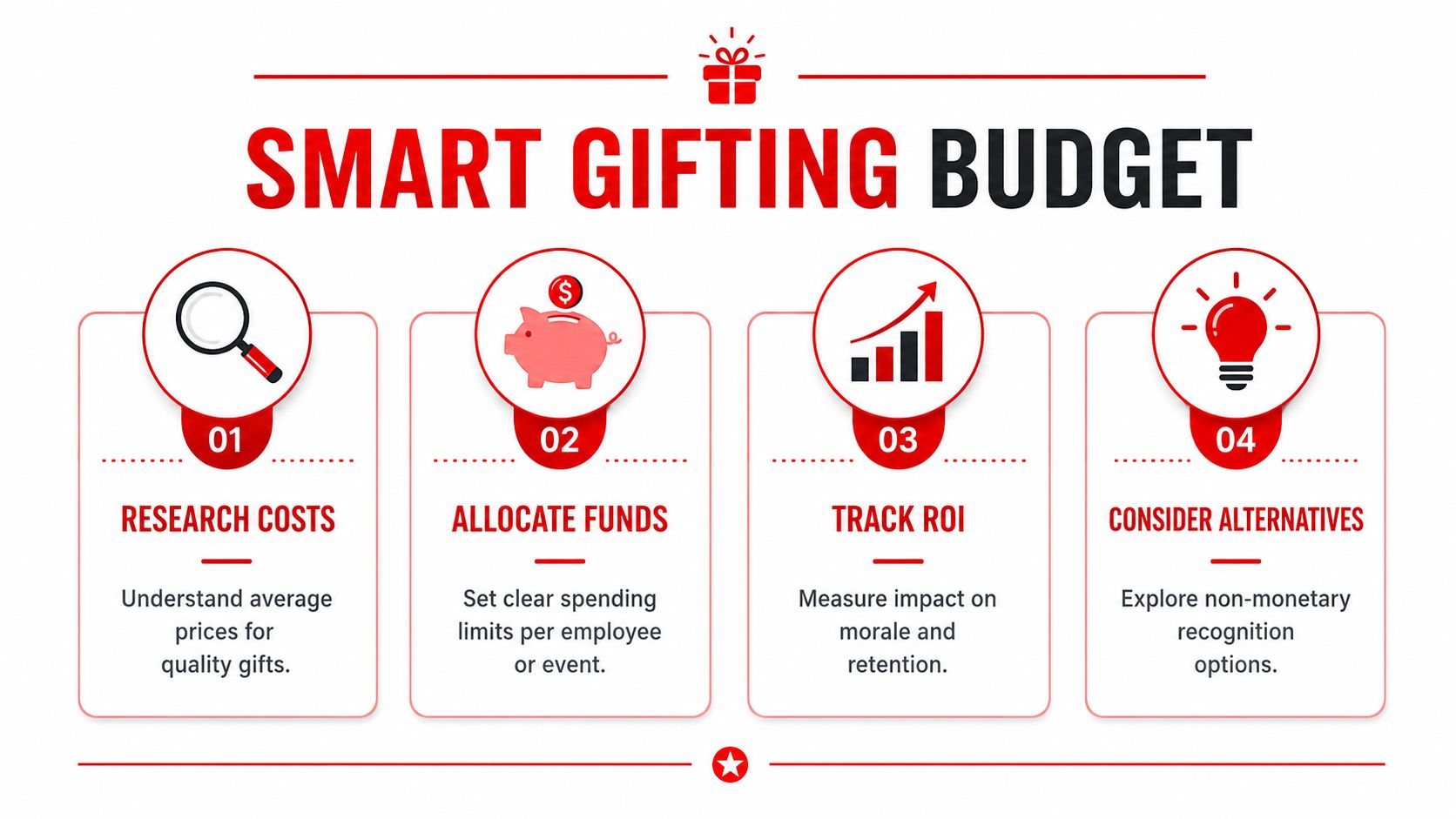
A strong gifting budget isn't about spending high. It's about spending on purpose.
Many managers overspend on a few splashy moments and then have nothing left for the rest of the year. Others go so lean that every gesture feels generic. The smarter approach is to set ranges for different kinds of appreciation and keep the quality high within each one.
Use budget tiers to stay consistent
These tiers help teams plan without turning recognition into guesswork.
| Budget tier | Best for | Good fit |
|---|---|---|
| Under $25 | Quick thanks, team boosts, small milestones | Specialty snacks, a handwritten note, desk-friendly practical items |
| $25 to $75 | Work anniversaries, project wins, holiday gifts | Elevated gift sets, quality entertaining pieces, personalized accessories |
| $75+ | Promotions, major milestones, executive or long-service recognition | Layered gifts, premium presentation, paired experiences or keepsakes |
The point isn't to treat every employee the same on every occasion. The point is to create fairness across comparable moments.
Measure value beyond price
The return on recognition is often larger than managers expect. Employee appreciation gifts can yield a measurable ROI of $5 to $7 for every $1 invested in employee recognition, and 69% of employees said recognition and rewards keep them loyal to their employers, according to Perfect Imprints' employee appreciation gift roundup.
That doesn't mean every gift needs a business case memo. It means budget decisions deserve the same care as any other retention tool.
A practical budgeting method:
- Reserve a baseline amount for every employee so no one gets overlooked.
- Create a milestone fund for larger recognition moments.
- Set aside a flexible portion for manager-led, spontaneous appreciation.
- Track what gets used and what gets ignored, then refine next cycle.
Spend where the message will last, not where the line item looks impressive.
When teams budget this way, they stop asking, “What can we afford?” and start asking, “What will feel meaningful here?”
Personalization and Inclusivity in Gifting
A gift can be generous and still miss the mark.
That usually happens when companies default to one-size-fits-all items without thinking through allergies, cultural norms, family realities, or simple differences in taste. A bottle of wine may delight one employee and alienate another. A spa voucher may feel luxurious to some and unusable to others.
Personal doesn't have to mean intrusive
You don't need a deep personal profile to choose well. You need respectful preference signals.
Start with what's appropriate to know:
- Practical preferences: remote or office, travel habits, desk setup, hosting style
- Gift format preferences: physical item, edible treat, experience, or flexible option
- Comfort considerations: dietary restrictions, fragrance sensitivity, alcohol preferences, and cultural fit
A short optional preference form solves a lot of problems. So does giving a curated choice between two or three options.
A growing trend is shifting toward non-monetary, experience-based, or flexible appreciation, such as extra vacation days, flexible scheduling, or charity donations in the employee's name, because these options avoid exclusivity and align with work-life balance priorities, according to Reward Gateway's employee appreciation gift guide.
A practical inclusivity filter
Before approving any employee appreciation gift, run it through these questions:
-
Can everyone use it comfortably?
If not, offer an alternative. -
Does it assume a lifestyle?
Gifts tied to drinking, beauty rituals, or nightlife can exclude more people than managers realize. -
Does it create work for the recipient?
Oversized items, highly branded objects, or fussy experiences can feel like clutter. -
Can the recipient choose how to enjoy it?
Flexible gifts often feel more respectful than highly specific ones.
For teams looking to make gifts feel more individual without becoming overly personal, these personalized gift ideas for friends offer useful inspiration for customization, initials, and thoughtful presentation.
Inclusive gifting isn't about making everything bland. It's about widening the circle of who gets to feel considered.
What tends to work better
Practical, flexible, and well-presented gifts usually perform better than novelty.
That can mean a useful home item, a beautifully packaged treat with options, or a polished accessory chosen with care. The more diverse your team, the more valuable choice becomes.
Stylish Gift Ideas and Flawless Presentation
A manager remembers the budget. An employee remembers how the gift felt to receive.
That difference is why style matters. A strong employee appreciation gift does more than fill a box. It reflects taste, shows care in the details, and fits into a gifting system your company can repeat without turning every occasion into a scramble. VistaPrint's roundup of employee appreciation gift ideas also points to the same tension. People respond to gifts that are useful, but they remember the ones that feel personal.
Shop the look for elegant appreciation
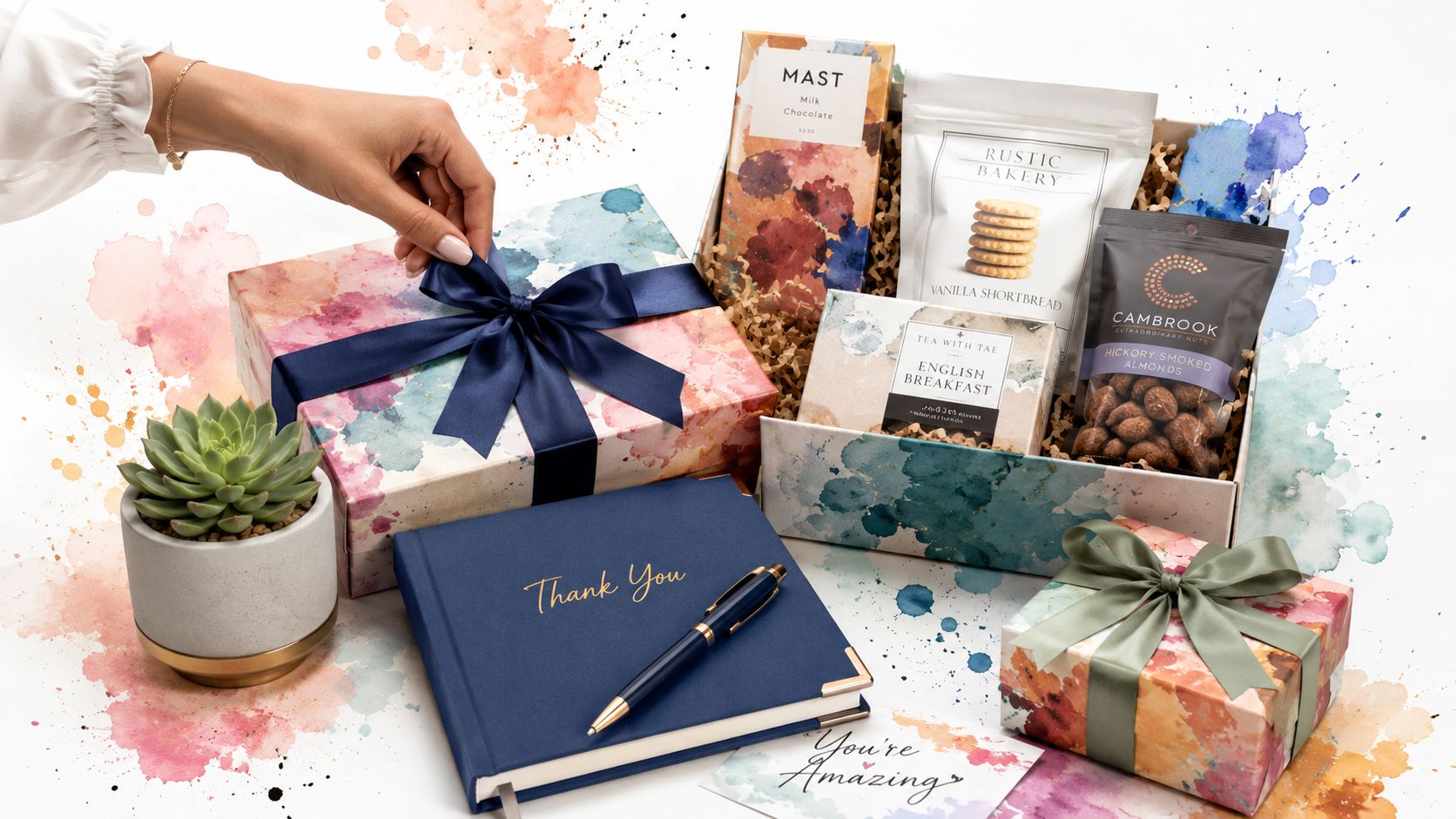
The most reliable gifts sit at the intersection of practicality, polish, and easy delivery. In company gifting programs, I usually see three formats hold up best over time: refined packaging, entertaining pieces people use, and lifestyle items with a clear place in daily life.
For milestone moments, the gift itself can stay simple if the presentation carries some charm. A bottle paired with a reusable canvas wine bag collection feels considered and gift-ready. It also travels well for office handoffs, event tables, or home delivery.
For promotions, housewarmings, or leadership thank-yous, hemstitch cocktail napkins strike a smart balance. They feel special, but they do not create clutter. They also work especially well for recipients who enjoy hosting or appreciate classic home details.
For broader teams, entertaining accessories and gifts give more room to build a consistent style across different occasions. That matters if you are creating a year-round gifting rhythm rather than buying one-off items whenever a reminder pops up.
Presentation details that strengthen the entire gift
Presentation changes the message.
A useful object dropped into generic packaging can feel administrative. The same object, wrapped well and paired with a concise note, feels chosen. That is the difference between checking a box and reinforcing culture.
Use a simple styling formula:
- Start with one strong gift instead of several weak fillers.
- Add a short handwritten note that names the contribution or milestone.
- Choose wrapping that feels finished and is easy to open, store, or reuse.
- Keep company branding restrained unless branded merchandise is an integral part of your culture.
If you want practical ways to refine wrapping without making the process fussy, these creative gift wrapping ideas are useful for small teams and larger rollouts alike.
This short video is helpful if you're refining the look and feel of workplace gifting:
What works and what doesn't
Certain patterns consistently produce better results.
What works
- Useful pieces with a point of view
- Subtle personalization
- Reusable or gift-worthy packaging
- Items that feel good at home, not just at work
- Notes that sound specific and human
What doesn't
- Generic branded clutter
- Gifts that rely on one narrow lifestyle assumption
- Boxes padded with random extras
- Delivery plans with no margin for delays
- Message cards that read like template copy
If you want another perspective on selecting meaningful gifts for employees, that guide pairs well with a presentation-first approach.
Your Simple Employee Gifting Checklist
A gifting system should be easy to repeat. If it depends on one heroic last-minute planner, it won't last.
Use this checklist every time you prepare an employee appreciation gift, whether it's for one person or a full team.
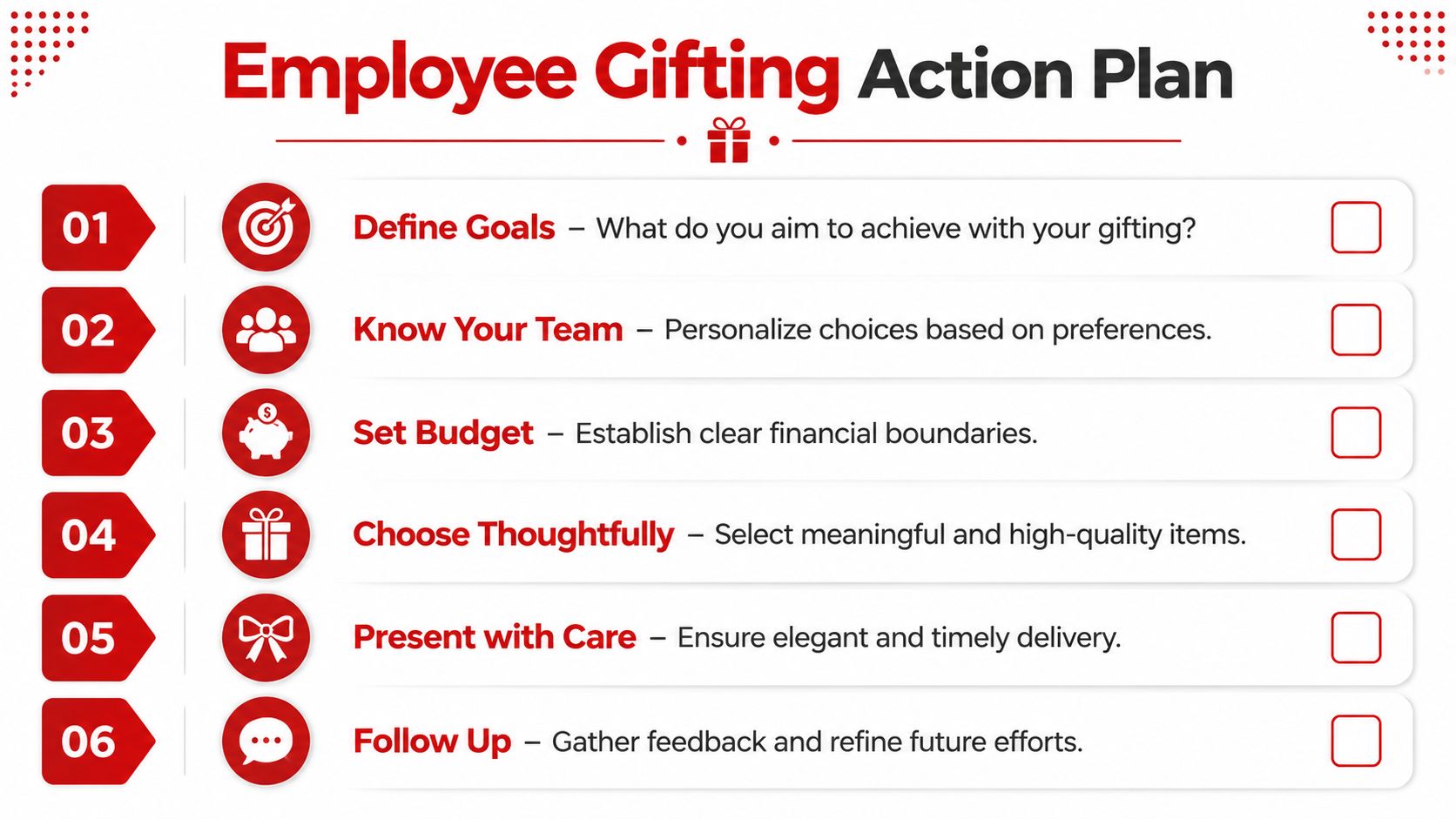
The six-step rhythm
-
Name the moment
Decide why this gift is being given. Appreciation is sharper when it recognizes something specific. -
Choose the audience shape
Is this one person, one department, a hybrid team, or company-wide recognition? That affects both format and delivery. -
Set the budget range
Choose the tier before you shop. That keeps quality decisions calm and consistent. -
Check for fit
Review preferences, restrictions, and whether the gift feels inclusive. -
Style the presentation
Add wrapping, a card, and a delivery plan. Timing is part of the message. - Capture feedback Notice what people use, mention, keep, or ignore. The best gifting systems improve by observation.
Keep a short record of what was sent, when it arrived, and how it landed. That small habit saves money and improves taste over time.
A simple manager's test
Before finalizing, ask:
- Would this feel thoughtful if I received it?
- Can I explain why this gift fits this person or this moment?
- Does the presentation match the appreciation level?
- Will this create delight, not obligation?
If the answer is yes across the board, you're in strong shape.
Conclusion
A great employee appreciation gift does more than mark an occasion. It shows employees that your company notices effort, respects individual preferences, and cares enough to get the details right.
The strongest programs are built as a repeatable system, not a last-minute shopping exercise. That shift changes everything. Budgets become easier to manage, gift choices become more consistent, and the experience feels thoughtful across departments, seniority levels, and work setups.
Style matters too. Presentation, timing, and tone shape how the gift is received, and those details often carry as much meaning as the item itself.
Build the process once, refine it over time, and appreciation stops feeling like admin. It starts becoming part of your company culture.
Frequently Asked Questions
Are employee appreciation gifts taxable?
Tax treatment depends on what you give, how often you give it, and local rules. For anything beyond very small occasional items, it's smart to check with your finance team or tax advisor before launching a program.
How do I include remote or hybrid employees fairly?
Plan delivery from the start. Choose gifts that ship well, avoid highly location-specific experiences unless there's an equivalent option, and make timing part of the experience so remote staff don't feel like an afterthought.
Is a physical gift better than a gift card?
Not always. A physical gift usually feels more memorable when it's chosen well and presented beautifully. A gift card can be better when flexibility matters most. The strongest choice depends on the moment and the person.
What if I don't know employees well enough to personalize gifts?
Use light, respectful preference gathering. An optional survey, manager input, or a curated choice model works well. You don't need intimate details. You need enough information to avoid obvious mismatches.
What's the most common employee gifting mistake?
Waiting too long and choosing something generic. Rushed gifting often leads to bland items, weak notes, and poor delivery timing.
If you're ready to turn appreciation into something stylish, easy, and memorable, browse Jolitee for playful wine gift bags, elegant hemstitch cocktail napkins, and ready-to-gift accessories that make every thank-you feel beautifully finished.