

Host a Magical Child Tea Party: Your Step-by-Step Guide
A child tea party often starts with one sweet idea and quickly turns into a swirl of questions. What will they eat? How fancy should it be? Do you need tiny china cups, flower garlands, and a bakery case of desserts to make it feel special?
You don't.
The most memorable parties usually come from a few thoughtful details, a calm plan, and enough room for children to play, pretend, and feel celebrated. That's why a tea party works so well. It feels timeless, a little dressy, and wonderfully imaginative without requiring a huge production.
Children already know how to step into make-believe with surprising ease. If you've been reading about understanding child development through play, you've probably seen how pretend rituals like pouring, serving, and hosting can support social confidence and creativity. A tea party gives that instinct a lovely frame.
Maybe you're planning a birthday. Maybe your child asked to invite a few friends and their favorite stuffed animals for “something fancy.” Maybe you want an afternoon that feels more magical than another pizza-and-cupcakes gathering. Whatever brought you here, the good news is the same. You can host a child tea party that feels polished, warm, and easy to manage.
Think less perfection, more atmosphere.
A pretty tablecloth, soft colors, bite-size treats, and one or two charming activities can carry the whole event. The children won't remember whether every sandwich matched the napkins. They'll remember sipping from tiny cups, wearing dress-up pearls, and laughing with friends around a table that felt made just for them.
Introduction
A child tea party has a way of making ordinary moments feel important. The table is smaller, the voices are higher, and the sense of occasion is somehow bigger. Children sit up straighter, speak a little more carefully, and delight in every tiny detail.
That's part of the charm. Tea parties invite children to practice hosting, sharing, and imaginative play without feeling like they're being taught anything at all. One child pours. Another offers a plate of strawberries. Someone introduces a teddy bear as an honored guest. The whole scene feels playful and surprisingly graceful.
A successful party for children doesn't need to impress the internet. It only needs to make the guests feel welcomed and included.
If you're worried that “elegant” means stressful, let that idea go early. The prettiest child tea party setups are often the simplest ones. A few flowers in a jar, dainty food served in small portions, and a theme your child loves will do far more than a table packed with overcomplicated décor.
There's also something wonderfully flexible about this kind of party. You can host it indoors at the dining table, outside under a tree, or even on a picnic blanket with a teapot and a basket of treats. It works for birthdays, playdates, school breaks, or a special afternoon with cousins.
What makes it feel special
A child tea party stands out because it turns familiar things into ceremony.
- Small portions feel fancy when sandwiches are cut into hearts or triangles.
- Simple drinks feel festive when poured from a teapot.
- Basic party games feel new when they match the tea-time mood.
- Everyday manners feel playful when children get to “host” each other.
That's why this kind of party is so forgiving. You're not trying to build a spectacle. You're creating a gentle, beautiful experience that children can step into with delight.
The Art of Planning Your Tea Party
The easiest way to keep a child tea party stress-free is to make decisions in stages. When you spread the work out, everything feels lighter and more enjoyable.
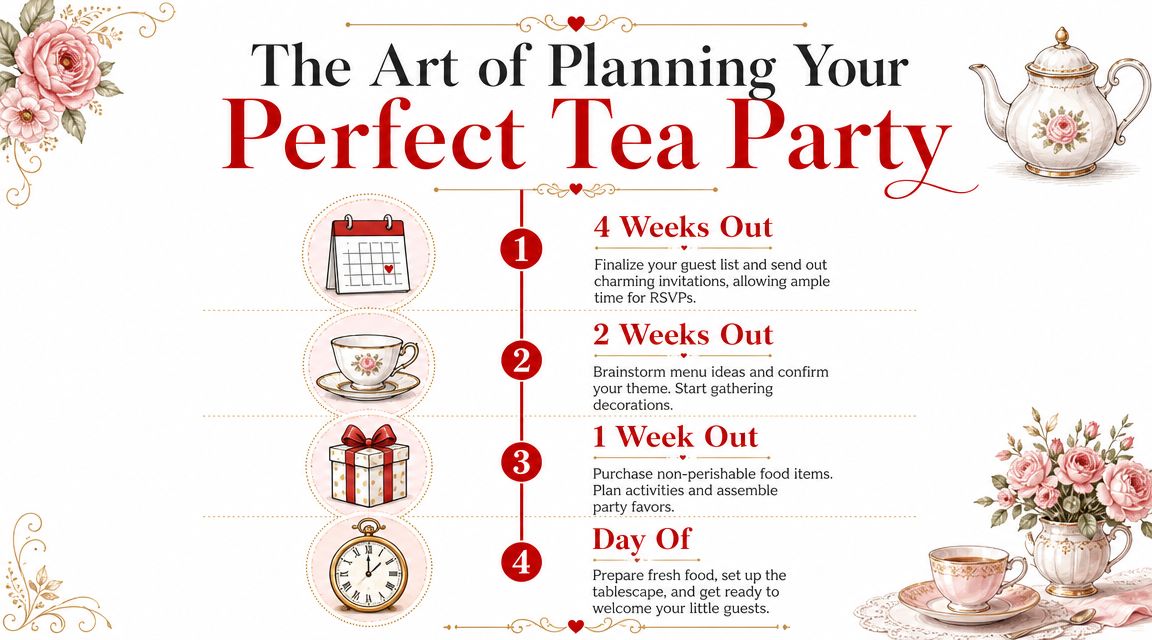
A simple planning rhythm helps. If you like checklists, this is the moment for one. If you don't, think of it as a series of small choices instead of one giant event.
A timeline that keeps things calm
Here's a practical way to pace your prep:
-
Four weeks out
Choose the date, make the guest list, and decide whether the party will be indoors or outdoors. -
Two weeks out
Set the theme, sketch the menu, and gather decorations you already own. -
One week out
Buy shelf-stable items, organize activities, and prep favors or take-home treats. -
Day of
Set the table, prepare fresh food, chill drinks, and leave yourself time to get dressed before guests arrive.
If you enjoy hosting and want a broader entertaining framework, this guide on how to host a party is a useful companion for pacing the details.
Choose a theme your child can help shape
The best themes are specific enough to guide the look of the party, but simple enough to execute without stress. Ask your child what kind of world they want the table to feel like.
A few ideas that work beautifully:
| Theme | Look | Easy activity |
|---|---|---|
| Secret Garden | Florals, pastel ribbons, flower crowns | Decorate paper butterflies |
| Teddy Bear Tea | Plush friends at each seat, gingham, soft colors | Introduce each stuffed guest |
| Mad Hatter | Mismatched cups, bright accents, playful signs | Silly hat parade |
| Royal Tea | Crowns, ribbon wands, polished place cards | Practice royal greetings |
A theme should help you edit. Once you choose one, it becomes easier to decide what belongs and what doesn't.
Practical rule: If a decoration doesn't support the theme or make serving easier, skip it.
Keep the guest list manageable
Parents often get stuck here. They want the party to feel generous, but they also want the birthday child to enjoy it instead of getting overwhelmed.
A smaller guest list usually creates a better rhythm for a seated tea party. Fewer children means easier conversation, less noise at the table, and more space for each child to participate. If your child is shy, this matters even more. A tea party shines when it feels intimate and welcoming, not crowded.
If your child wants to invite “everyone,” consider one of these compromises:
- A tea party plus open play
- Two short seatings
- A best-friends tea table within a larger party
That approach preserves the charm without making you feel like you're catering a banquet.
Sending Whimsical Invitations
Invitations set the tone before the first cupcake appears. They tell guests whether this child tea party will feel garden-inspired, playful, storybook, or dressy. They also implicitly answer the questions parents will have.
For that reason, clarity matters just as much as charm. A lovely invitation should never leave someone guessing about the basics.
What to include
Make sure every invitation includes:
- Date and day
- Start and end time
- Location
- Theme or dress suggestion
- RSVP details
- Any allergy or dietary note request
If children should bring a doll, teddy bear, or dress-up accessory, say so directly. If parents are welcome to stay, mention that too. It saves awkward follow-up texts later.
Ideas that feel charming but easy
Paper invitations can be simple and still feel special. A floral card tied with ribbon works beautifully for a garden tea. For a royal theme, roll the invite like a tiny scroll. For a whimsical party, use playful wording and watercolor illustrations.
Digital invitations can carry just as much magic when the design matches the mood. Use soft florals, teacup motifs, or storybook lettering. Add a line like “Please join us for tea, treats, and a touch of make-believe” to make the event feel distinct from a standard birthday invite.
A few wording examples can help:
- Garden theme: “Join us for an afternoon of tea, flowers, and sweet treats.”
- Teddy bear theme: “Bring your favorite furry friend for a cozy tea party.”
- Royal theme: “Little guests are invited to dress in their finest party attire.”
One detail parents appreciate
State the party length clearly.
A child tea party is usually nicest when it has a defined beginning and ending. Parents appreciate knowing whether they're dropping off, staying nearby, or planning around another event. Children also do better when the celebration ends while everyone is still cheerful.
Crafting a Delightful Kid-Friendly Menu
The best child tea party menu looks elegant but eats easily. Children don't want towering pastries they can't manage. They want small, appealing bites they can pick up confidently without turning the whole afternoon into a laundry emergency.
That's why miniature food works so well here. It feels fancy to them and practical to you.
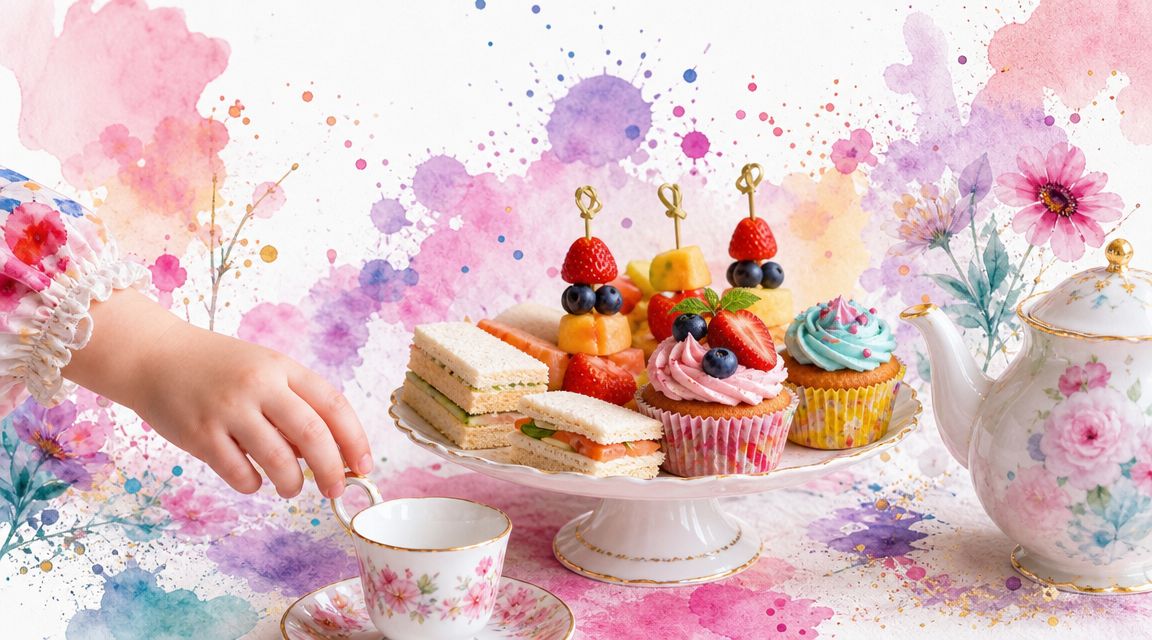
Build the menu in three parts
A balanced tea table usually includes a little savory, a little sweet, and something fresh.
Savory ideas children actually eat
Start with foods that are familiar, then give them tea-party styling.
- Cucumber and cream cheese sandwiches cut into small triangles
- Turkey and cheese pinwheels
- Mini croissants with mild fillings
- Cheese cubes and crackers
- Butter sandwiches with jam for a softer, old-fashioned touch
Keep flavors gentle. This isn't the moment for bold spreads or complicated combinations.
Sweet treats that feel festive
You don't need a dessert buffet. Two sweet choices are plenty if they're pretty and easy to serve.
Consider:
- Mini cupcakes
- Shortbread cookies
- Petit fours or cake squares
- Jam tarts
- Sugar cookies in teacup or flower shapes
One decorated item goes a long way. If the cupcakes have swirled frosting or the cookies match the theme, the table already feels celebratory.
Fruit that looks party-ready
Fresh fruit adds color and gives children something refreshing between sweets.
Try serving:
- Strawberries with stems removed
- Grapes in small bunches
- Melon stars cut with a cookie cutter
- Berry cups
- Fruit wands on short skewers
What to pour in the teapot
Parents often hesitate. If you're serving a tea-style drink, safety comes first.
Tea-party specialists recommend real ceramic or china teaware for an authentic feel, and note that demitasse cups are an especially child-friendly size because they're easier for small hands to manage. They also warn that any tea should be cooled substantially before serving because children have lower heat tolerance, as noted in this guidance on throwing a children's tea party.
Let the drink feel fancy, not hot. Temperature is one of the most important hosting details for children.
Good options include lightly steeped herbal tisanes, fruit-infused water, or pink lemonade served from a teapot. If you use mint or ginger herbal blends, keep the brew gentle. Children usually prefer milder flavors anyway.
A simple sample menu
If you want an easy formula, this works well:
| Tier | What to serve |
|---|---|
| Top | Mini cupcakes or iced cookies |
| Middle | Fruit cups or berry skewers |
| Bottom | Small sandwiches and crackers |
That format looks polished on a stand and keeps the table from feeling crowded.
Setting a Dreamy Tablescape
A child tea party becomes memorable the moment the table feels intentional. Not expensive. Not overdesigned. Intentional.
Children notice atmosphere immediately. A special napkin, a place card, a flower in a tiny vase. Those details tell them this gathering matters.
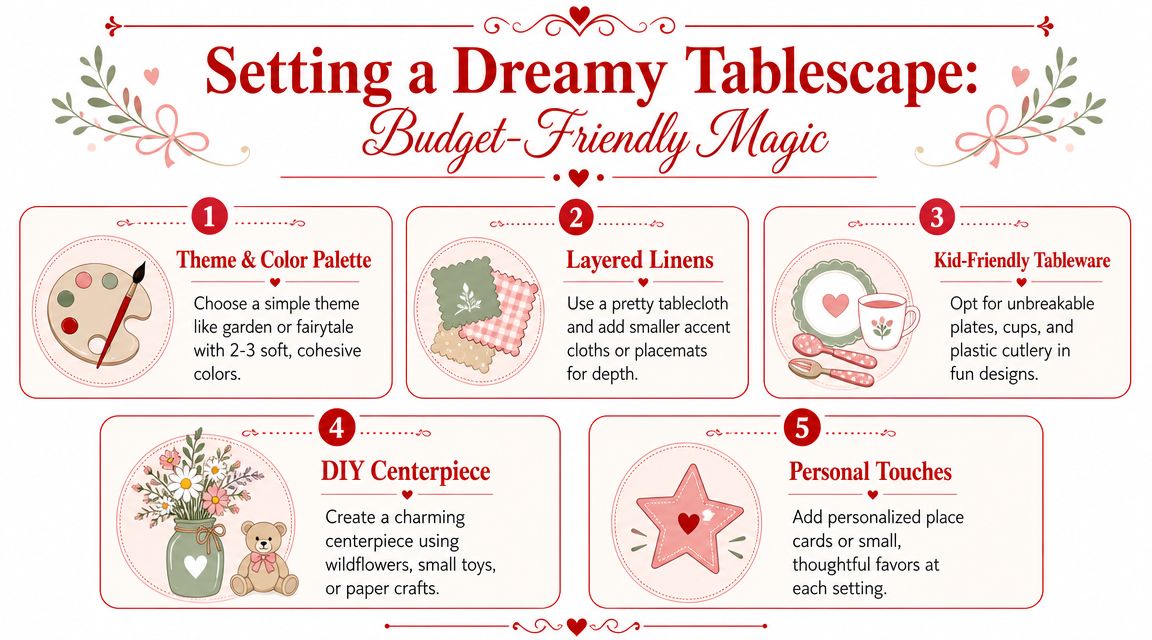
Start with layers, not clutter
A beautiful children's table doesn't need many pieces. It needs a few pieces with contrast.
Begin with a tablecloth or runner in a soft color. Then add plates, cups, and napkins that coordinate without matching too rigidly. This creates a boutique feel and keeps the setup from looking like a school lunch table in party clothing.
A few dependable layers:
- Base linen in white, blush, pale blue, or floral print
- Napkins that feel cloth-like and refined
- Small plate or saucer at each seat
- One centerpiece kept low enough for conversation
If you're looking for styling ideas beyond this party, this guide on how to set a beautiful table offers helpful principles that translate nicely to child-friendly entertaining.
Use one focal point
Many parents overdecorate the center of the table and then wonder why serving feels awkward. A tea party centerpiece should be charming and low.
Good options include a bowl of flowers, a cake stand with one plush bear, or a row of bud vases. If you're using stuffed animals as part of the theme, seat one at the head of the table or place it in the center as the guest of honor.
A tablescape works hardest when it leaves room for little hands, cups, and conversation.
The detail that makes it feel elevated
Napkins do more than manage crumbs. They signal occasion. Cloth or cloth-like napkins instantly make the party feel more polished, even if the food is very simple.
In the body of the setup, products like hemstitch cocktail napkins from Jolitee fit naturally because they add structure and softness without introducing a loud theme. That's useful when you want the table to feel stylish but still child-appropriate.
Small finishing touches
These details make the table feel thoughtful instead of busy:
- Name cards tucked at each place
- Ribbon around a napkin
- A tiny favor at each seat
- Matching serving trays
- A soft color palette with only a few hues
Keep editing until the table looks calm. If everything is shouting for attention, nothing feels special.
Enchanting Games and Activities
The loveliest child tea party activities don't feel scheduled down to the minute. They feel like invitations. One child starts decorating a cupcake. Another drifts toward the dress-up basket. Soon the whole group finds its rhythm.
That flexibility is your friend.
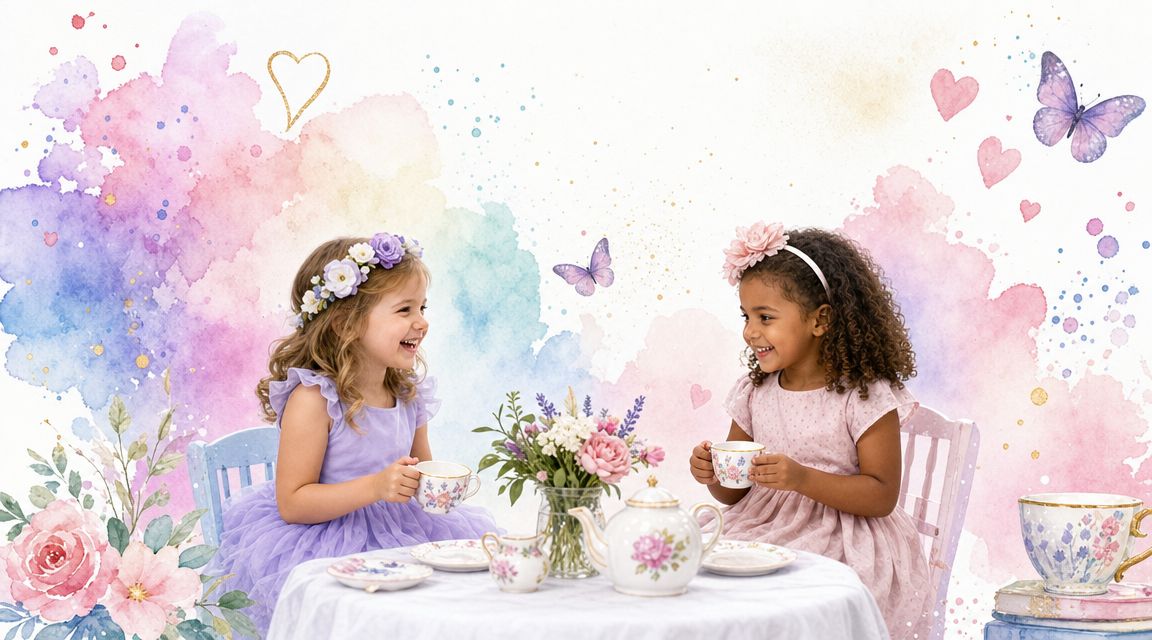
Active fun that fits the mood
A tea party doesn't need loud party games to keep children engaged. Gentle, themed activities often work better.
A few favorites:
- Tea-time treasure hunt with hidden paper flowers or sugar cubes
- Musical statues set to light music
- Follow-the-host parade with hats, boas, or ribbons
- Teddy bear introductions where each child presents their plush guest
These activities keep the energy moving without breaking the atmosphere.
Quiet stations children linger over
Calmer moments help balance the room, especially if guests vary in age or temperament.
Set up one or two low-prep stations such as:
- Decorate-your-own cupcake
- Bracelet beading
- Coloring pages with teacups and flowers
- Sticker crowns or paper fascinators
These are especially handy during arrival time, when not every guest settles in at the same speed.
A short video can also help spark ideas for pacing and mood:
Let the party breathe
One of my favorite hosting tricks is to plan fewer activities than I think I need. Children often spend longer than expected pouring pretend tea for one another, chatting, or circling back to the same craft.
That unhurried feeling is part of the magic. You're not directing a camp program. You're hosting a small social world.
If you want a loose sequence, this works beautifully:
| Party moment | Good activity |
|---|---|
| Arrival | Coloring, dress-up, cupcake station |
| After food | Treasure hunt or simple movement game |
| Before goodbye | Group photo, favor handout, one last toast |
That's enough structure to keep things smooth while still leaving room for spontaneous fun.
Your Guide to a Flawless Day
Party day feels easier when you make a few decisions before the doorbell rings. The goal isn't to control every moment. It's to remove the last-minute choices that create stress.
The first one is food safety and inclusion. Ask about allergies on the invitation and keep at least one treat simple and broadly workable. A fruit plate, plain crackers, or clearly separated servings can spare a child from feeling left out.
Last details that matter
A small favor table can make goodbyes feel graceful. Think sticker sheets, a ribbon-wrapped cookie, a mini plush, or a simple craft to take home. Keep it sweet and manageable.
If another parent is helping with setup or staying to assist, a small thank-you can be a lovely touch. Thoughtful hostess-style gifts, such as beautifully wrapped soap bundles, feel appropriate and useful without being overdone.
For activity flow and guest energy, I like borrowing one principle from Very Special Games' expert advice. Give people a clear start, keep transitions simple, and don't overschedule the fun. That applies beautifully to children too.
Calm hosts create calm parties. Prep what you can, then let the room have a little life of its own.
A supply checklist you can scan quickly
Before guests arrive, make sure you have:
- Teaware with cups, saucers, serving pieces, and a safe drink option
- Linens including napkins, table covering, and any placemats
- Food service basics like trays, tongs, cake stand, and small plates
- Activity supplies for crafts, coloring, or a simple game
- Cleanup tools such as wipes, extra towels, and a trash bag nearby
- Parent corner items with water, coffee, or small refreshments if grown-ups stay
- Favors bagged, labeled, or placed at seats
That final pass is what makes the party feel easy once it begins.
Shop the Look for a Storybook Tea Party
The easiest way to make a child tea party feel storybook-pretty is to choose a few details that do more than one job. A napkin can add color, soften the place setting, and make even simple bakery treats feel special. A small favor can decorate the table first, then go home with each guest. That is the boutique-style shortcut. Fewer pieces, chosen with care.
For the table, start with hemstitch cocktail napkins for tea-party place settings. They give the table a dressed-up finish without asking you to buy a full set of themed party ware, and they pair beautifully with floral china, plain white plates, or pastel dessert dishes.
A few extras can round out the look without creating more setup:
- Cloth napkins or polished tabletop accents if you want the table to feel a touch more special
- Cuddle-worthy plush guests to place on chairs, style at the center of the table, or send home as favors
- French-milled soap bundles as a thoughtful thank-you for a parent, grandparent, or family friend who helped
If you want one smart place to keep things simple, let your decor overlap with your activities. A plush animal can become a tea party guest during playtime. A favor at each seat can double as part of the tablescape. If you are still deciding on a craft addition, these questions about kid-tested craft kits can help you choose something age-appropriate and easy to manage.
Frequently Asked Questions
What is a good age for a child tea party
A child tea party works especially well for children who enjoy pretend play, simple group activities, and a bit of dress-up. Many families find the format especially sweet for early elementary ages, but the best guide is your child's temperament. If they love imaginative play and hosting games, they're likely ready.
What if a child doesn't like tea
That's completely fine. The “tea” is really about the ritual. Serve fruit-infused water, lemonade, or another child-friendly drink in the teapot and call it something whimsical to match the theme.
How do I keep children busy without overplanning
Choose one arrival activity, one seated food moment, and one simple game. That's often enough. If you're adding a craft and want to compare options before buying supplies, this page with questions about kid-tested craft kits can help you think through what's practical for different ages.
Should parents stay or drop off
Either can work. What matters most is that you state it clearly on the invitation. Younger children often feel more comfortable when a caregiver stays nearby, while older children may enjoy a more independent party flow.
How do I make it feel elegant without making it formal
Focus on presentation, not rules. Use a pretty table covering, keep the menu bite-sized, choose soft colors, and add one or two thoughtful details like place cards or folded napkins. Children respond to the feeling of occasion far more than strict etiquette.
If you're ready to pull your table together, browse Jolitee for polished entertaining accents, giftable extras, and cheerful details that help make a child tea party feel thoughtful, stylish, and easy to host.