

Best Broken Arm Gifts for Kids: 2026 Guide
A child in a cast doesn't need more noise. They need a gift that fits the reality of one-handed mornings, long car rides, restless evenings, and the constant “I'm bored” that shows up faster than the cast paperwork. The best broken arm gifts for kids do two things at once. They keep a child occupied, and they make recovery easier for the adults who are doing the lifting, opening, carrying, and cleaning around them.
Childhood fractures are common enough to feel ordinary in families, even when they're stressful in the moment. A large study found that from 1990 to 2023, U.S. emergency departments treated an average of 1,940 nonfatal fractures in children each day, about one every 45 seconds nationally (PMC study on pediatric consumer product-related fractures). That scale explains why cast-friendly gifts, comfort items, and practical support tools have become such a useful category, not a novelty.
Why Gift Ideas Matter for Kids with Broken Arms
A broken arm changes the rhythm of home fast. A child who used to open snacks, turn pages, tie crafts together, and grab a toy from the floor now has to ask for help more often, and that loss of control can be the hardest part. Parents feel it too, because every routine gets a little slower, from dressing to bedtime.
The right gift helps in a very specific way. It gives a child something they can still do, instead of another reminder of what they can't do right now. It also takes pressure off the parent, which matters more than most gift guides admit.
A cast doesn't mean a child should sit helplessly on the couch. The best gifts keep their mind busy and give them a small win they can manage on their own.
Upper-limb injuries are common enough that recovery-friendly gifts have become a standard part of care-package thinking, especially for books, puzzles, and other quiet activities that work with one hand (Ohio State overview of childhood forearm fractures and cast-friendly gifts). This functional aspect sets the standard here, not cute packaging. If a gift creates frustration, it's the wrong gift.
The most useful presents meet a child where they are. They reduce boredom, protect comfort, and give the family one less thing to solve in the middle of an already disrupted week.
Features of Cast Friendly Gifts
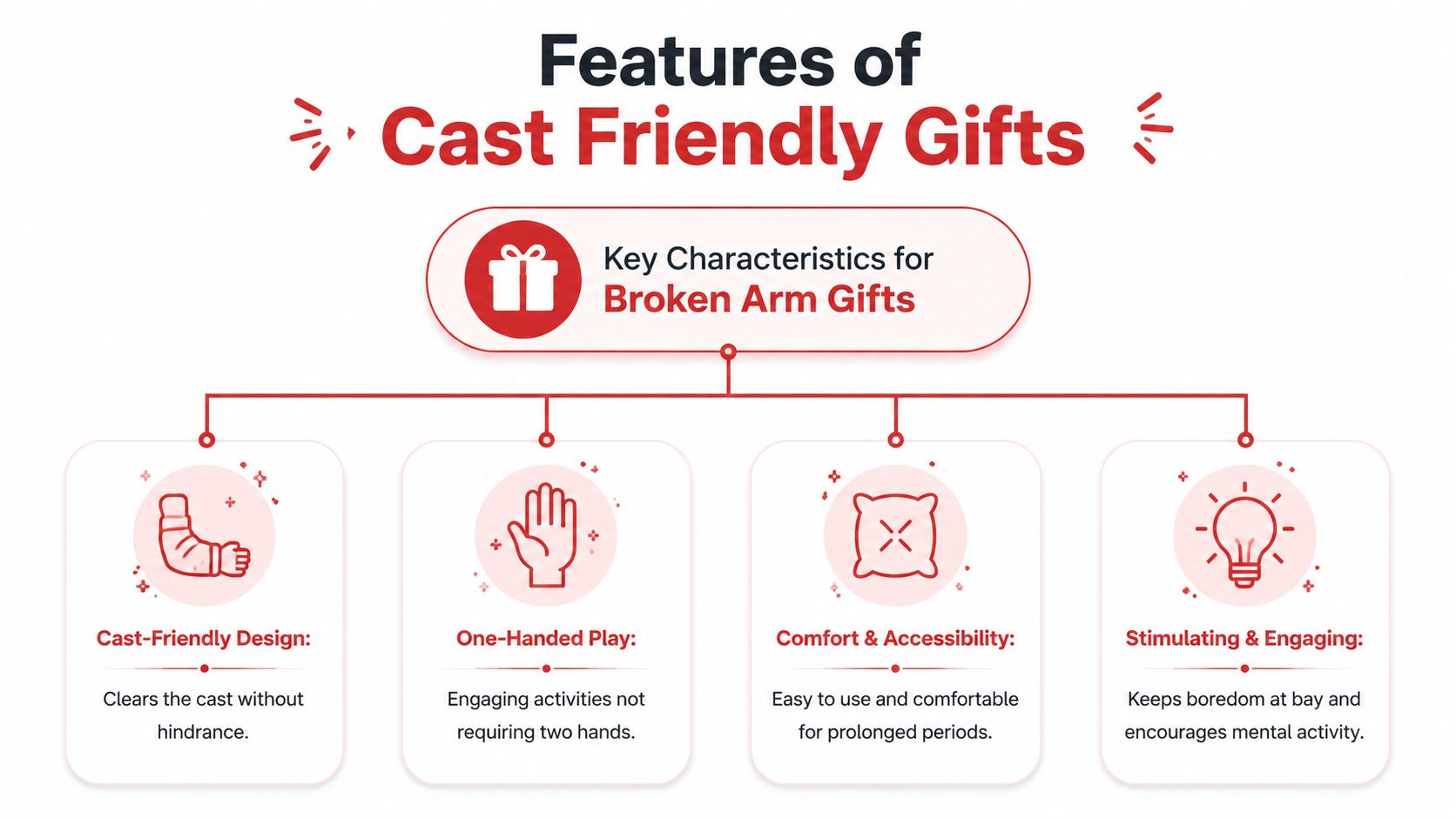
The fastest way to shop well is to filter every option through four traits. If a gift misses even one of them, it probably isn't a strong choice for a child in a cast.
Cast friendly design comes first
A cast-friendly gift clears bulky sleeves, awkward edges, and anything that needs two hands to manage. That means no fiddly parts, no tight fasteners, and no packaging that becomes another job for the child or parent.
One-handed use beats clever design
A child in a cast needs activities they can start, pause, and resume without help. That's why one-handed play matters so much, whether it's a simple book, a card game, or a toy they can manipulate with one safe hand. Clinical guidance on childhood upper-limb fractures points toward exactly that kind of support, especially books, puzzles, and fidget toys that keep children engaged during recovery (Ohio State overview of childhood forearm fractures and cast-friendly gifts).
Comfort matters more than flashy features
Soft materials, smooth edges, and easy handling matter because a child may already feel sore, tired, or irritated from the cast. Anything that adds strain, pressure, or frustration loses value quickly. Keep the experience gentle and low-effort.
Engagement keeps boredom from taking over
A good recovery gift does not have to be educational in a heavy-handed way. It just has to hold attention long enough to make the day feel less stuck. If you're comparing ideas, sensory-friendly play can be especially useful, and how sensory toys support growth is a helpful resource for understanding why tactile, repeatable activities work so well for children.
For play-based gifts, think in this order:
- Can they use it with one hand?
- Will it stay comfortable for more than a few minutes?
- Does it hold attention without creating frustration?
- Will it still work if a parent has to help only once at the start?
Play dough is a strong example of this thinking. It can function as a low-load hand activity that encourages gentle finger movement while the arm stays protected, as long as you choose soft, non-hardened compounds and avoid anything that demands strong gripping (hand-therapy-friendly play dough guidance). That's the kind of practical detail that separates a useful gift from a decorative one.
Gift Ideas by Age Group
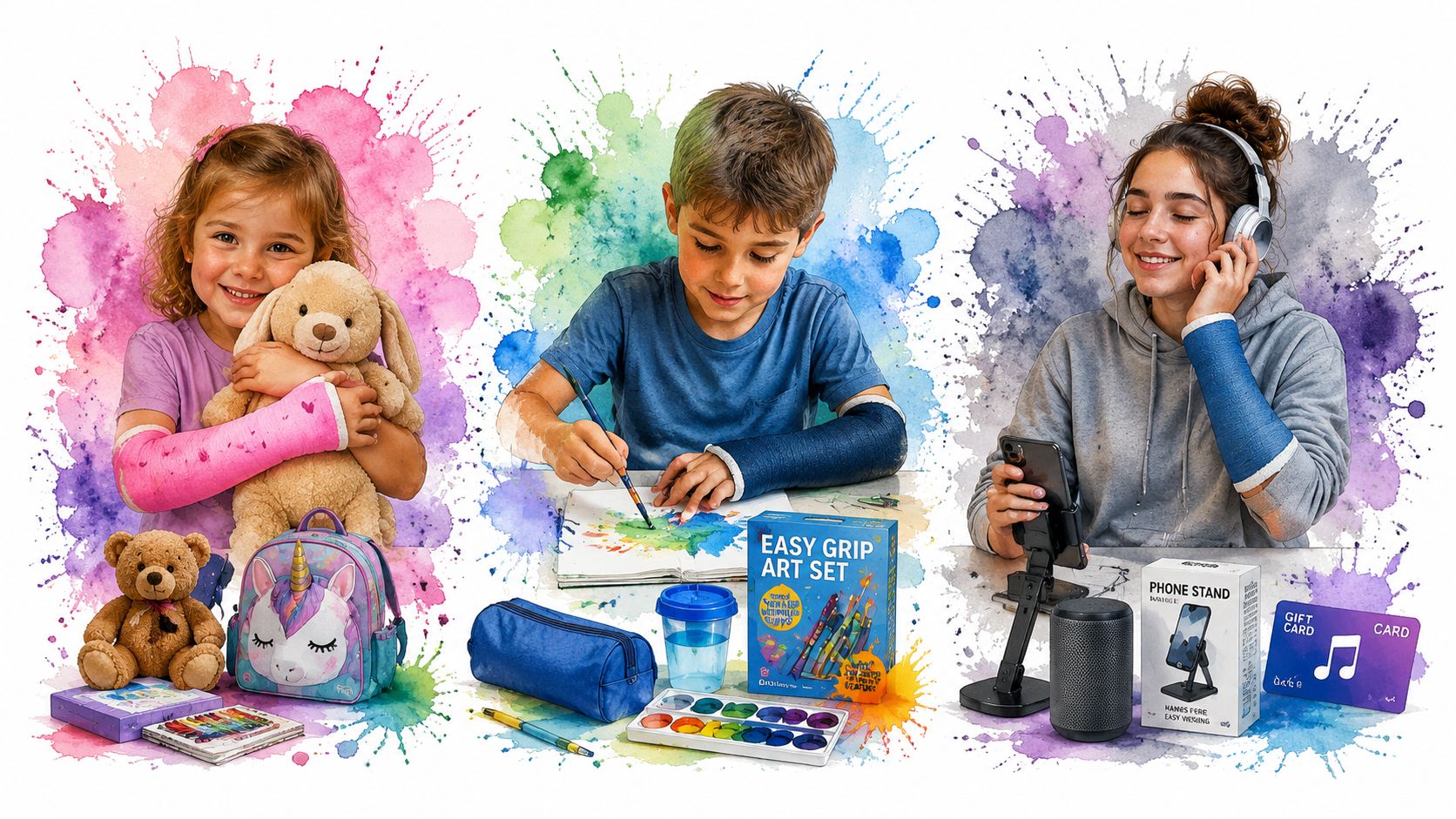
Young kids, school-age kids, and teens don't want the same thing. Age matters because attention span, independence, and frustration tolerance all shift as children grow.
Preschoolers need touch and comfort
For younger children, go simple and soothing. Soft modeling compounds, plush animals, sticker books, chunky board books, and easy sensory toys work well because they don't require coordination or long instructions. A plush friend is especially smart for bedtime, car rides, and doctor follow-ups.
Practical rule: If a preschool gift needs explanation before it's fun, it's too complicated.
School-age kids need agency
Elementary-aged kids usually want something they can do themselves, even if the arm is out of commission. One-hand card games, easy craft kits, fidget toys, and audio story players are all better bets than intricate toys that assume two-handed play. You want activities that let them feel capable, not supervised every second.
Play dough belongs in this age group too, because it gives kids something tactile to do without pushing the injured arm. The gentle squeezing and rolling can help keep fingers moving, which is exactly what makes it such a strong recovery choice (play dough and hand movement guidance).
A few practical picks by age:
- Preschool: plush toy, soft sensory putty, sticker activity pad
- Elementary: one-handed card game, puzzle book, craft kit with simple steps
- Older elementary: audio stories, drawing pads, fidget cube, card holder for game nights
Teens need low-drama independence
Teens rarely want anything that feels babyish. Choose items that support independence and don't look like medical accessories. Phone stands, wireless earbuds, adult coloring books, and tablet supports are all better than novelty toys, because they fit into schoolwork, entertainment, and texting without making the cast the center of the moment.
Adaptive tools matter here. One-handed use reduces the need to brace objects with the injured side, which makes routine tasks less annoying and more manageable. That's why gift ideas like card holders and phone stands keep showing up in recovery lists, alongside a better guide to creative gift wrapping ideas for making the present feel special without making it harder to open.
The best age-based rule is simple. Younger kids need comfort, middle kids need autonomy, and teens need dignity. Shop for the child they are now, not the child you wish would love the cute thing you found online.
DIY and Experience Gift Suggestions
Store-bought gifts are fine, but a personal bundle can feel more thoughtful and usually lands better. Start with a cast decorating kit if the child's care team says decorating is okay. Use washable stickers, gentle markers, and a small stack of paper activities so they can personalize their cast and then move on to something fun.
A care package works best when it's small and useful. Add favorite snacks, a water bottle they can manage with one hand, a notebook, and a simple habit tracker for medicine, rest, or “today's win.” If the child likes arts and crafts, include a one-hand drawing prompt pad or an easy paint-by-number kit.
Experience gifts are underrated because they don't add clutter. A virtual museum tour, an online drawing class, or a kid-friendly storytelling subscription can keep attention focused without asking the child to hold materials awkwardly. Choose experiences with short sessions and clear instructions, since long, complicated classes are exhausting during recovery.
If you want the gift to feel extra personal, add one playful note inside the bundle: “For cast days that need a little magic.” That kind of line costs nothing and makes the gift feel made for them.
Personalization and Presentation Tips
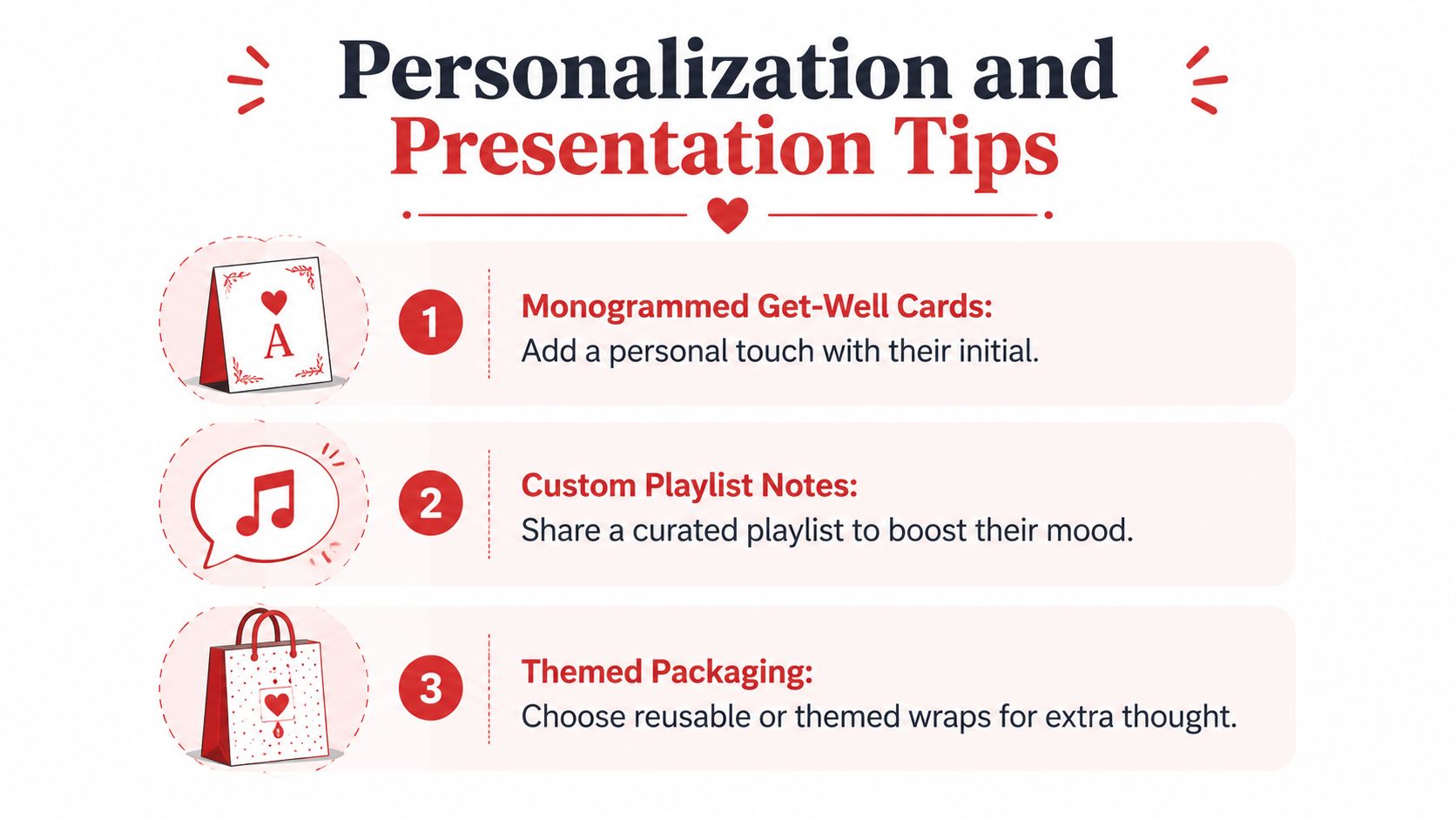
Presentation matters because a child in a cast already feels singled out. A thoughtful wrap job can make the moment feel cheerful instead of clinical.
Start with a theme, then keep it simple. Use one color family, one main character or motif, and one playful accent. If you're adding stickers, labels, or custom decals, a page like custom vehicle stickers can give you ideas for bold, kid-friendly personalization that feels energetic rather than fussy.
Make the outside easier than the inside
Use easy-open packaging whenever you can. Tear strips, reusable bags, or soft tissue are better than tight knots and elaborate bows. A child in a cast should be able to reach the good stuff without waiting for three adults and a pair of scissors.
Use the gift to tell a story
A short playlist note, a card with their name, or a tiny theme like “superhero recovery kit” makes the bundle feel custom. If you're wrapping multiple items together, keep the heaviest thing at the bottom and the softest items on top so the package opens neatly. For more polished ideas, bookmark creative gift wrapping ideas for polished presentations.
Keep the visual details friendly
Children notice shapes, colors, and patterns immediately. Bright paper, cartoon tags, or a small charm tied to the handle can turn a plain gift into something worth showing off. The goal is not luxury for luxury's sake. It's delight.
A well-wrapped gift does half the emotional work before the child even sees what's inside.
Gifts for Hospital Stays and Home Care
Hospital rooms and recovery days at home both reward practical gifts. The smartest choices reduce the number of times a parent has to step in for everyday tasks.
Waterproof cast protectors, bedside organizers, book holders, wireless chargers, and phone or tablet stands are all useful because they support one-handed routines and cut down on constant repositioning (parent convenience and cast-friendly items). For the family, this translates to fewer interruptions during bathing, screen time, and quiet rest.
A few things that help right away:
- Book holder: keeps reading materials upright
- Wireless charger: reduces fumbling with cords
- Waterproof cast protector: helps with showering and cleanup
- Snack cup with a stable grip: makes self-feeding easier
- Bedside caddy: keeps essentials in one place
If you're planning to contribute to a child-focused care environment, the tips for donating to hospitals can help you think beyond a single gift and toward items that make repeated stays more humane.
Practical gifts are not boring. They're respectful. They tell the child and the caregiver, “I see the work this week is creating, and I've tried to make it smaller.”
Quick Shopping and Wrapping Checklist
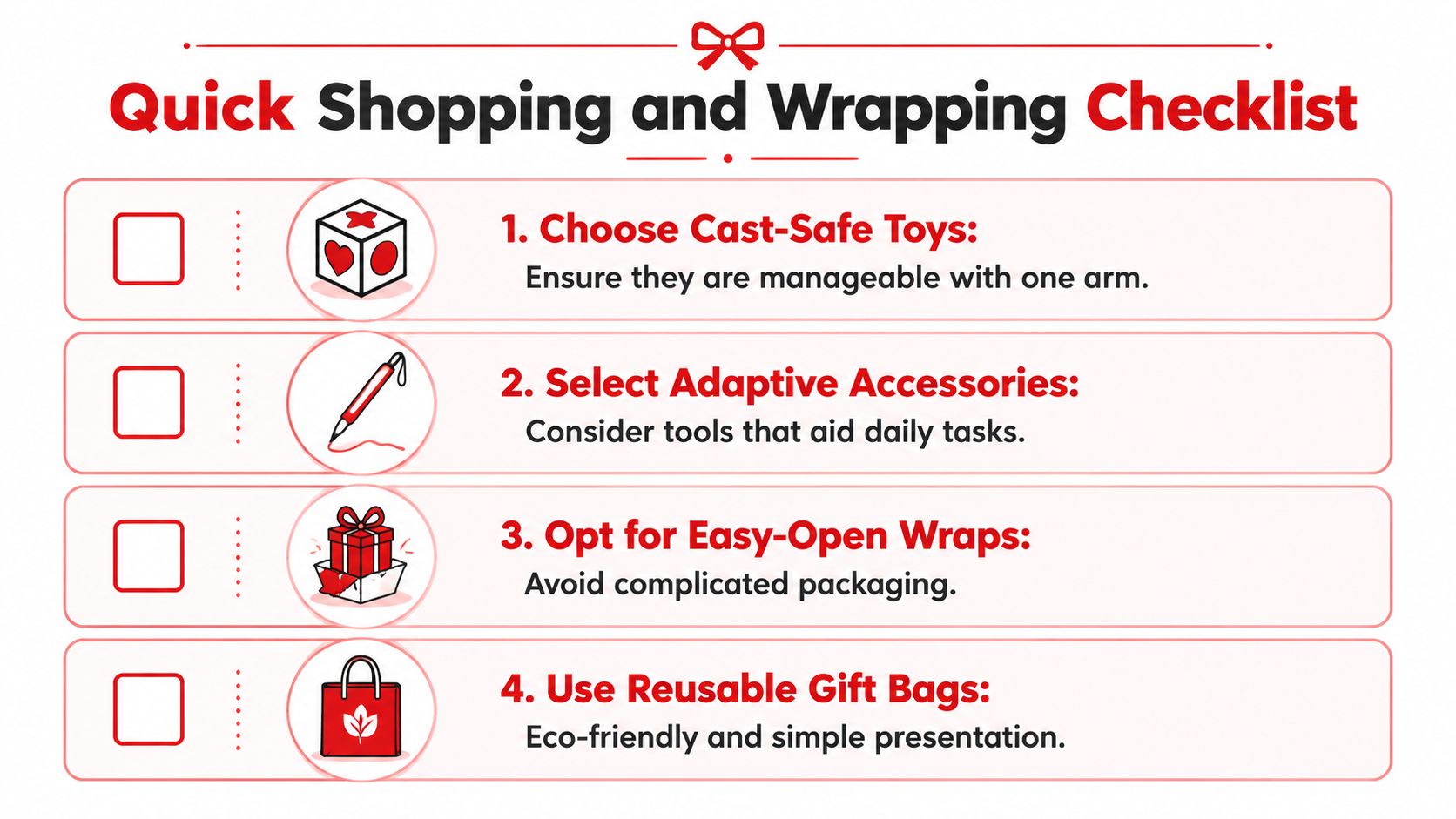
When you're ready to buy, keep the list tight. A shorter, smarter bundle is better than a big pile of things that need adult intervention.
Shop for the gift itself
- Choose cast-safe toys: Pick items the child can hold, move, or enjoy with one arm.
- Select adaptive accessories: Go for tools that make daily tasks easier, not harder.
- Prefer one-handed play: If it takes two hands to begin, it probably won't get used often.
- Add one comfort item: A plush friend, soft notebook, or soothing sensory item helps on hard days.
Shop for the wrap
- Use easy-open packaging: Skip tight ribbons and hard knots.
- Choose reusable bags: They're simple to carry and easy to reopen.
- Keep tags large and readable: A child should know the gift is theirs without help.
- Avoid tiny pieces that can spill: The opening moment should feel calm, not chaotic.
Adaptive gifts that preserve independence, such as card holders, one-handed games, and phone stands, reduce compensatory movements and support child autonomy (adaptive gifts and independence). That's exactly the standard to use before you checkout.
If you want a final quick test, ask this: can the child enjoy it, and can the parent deliver it without extra work? If the answer is yes to both, you've probably found the right gift.
FAQs and Conclusion
Can cold items hurt a cast?
Cold items are fine only if the care team says they're appropriate and they don't create moisture problems. Keep anything cold wrapped, clean, and short-term, and avoid anything that could soak the cast.
What should I ship to a hospital?
Ship small, labeled, and easy-to-open items. Hospital stays already involve plenty of handling, so gifts should be lightweight, non-messy, and simple for staff or parents to pass along.
Are there weight limits I should think about?
Yes, but the safest rule is even simpler. If the child has to brace, lift, or twist awkwardly to use it, the gift is too cumbersome. Keep anything intended for play or travel light and easy to maneuver.
What's the best all-around gift choice?
A mix of comfort, one-handed entertainment, and a practical accessory wins almost every time. That combination supports the child and reduces friction for the parent.
The best broken arm gifts for kids aren't the loudest ones. They're the gifts that help a child feel capable, calm, and entertained without making recovery feel like work. Choose one thing for comfort, one thing for boredom, and one thing that makes the parent's day easier, and you'll almost never miss.
A CTA for Jolitee.