
Angled Pocket Napkin Fold: Impress Your Guests
The candles are lit, the menu is set, and the table still feels like it wants one more detail. Not a fussy detail. A smart one.
That's where the angled pocket napkin fold earns its place. It looks polished, keeps the setting tidy, and gives cutlery or a card a natural home without making the table feel overworked. It's one of those rare hosting moves that reads as thoughtful but doesn't demand advanced skills.
Elevate Your Table with the Angled Pocket Napkin Fold
A well-set table always has a quiet sense of order. Plates are centered, glassware makes sense, and each place setting feels finished. The angled pocket napkin fold does that job beautifully because it adds shape and function at the same time.
This fold also carries real table-setting history. The tradition belongs to a much older European dining culture documented in the early 16th century, when Matthia Giegher's Li tre trattati is identified as the first substantial written record of napkin folding, as noted in this history of napkin folding. In those formal settings, folded linen signaled care, ceremony, and status.
Why this fold still works now
What makes the angled pocket so useful today is that it never feels outdated. It borrows the grace of formal dining, but it solves a very current hosting problem. You need a place for flatware, a menu, or a name card that won't slide around the plate.
Practical rule: The best decorative detail is one that also makes the table easier to use.
I reach for this fold when the meal has structure. Holiday dinners, bridal lunches, birthdays, and seated cocktail suppers all benefit from a napkin that helps organize the setting instead of just filling space.
If you're refining the overall feel of the table, Atlanta's luxury table fabric guide is a useful read for thinking through linen texture, finish, and how fabric choices shape the mood of a setting.
What guests notice
Guests may not name the fold, but they notice the effect:
- A cleaner plate presentation keeps the setting composed.
- A designated pocket makes flatware placement feel intentional.
- A refined silhouette adds elegance without clutter.
- A personal insert like a place card or menu makes each seat feel considered.
This fold distinguishes itself through its quiet elegance. It doesn't shout for attention. It makes the whole table look more finished.
How to Create the Perfect Angled Pocket Fold
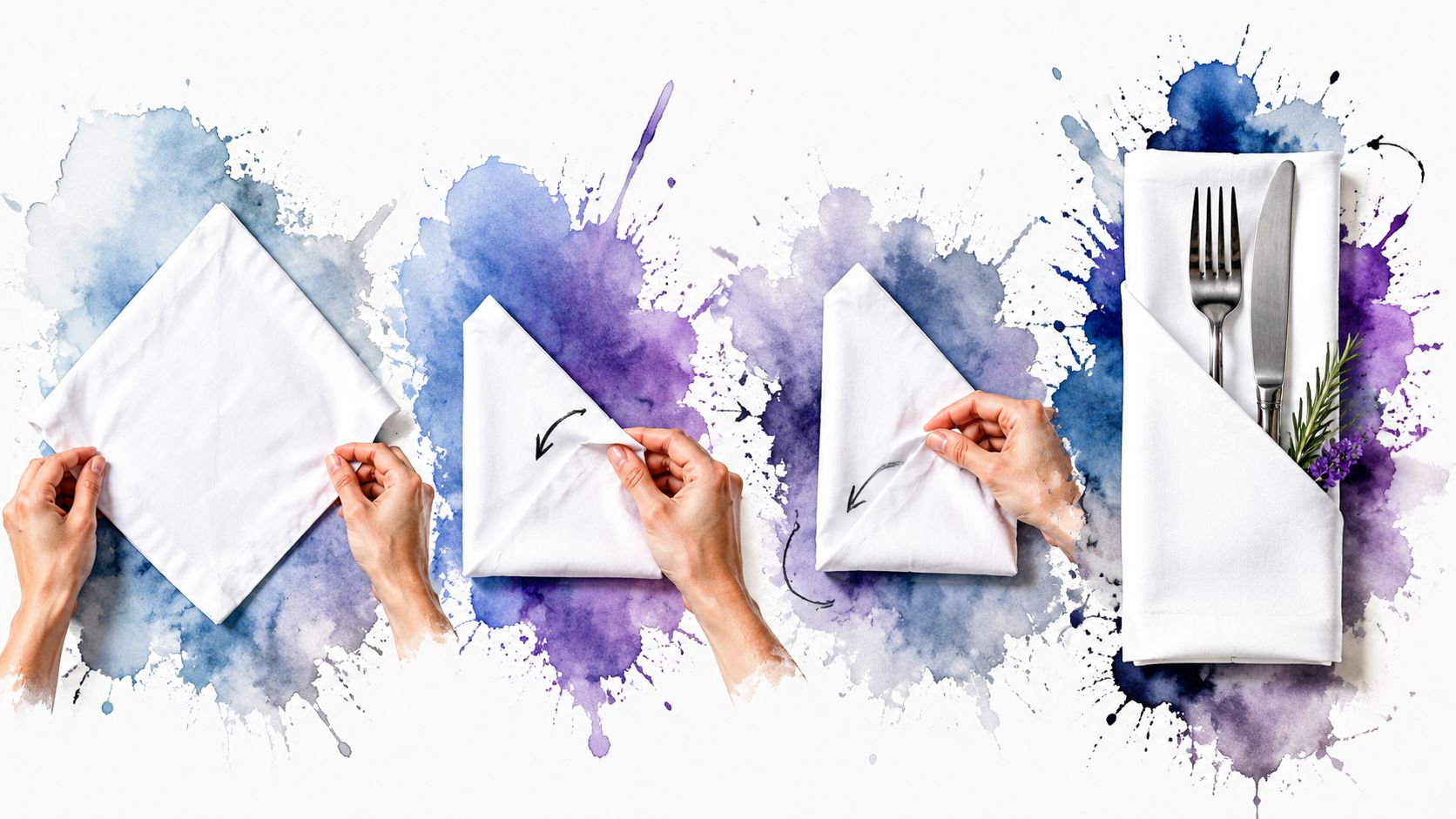
The angled pocket fold works because the structure is repeatable. A commonly taught method turns a square napkin into a compact holder with one visible pocket, and some versions can create two pockets, using a sequence of folding in half, then in quarters, then a diagonal fold, and finally a roughly one-third side fold before tucking the edge in, as shown in this pocket napkin method.
Start with a square napkin and a flat surface
Lay the napkin flat with the smoothest side facing down if one side is more attractive than the other. Press out any soft wrinkles with your hands first. This fold depends on clean lines, and rumpled fabric fights you at every turn.
Fold the napkin in half. Then fold it again into quarters so you have a smaller square. Keep the open corners oriented consistently as you work so the fold develops in the correct direction.
Form the diagonal pocket
Take only the top layer and fold that corner diagonally across the square. This is the move that gives the pocket its signature slant, so don't rush it. If the diagonal is crooked, the entire fold looks slightly off even when the rest is technically correct.
Smooth the crease firmly with your fingertips. A soft crease often opens later when you add flatware.
The diagonal layer is what gives the pocket its shape. If that line drifts, the whole setting starts to look uneven.
Flip the folded napkin over carefully, keeping the diagonal section in place. At this stage, the napkin should still feel compact, not loose.
Fold the back and secure the structure
Bring one side inward by roughly one-third of the napkin's width. Then fold the other side over it. You're creating the backing that supports the pocket on the front.
Tuck the final flap neatly into the small opening created by the opposite fold. This is the locking move. Once it's tucked, flip the napkin back over and the angled pocket should be visible on the front.
A close visual can help if you like to learn by watching:
If you want another flatware-friendly variation to compare against, this guide to a napkin fold with silverware is helpful for seeing how utensil placement changes the final presentation.
What a finished fold should look like
You'll know you have it right when the pocket sits flat, the diagonal line looks clean, and the napkin holds together when lifted and turned. The front should feel crisp and symmetrical, not puffed out or twisted.
Use this quick check before setting the table:
- Pocket opening visible: You should clearly see where the cutlery or card will slide in.
- Edges aligned: The sides should look even rather than skewed.
- Back tucked securely: Nothing should spring open when handled.
- Front lies flat: The fold should rest neatly on a plate or directly on the table.
If you want a more layered look, try a double-pocket version after you've mastered the basic one. It's especially useful when you want to separate flatware from a name card or menu insert.
Napkin Choice and Pro Tips for a Crisp Fold
The fold matters, but the napkin choice decides whether it will look sharp or slightly floppy. Some materials cooperate immediately. Others resist every crease.
Expert instruction on this fold emphasizes that it's efficient because it uses only a small number of crease operations while still producing a secure utensil pocket, and that the most important technical move is the diagonal fold from top-left to bottom-right because poor alignment makes the pocket uneven, as demonstrated in this angled pocket tutorial.
Cloth versus paper
Cloth gives you the most elegant result. Linen and tightly woven cotton tend to hold shape well and look better the longer the meal goes on. If the event is formal or photographed, cloth is usually worth it.
Paper can work, but quality matters more than people expect. If you're choosing disposables for a shower, buffet, or outdoor gathering, a paper napkin buyer's guide is useful for comparing finishes and thicknesses before you commit.
What works best in real use
This is the practical short list I use when I want the fold to stay crisp through setup and service:
- Pressed cloth napkins: Best for sharp edges and a polished look.
- Smooth, flat workspace: A cluttered surface transfers bumps into the fold.
- Firm crease setting: Run your fingers along each fold as you go.
- Reasonable pocket fill: Fork and knife, a card, or a slim menu work better than bulky items.
What usually goes wrong
Most failed angled pockets come down to a few avoidable mistakes. The fold itself isn't difficult. Sloppy prep is usually the problem.
| Issue | What happens | Better approach |
|---|---|---|
| Misaligned diagonal fold | Pocket looks lopsided | Reposition before pressing the crease |
| Soft creases | Fold opens when moved | Smooth each fold firmly as you go |
| Heavy pocket contents | Front bulges outward | Keep inserts slim and light |
| Thin, limp napkin | Structure collapses | Choose firmer cloth or better paper |
For hosts who love a more refined linen table, this article on monogrammed linen napkins offers good inspiration for layering personal detail into the setting.
A crisp fold starts before the first fold. Pressed fabric and a clean surface do half the work.
Styling Variations for Any Occasion
Guests notice this fold most in the moment before they sit down. The plate looks finished, the flatware feels intentionally placed, and the pocket gives you one tidy spot for the detail that matters most, whether that is a name card, menu, or utensil set.
Its real strength is function. A well-styled angled pocket should still look composed after guests lift it, slide out the contents, and set it back on the plate. That depends less on decoration and more on choosing inserts with the right weight and shape. As noted in Martha Stewart's angled pocket overview, the pocket suits cutlery, place cards, and menus. In practice, the best result comes from keeping those inserts slim.
Best uses for the pocket
For a dinner party, I reach for a fork and knife or a neatly printed menu. Both keep the fold clean and architectural. For showers, brunches, and holiday tables, a place card usually does more for the setting than extra embellishment.
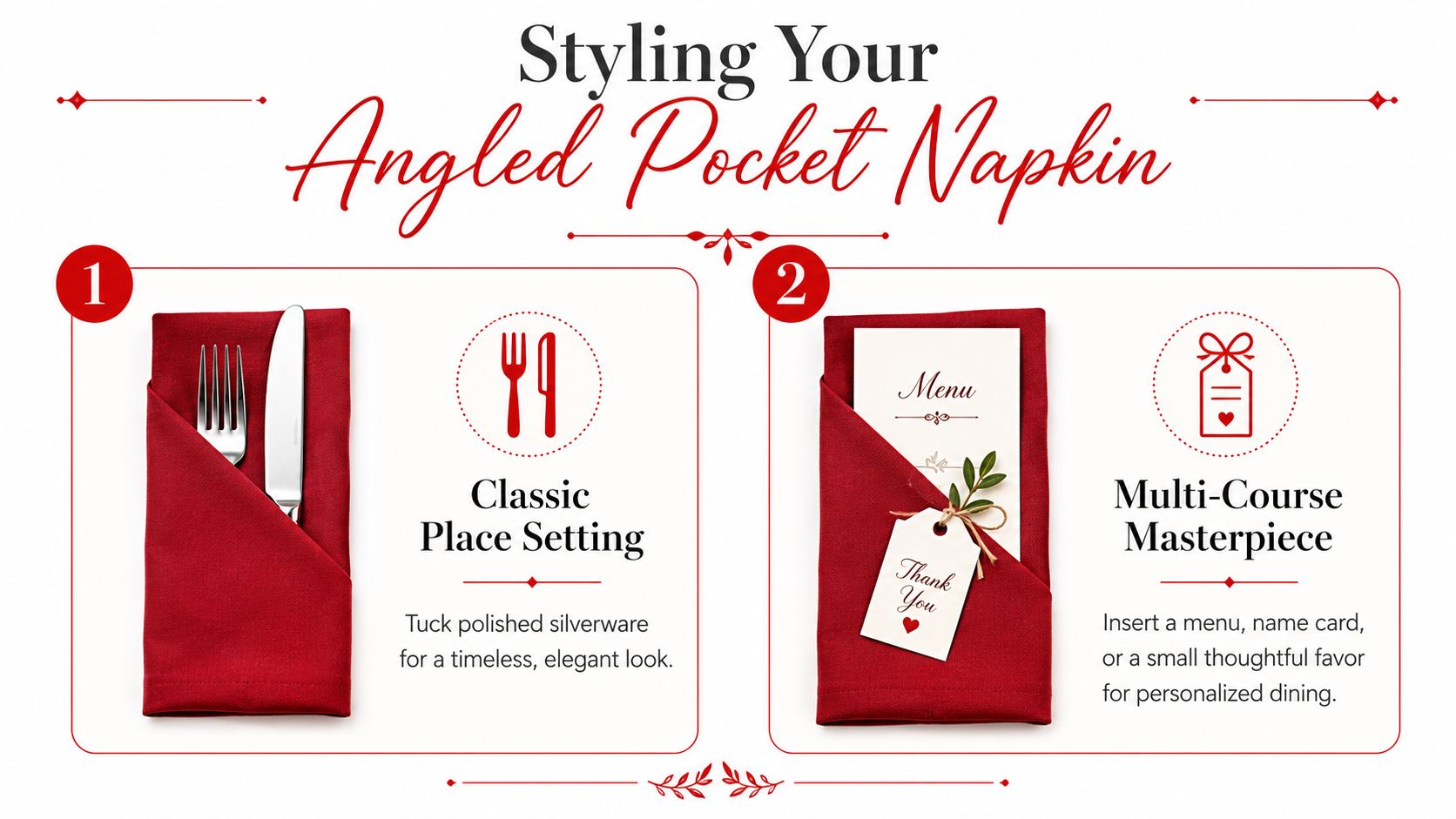
A single herb sprig can work well too, especially on spring or outdoor tables. Go any fuller than that and the fold starts doing too much.
When it looks best and when it doesn't
The angled pocket earns its place on tables where you want order without stiffness. It works particularly well for:
- Fork and knife pairings on plated tables
- Place cards for weddings, showers, and seated dinners
- Slim printed menus for multi-course meals
- One stem or herb sprig for a softer seasonal finish
The weak point is bulk. Thick flatware bundles, stacked cards, wrapped favors, or anything with real weight will pull the front panel forward and make the pocket look tired before the first course is served.
Keep the insert light, flat, and easy to remove.
Style ideas by occasion
The same fold can shift easily from formal to relaxed with a few smart choices.
- Formal dinner: White, ivory, or soft taupe napkin with polished flatware and a narrow menu card. This is where crisp cotton or linen really pays off.
- Garden brunch: Floral or pastel napkin, handwritten place card, and one small sprig of rosemary or chamomile.
- Holiday table: Deep green, merlot, or navy napkin with warm metallic flatware and a simple name card.
- Minimalist gathering: Let the fold carry the setting with no extra insert beyond a single utensil set or a clean folded card.
Fabric changes the mood as much as color does. A structured linen or cotton napkin gives the pocket sharper lines and holds up better through service, which is why quality pieces make styling easier from the start. Jolitee's beautiful napkins suit this fold especially well because the finished look feels polished without becoming fussy.
Shop the Look with Jolitee
Beautiful folds look better when the supporting pieces are chosen with the same care. A table never relies on one detail alone. Napkins, gifting accents, and small comforts around the home all contribute to how guests experience the gathering.
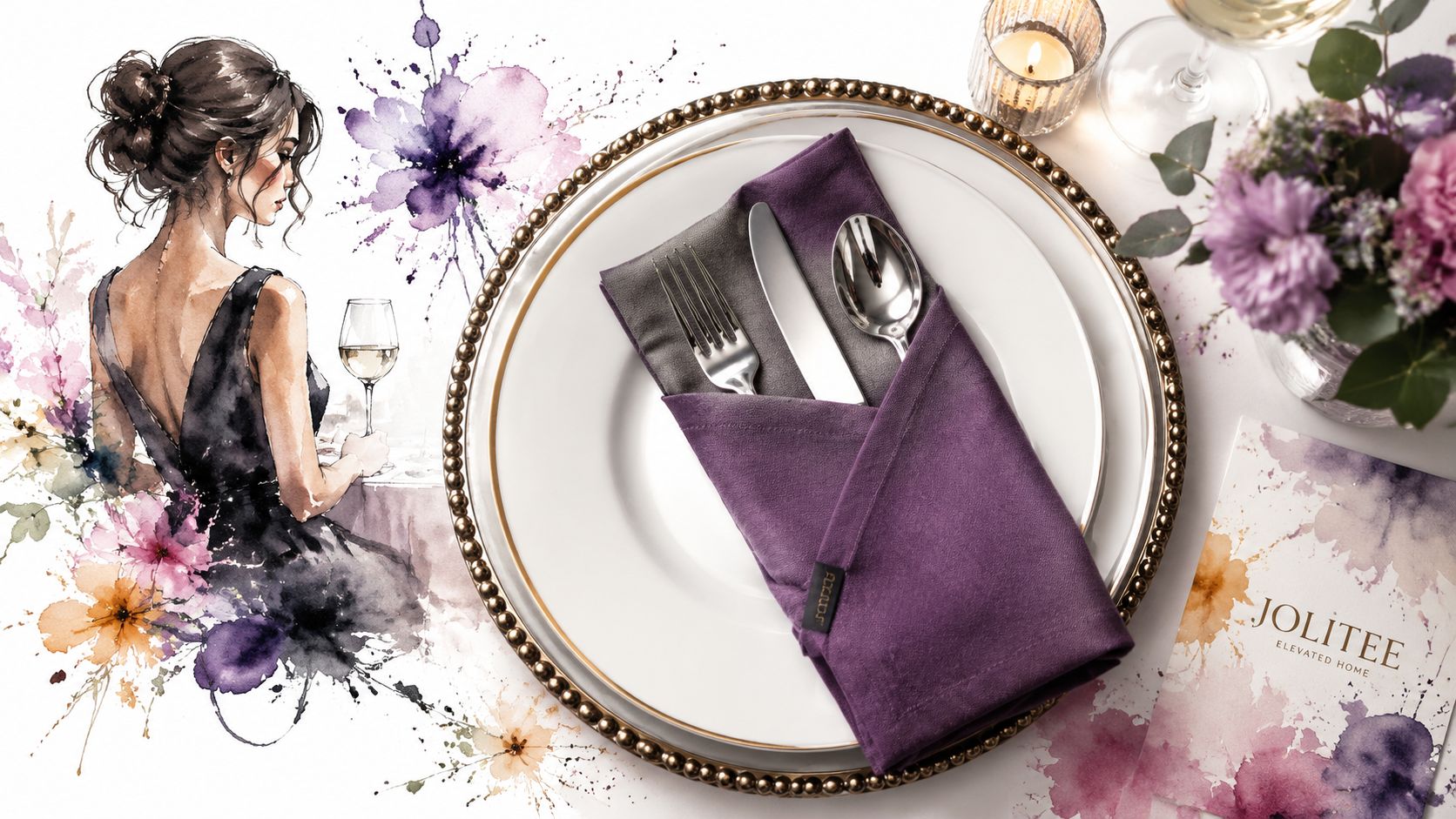
Pieces that support the setting
The most direct fit is a refined napkin collection that can carry a crease and still feel soft in hand. Browse Jolitee's cloth napkin collection for entertaining if you want options that suit both everyday hosting and more polished occasions.
A complete hosting moment often extends beyond the table itself. If you're arriving with a bottle in hand, Jolitee's wine gift bags make that gesture feel finished before the cork is even pulled. French-milled soap bundles also make a guest bath feel considered, which guests always notice more than hosts expect.
Why these details matter
A strong table setting creates consistency. The napkin fold, the bar area, the host gift, and even the powder room all tell the same story when they're chosen thoughtfully. That doesn't require excess. It requires editing.
For creators or stylists who build gifting moments professionally, it can also be helpful to submit your influencer collaboration request when you're looking for brand partnerships tied to entertaining and presentation.
Your Angled Pocket Napkin Fold Questions Answered
Can you make an angled pocket napkin fold with paper napkins
Yes. Paper works best when it has some body and a fairly smooth finish, because the diagonal line stays cleaner and the corners resist crumpling.
It is a practical choice for outdoor lunches, kids' tables, buffet service, or any meal where cleanup matters. Keep the insert light. A place card or a single piece of flatware usually holds well, while a heavier bundle can pull the pocket open.
How do you make the fold stay in place
Sharp creases do the work.
Press each fold firmly as you go, and start with a napkin that lies flat. With cloth, a quick press before folding makes a visible difference, especially on cotton and linen blends that are woven tightly enough to keep their shape. I also avoid overhandling the finished fold. Once the pocket is formed, move it to the plate and leave it alone until the table is set.
What should you put inside the pocket
Choose slim, useful pieces. Flatware, a menu card, or a name card all fit naturally and keep the fold looking intentional.
Heavy favors and thick utensil bundles tend to drag the front layer down. The angled pocket is decorative, but it should still function through the meal, so restraint usually gives the better result.
Can you make these ahead of time
Yes, and I recommend it for dinner parties.
Fold them earlier in the day, then store them flat in a clean tray, drawer, or shallow box. Keep the stack light so the top folds stay crisp. If you plan to tuck anything inside, wait until close to serving time. That keeps the pocket neat and prevents dents or stretching.
Is the angled pocket fold better for formal or casual tables
It suits both. The fabric decides the mood more than the fold itself.
In crisp linen or a polished cotton napkin, it reads refined and sharp. In softer colors, relaxed prints, or good-quality paper, it feels easy and welcoming. That flexibility is part of why I come back to this fold so often. It looks composed, holds what guests need, and does not ask for complicated styling to succeed.
A well-set table does not need extra fuss. A crisp angled pocket fold, beautiful napkins, and a few thoughtful entertaining details give the whole setting more polish and make service easier on the host. If you want pieces that help the table look good from the first pour to the last plate, explore Jolitee for cheerful entertaining pieces, beautiful napkins, and charming gifts.