

Affordable Luxury Gifts That Feel Lavish on Any Budget
The popular advice says luxury starts with a famous label, expensive materials, or a larger gift basket. I disagree. The most convincing affordable luxury gifts feel considered because they combine usefulness, emotional relevance, and presentation. A modestly priced object can look far more generous than a costly item chosen without thought.
That matters now because luxury shoppers are becoming more selective. Bain & Company and Altagamma estimated that global spending across luxury categories reached approximately €1.44 trillion in 2025, while personal luxury goods represented about €358 billion. Their research also found that accessible luxury was flat to slightly negative overall, with an estimated compound annual growth rate between 0% and -2%, yet it performed better than more expensive tiers as shoppers became more price-conscious. Bain & Company and Altagamma describe the shift toward accessible luxury.
The better question isn't “What can I buy cheaply?” It's “How can I make a useful gift feel intentional, personal, and beautifully presented?” This guide gives you a repeatable way to choose the item, add the right emotional cue, and finish it with polish.
Why Affordable Luxury Gifts Outperform Expensive Ones
More than half of U.S. luxury consumers believe quality no longer justifies the cost, according to Mintel's U.S. luxury consumer market coverage. That opinion changes the assignment. Your aim isn't to find a lesser version of an expensive gift. Your aim is to create a stronger impression with better judgment.
Accessible luxury works because shoppers still want pleasure, quality, and symbolic meaning. They're choosing smaller indulgences, practical upgrades, and products that feel easier to justify. Bain and Altagamma expected approximately 50% of accessible-luxury brands to grow in 2025, compared with roughly 25% of aspirational-luxury brands and 35% of absolute-luxury brands. The figures point to a useful gifting principle: a well-designed, attainable object can meet the mood of luxury without demanding the financial commitment of traditional luxury.
A hostess doesn't need another generic ornament. She may appreciate a bottle presented in a reusable canvas bag, or hemstitch cocktail napkins that make her bar cart feel finished. A new neighbor may remember a French-milled soap bundle long after a basket of disposable filler has disappeared.
The luxury signal isn't the price tag. It's the evidence that you noticed.
A thoughtful gift can also carry a sustainability advantage. If you're comparing options, find ethical handcrafted presents with an eye toward craftsmanship, longevity, and the story behind the object. Those qualities often make a gift feel more distinctive than a recognizable logo alone.
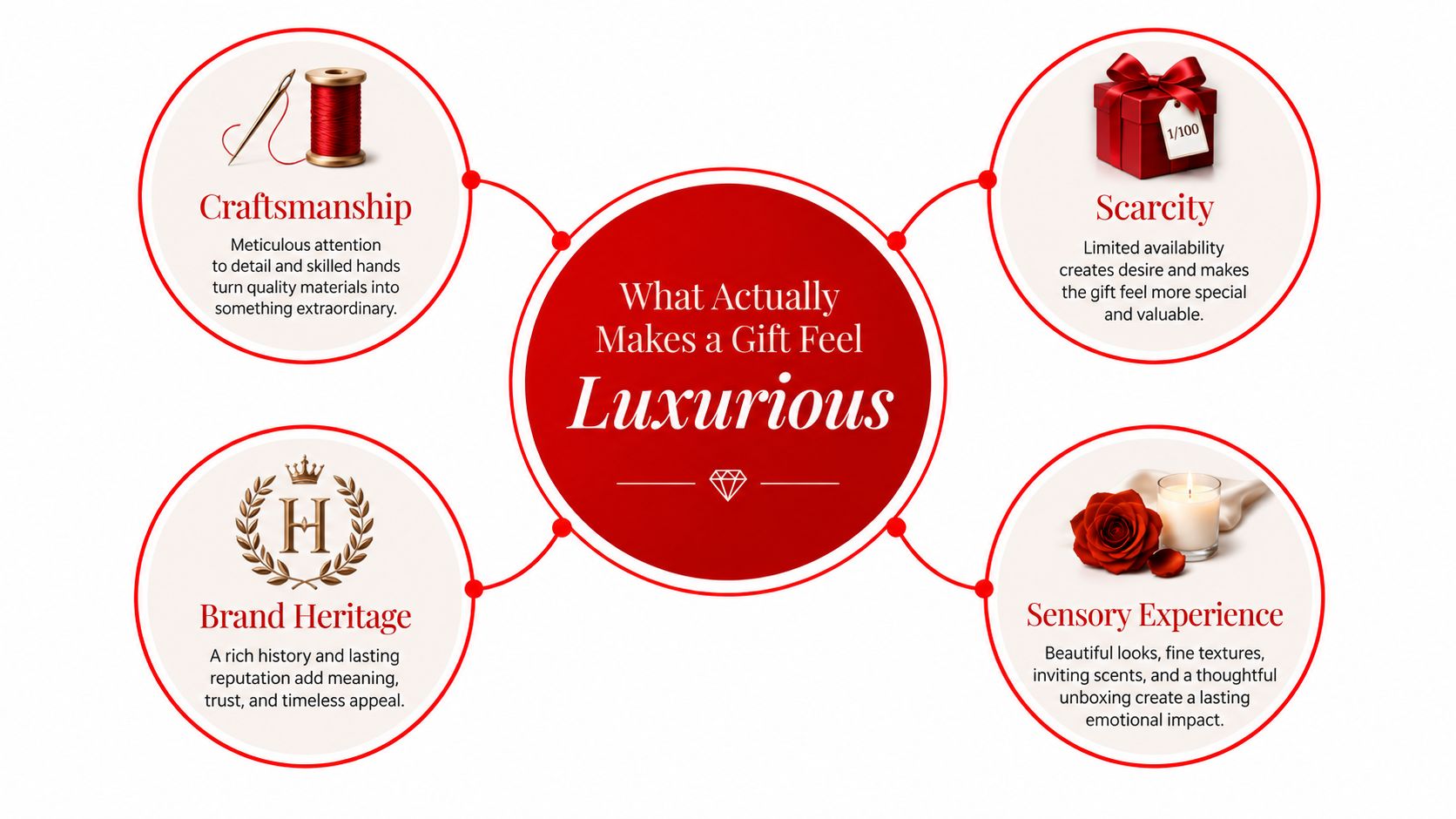
What Makes a Gift Feel Luxurious
Luxury value rests on four practical dimensions: financial, functional, individual, and social. Use them to judge any candidate gift. Read the product listing, then ask four direct questions.
Financial value means the gift feels worth its cost. The item does not need to be inexpensive. The recipient should understand its place through durable construction, useful design, or a polished finish.
Functional value comes from regular use. Passport holders, AirTag-compatible keychain cases, soap bundles, cocktail napkins, and bottle carriers solve everyday problems. That usefulness keeps the gift from becoming clutter.
Individual value reflects emotional fit. A destination-inspired design suits a frequent traveler. A witty seasonal bottle bag fits the friend who brings energy to every dinner party. A monogram can make a familiar object feel like a keepsake.
Social value appears at the handoff. Clean presentation, coordinated colors, and an easy-to-see personalization cue show that you planned the moment rather than grabbed an item on the way over.
A witty canvas bottle bag beats a generic branded accessory because it combines practical use with visual interest. It also gives you a simple way to match the gift to the recipient. That combination creates distinction without relying on artificial exclusivity.
A 2025 meta-analysis covering 64 papers, 74 studies, and 32,587 consumers found positive effects from luxury-value antecedents on affective and behavioral outcomes, with effect sizes ranging from 0.16 to 0.38. The meta-analysis on luxury value and consumer outcomes supports a clear recommendation: pair status cues with usefulness instead of letting a logo carry the entire gift.
Restraint, presentation, and personal relevance often communicate more value than a conspicuous logo.
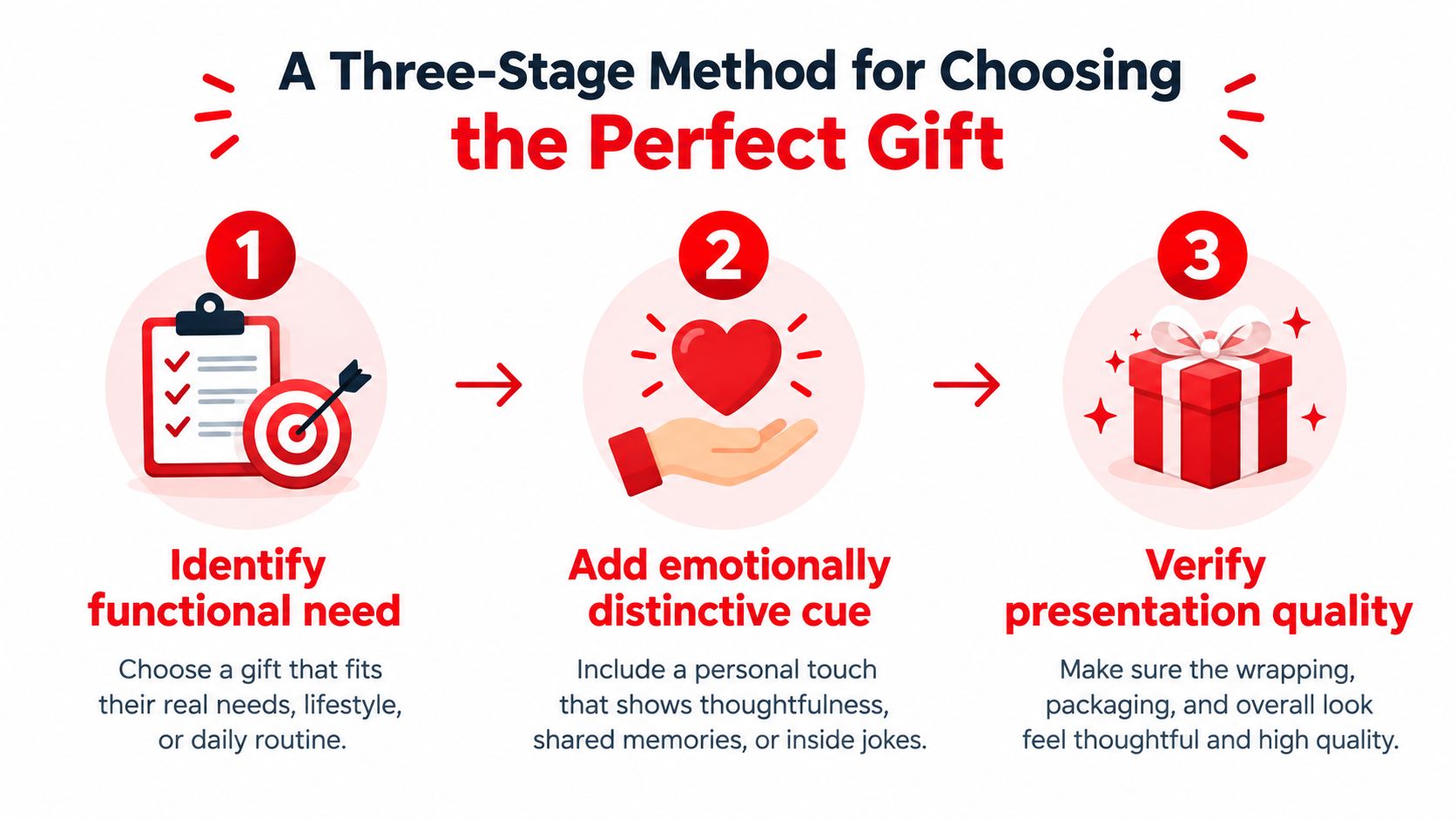
A Three-Stage Method for Choosing the Perfect Gift
Use this method whenever you're uncertain. It works for a dinner-party hostess, a wedding couple, a new parent, or the friend who already seems to own everything.
Start with the functional need
First, identify what the recipient can use immediately. A frequent traveler may need a passport holder. Someone who hosts cocktails may appreciate hemstitch cocktail napkins. A new neighbor may enjoy a soap bundle for the guest bath.
The functional base should be clear enough that the gift never feels like clutter. Practicality is the anchor, not the boring part.
Add one emotionally distinctive cue
Next, choose one detail that says “this is yours.” That might be a monogram in serif or script, a destination theme, a witty phrase, or seasonal artwork. Keep the cue focused. Three competing themes make a gift look assembled rather than designed.
For example, pair a useful bottle carrier with a destination-inspired design for a lake-house host. Choose a playful seasonal motif for the friend who makes holiday entertaining her personality. The object stays practical, while the design supplies the emotional lift.
Verify the presentation
Finally, inspect the handoff. Does the gift look ready for the occasion? Can the recipient see the personalization immediately? Does the packaging protect the item and support the story without becoming wasteful?
Score every candidate from 1 to 5 on:
- Utility: Will the recipient use it?
- Emotional fit: Does it suit their taste or the occasion?
- Visual distinctiveness: Does it look memorable?
- Perceived quality: Do the materials and finish feel considered?
- Price fairness: Does the value make sense?
Reject any gift scoring below 4 on utility or price fairness. A beautiful object that won't be used is decoration, not successful gifting.
A useful example is a set of hemstitch cocktail napkins. The functional need is polished entertaining. The emotional cue might be a wedding, housewarming, or holiday connection. The presentation can stay simple, because the textile detail already carries visual refinement.
Choosing Materials and Categories That Read as Refined
Material signals quality, but repeated use proves it. Reusable canvas and textile accessories continue serving the recipient after the first exchange, while decorative packaging often becomes waste once the gift is opened. The EPA recommends reusable cloth bags and minimal or recycled-content packaging, making a reusable bottle bag a practical part of the presentation.
| Category | Luxe Signal | Reusability | Best For |
|---|---|---|---|
| Canvas wine gift bag | Graphic artwork, texture, and a finished bottle presentation | High | Hostess gifts and wine gifting |
| Hemstitch cocktail napkins | Refined textile detail and tablescape polish | High | Dinner parties and wedding gifts |
| French-milled soap bundle | Sensory appeal and an indulgent daily ritual | Medium to high | New neighbors and thank-you gifts |
| Plush teddy bear | Softness, comfort, and emotional warmth | High | Get-well and new-baby gestures |
| Passport holder | Useful travel organization with a thoughtful finish | High | Travelers and destination occasions |
| AirTag-compatible keychain case | Everyday utility with a playful visual accent | High | Practical, compact gifts |
Choose canvas when the gift should feel cheerful, useful, and ready for another bottle later. Choose hemstitch when the recipient enjoys hosting and notices table details. Choose soap for an easy sensory gift that does not require a precise size or style. Learn more about what French-milled soap means before choosing a bundle.
Practicality is the foundation that keeps the gift from becoming clutter. Score each category for repeated use, material quality, visual character, and fit with the recipient. A category with strong scores across all four usually feels more generous than a decorative item with a higher price.
Personalization should stay restrained. Monograms suit objects the recipient will keep, while humor works best when you know the relationship well. Seasonal artwork feels festive, though a specific holiday reference can limit reuse. A destination theme suits a frequent traveler, while a broader travel motif remains relevant longer.
The strongest choice keeps earning its place. A canvas bottle bag carries the gift today, transports a bottle later, and joins the recipient's next hosting ritual. That lasting usefulness is what turns modest materials into a considered gift.
Personalization and Packaging Tips That Multiply Perceived Value
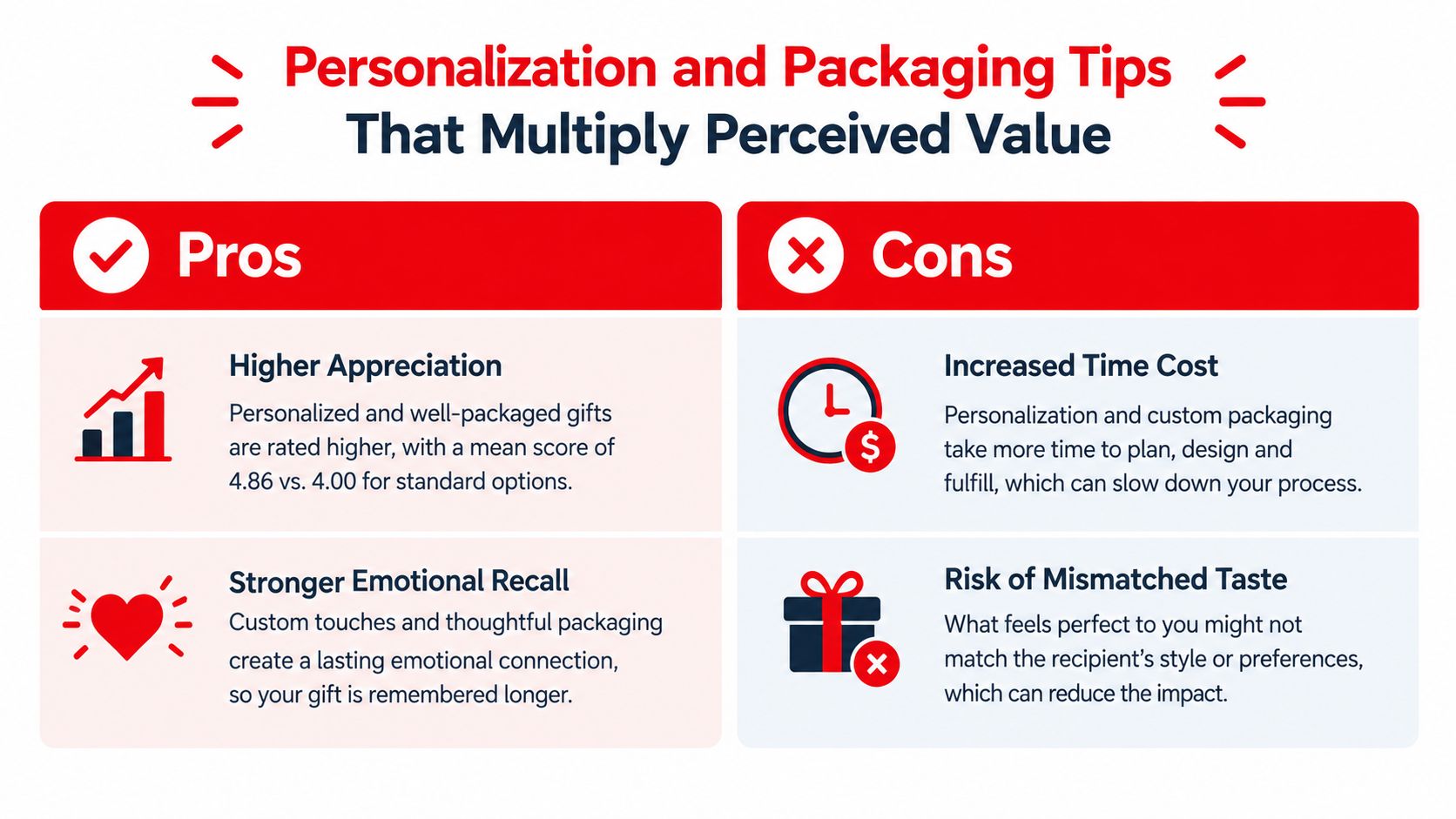
Personalization works because it changes the recipient's interpretation of the gift. In a four-study customized-gifting experiment, appreciation was significantly higher for customized gifts than non-customized gifts, with mean appreciation of 4.86 versus 4.00 in one study. The customized-gifting research makes the practical lesson simple: personalization should clarify thoughtfulness, not create a maze of choices.
Use this workflow:
- Collect the cues. Note the occasion, the recipient's hobbies, their hosting style, and any relevant destination or season.
- Offer a constrained menu. Choose from a few options such as serif monogram, script monogram, humor, seasonal artwork, or destination design.
- Preview the result. Check placement, legibility, and color balance before confirming.
- Confirm spelling and timing. Personalization errors undermine the entire luxury signal.
- Make the detail visible. Package the gift so the recipient sees the thoughtful element before digging through layers.
A 2025 experiment with 50 participants found higher gift-condition purchase intention, with a mean of 4.35, and packaging satisfaction, with a mean of 4.18, both significantly above the self-consumption condition at p < 0.01. That doesn't mean you need ornate materials. It means the package should support the gifting moment.
High-signal finishing touches
- Use clean typography: A legible monogram looks more polished than an overworked design.
- Coordinate one detail: Match tissue, ribbon, or a gift tag to the artwork.
- Protect the item: A crushed corner or loose bottle makes even a thoughtful gift feel careless.
- Add a short note: Mention the occasion or the recipient's habit the gift supports.
- Skip excess: Too many layers and options create friction, waste, and fulfillment mistakes.
If you're deciding between visual directions, it can help to compare canvas art styles and notice how scale, color, and typography change the mood of a personalized object. For additional ways to make the handoff memorable, use these creative gift-wrapping ideas.
Occasion Pairings and Shopping Strategies
A gift feels expensive when every part has a job. For a dinner-party hostess, pair a bottle with a witty canvas bag and hemstitch cocktail napkins. The bottle answers a practical need, the artwork adds personality, and the napkins connect the gift to her entertaining routine. Use wine gift bag ideas to choose reusable presentation that looks intentional rather than improvised. For serving guidance, NIAAA's alcohol basics notes that wine commonly averages about 12% alcohol by volume, with examples ranging from approximately 5% to 16%, and supports measured 5-ounce servings when planning a gathering.
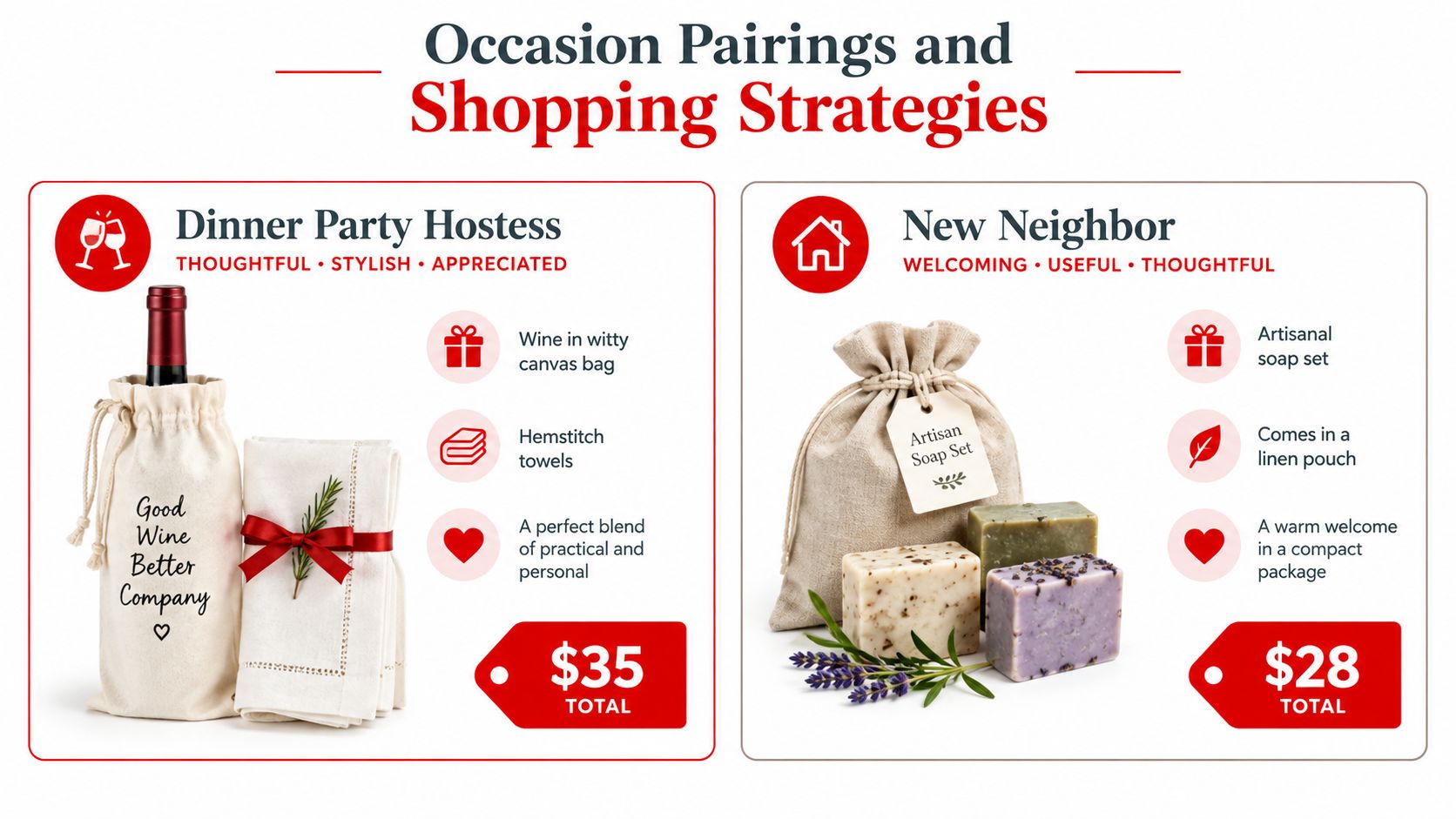
For a new neighbor, choose French-milled soap in a reusable pouch. The gesture feels welcoming without making assumptions about personal taste. For someone recovering from illness, pair a cuddly teddy bear with bath treats. For a wedding, monogrammed textiles keep working long after the celebration ends.
Shop the look
- For the hostess: Choose a reusable canvas wine bag with hemstitch cocktail napkins. The combination creates a complete bar or dinner-party gift without unnecessary extras.
- For the practical traveler: Pair a passport holder with an AirTag-compatible keychain case, then add a destination-inspired visual cue for personality.
- For the comfort seeker: Combine a plush get-well teddy bear with French-milled soap or a lotion set. Keep the palette calm and the message warm.
- For cocktail inspiration: Match the gift to the recipient's next gathering by using Eats & Sips cocktail recipes and entertaining ideas to guide the pairing.
A 750-milliliter bottle of table wine at 12% ABV contains about five standard drinks, according to NIAAA. Its drinking-planning guidance gives hosts a practical benchmark, while a reusable carrier keeps the bottle secure, visible, and easy to transport.
Keep a small gifting shelf stocked with reusable bags, neutral napkins, soap, and occasion-flexible accessories. Watch seasonal collections, sign up for mailing-list offers, and favor pieces that serve as both the present and its next presentation layer. For a softer comfort-focused option, consider ready-made minky blankets at OPN Quilting.
Affordable Luxury Gift FAQs and Final Thoughts
Is one well-presented useful item better than a larger basket of filler?
Yes. One useful item with a clear emotional cue feels edited and confident. A larger basket only works when every component supports the same recipient, occasion, and story. Otherwise, the extra pieces dilute the gift.
How do you make a $25 gift look intentional rather than cheap?
Start with an item that solves a real need, then add one strong detail. A clean gift tag, coordinated ribbon, protective wrapping, and a specific note will do more than layers of shiny packaging. The presentation should look controlled, not expensive for its own sake.
When does personalization become too specific to reuse?
It becomes too specific when the recipient can use the item only for one date, holiday, or inside joke. A monogram, broad destination theme, or durable design usually has more staying power than a narrow event reference. Choose humor only when you know the relationship well.
What should you keep on hand for last-minute gifting?
Keep reusable canvas bottle bags, neutral hemstitch napkins, French-milled soap, and a few blank cards. Those items cover hostess visits, thank-you moments, new neighbors, birthdays, and casual invitations without looking generic.
Affordable luxury gifts work best when you edit rather than add. Choose usefulness first, introduce one personal cue, and let the presentation make the value visible. That combination gives a modest gift the warmth and polish people actually remember.
Jolitee offers playful canvas bottle bags, refined hemstitch cocktail napkins, bath and body gifts, plush, travel accessories, and entertaining details suited to real occasions. Visit Jolitee to browse giftable collections, then find an Eats & Sips idea to make your next handoff feel especially well considered.