

Tablecloth Sizes for Oblong Tables: A Simple Sizing Guide
The candles are lit, the chairs are pulled in, and your oblong table is ready for guests. Then you unfold the tablecloth and discover that it's either too short at the ends or hanging on the floor like a parachute. Choosing tablecloth sizes for oblong tables feels surprisingly confusing, especially when online listings show several nearly identical rectangles.
The good news is that the problem usually isn't difficult math. It's choosing the right drop length for the occasion, then accounting for the table's actual dimensions, extension leaves, and styling layers. Once those choices are clear, the correct stock size becomes much easier to spot.
Why Oblong Tablecloth Sizing Feels Harder Than It Is
Oblong and rectangular tables often look simple, but they vary in length, width, and intended use. A dining table may have extension leaves, a rental table may follow banquet standards, and a buffet table may need a more generous drop to conceal its legs. The cloth still has to cover the same basic surfaces, but the finished look changes dramatically with only a small shift in overhang.
Two decisions do most of the work:
- How much drop do you want? This is the distance from the tabletop edge to the tablecloth hem.
- Will the table stay the same size? If you'll add or remove leaves, measure the table in its exact entertaining configuration.
A casual breakfast table needs comfortable leg clearance and a hem that won't brush every lap. A holiday dinner can handle a longer, more decorative drape. A reception or buffet table often benefits from near-floor coverage that hides the table base and anything stored underneath.
The practical rule: Choose the occasion first, then calculate the cloth. Don't begin with the prettiest stock size and hope it works.
Shape matters, too. An oblong tablecloth is designed to follow a table with long, straight sides and shorter ends. It won't create the even, continuous drape you'd get from a round cloth on a round table. If your table has softened corners or an oval outline, compare its longest and shortest measurements with the guidance in this guide to tablecloth sizes for oval tables.
For a quick visual introduction to measuring and draping, use the video below.
The One Formula Behind Every Oblong Tablecloth
Start with the tabletop measurements, then let the desired drop do the work:
- Cloth length = table length + twice the desired drop
- Cloth width = table width + twice the desired drop
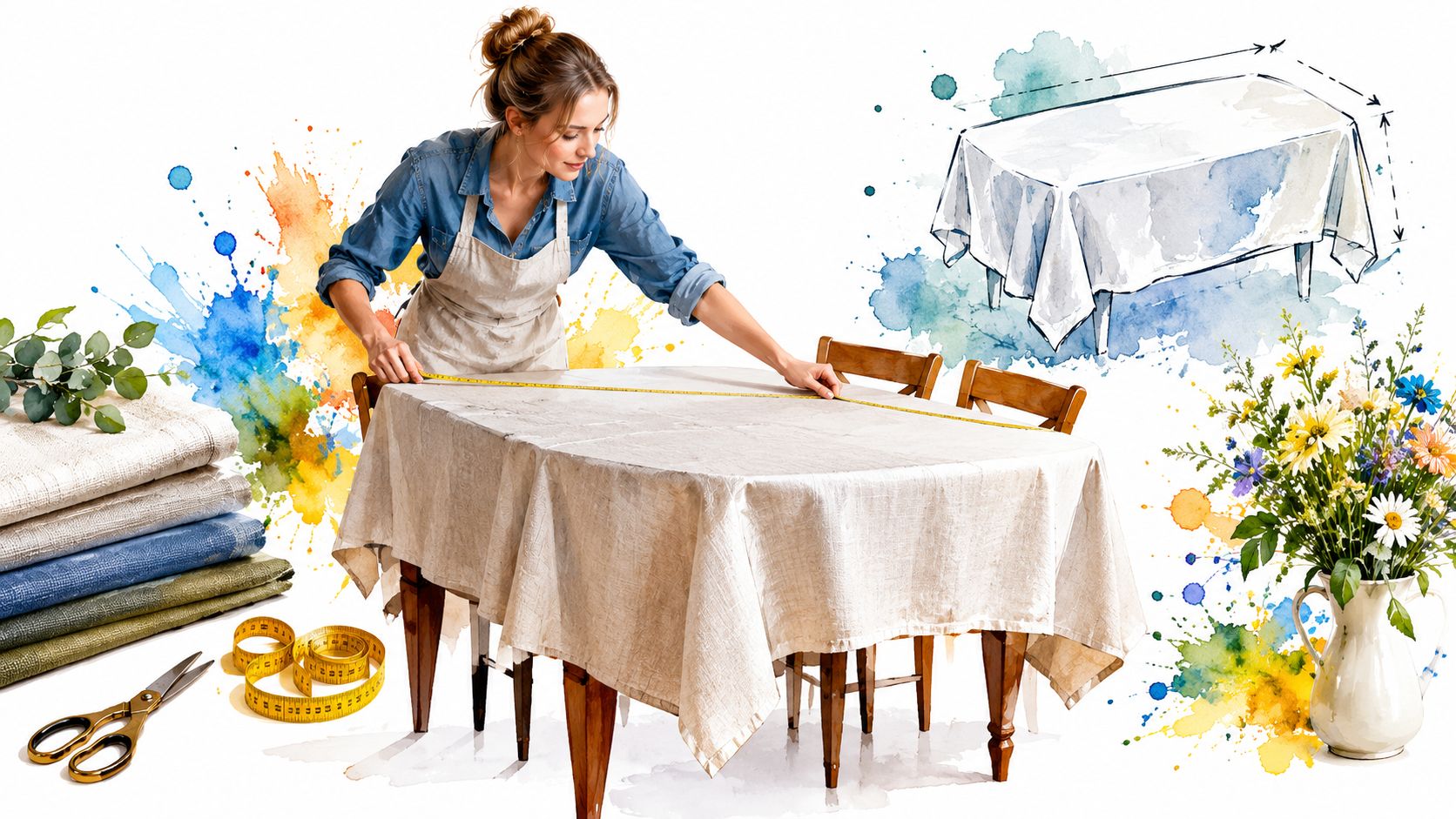
Measure the surface itself, excluding the legs and apron. The drop appears on both long sides and both short ends, so add it twice to each tabletop dimension. For a 72-by-30-inch table with a 10-inch drop, the calculated cloth size is 92 inches long by 50 inches wide. Use that result as your target before comparing it with ready-made sizes. The same calculation appears in this technical tablecloth buying guide.
Why stock dimensions can look unexpected
Ready-made cloths rarely match the calculated dimensions exactly. A stock size may give you the drop you want in one direction and a different look in the other, so the label alone does not determine the result. The sizing formula and industry guidance for tablecloth dimensions help explain those differences.
Orientation changes the appearance, too. Place a 60 × 102-inch cloth lengthwise on a 72-inch table, and it provides a shorter, practical drop along the long edges. Turn a 90 × 132-inch cloth so its longer dimension crosses the table, and the extra fabric creates a fuller, near-floor event drape.
Match the cloth's shape to the table. An oblong or rectangular table needs a rectangular cloth. Choose the larger option when coverage matters for a formal setting or buffet. Choose the smaller one when clear legroom, easier laundering, and everyday use matter more.
Choosing the Right Drop Length for the Occasion
The drop changes the personality of the table. A short hem feels relaxed and useful, while a longer one introduces ceremony and conceals more of the table frame. Industry guidance generally places casual drops around 6 to 8 inches, standard drops around 10 to 12 inches, formal drops around 15 inches, and floor-length coverage near 30 inches as outlined by this tablecloth sizing calculator.
Match the hem to the gathering
- Casual, 6 to 8 inches: A short drop suits breakfast nooks, children's tables, and everyday farmhouse dining. The hem stays clear of seats and knees, and the cloth is easier to shift when someone needs to stand.
- Standard, 10 to 12 inches: This is the versatile middle ground for family dinners, brunches, and relaxed dinner parties. It softens the table's edges without making the setting feel ceremonial.
- Formal, about 15 inches: A longer drop works beautifully for holiday dinners, weddings, and carefully arranged celebrations. It covers more of the legs and gives the table a composed, occasion-ready finish.
- Floor length, around 30 inches: Banquets, receptions, and buffet tables often call for a hem close to the floor. The result is a continuous sweep that hides the frame and makes a rental table look intentionally styled.
An oblong table usually benefits from an even hem at every edge. A deliberate puddle can look romantic on a round or square table, but pooling fabric is harder to control on a rectangle, where excess gathers at the corners and ends. If you want softness, choose a heavier fabric or add a runner rather than allowing the main cloth to spill unpredictably.
The easiest decision rule is simple. Identify whether the table is serving a casual meal, seated celebration, or display function. Then select the drop that supports movement, service, and the visual mood.
Oblong Tablecloth Sizing Chart for Common Tables
Use the occasion and desired drop together. The same oblong tabletop may suit a shorter cloth for everyday dining or a longer one for formal service.
| Table Size (L × W) | Recommended Cloth (Standard Drop) | Recommended Cloth (Banquet Drop) | Seats | Best For |
|---|---|---|---|---|
| 48 × 30 inches | 60 × 60 inches | 90 × 108 inches | 4 to 6 | Everyday meals and compact gatherings |
| 72 × 30 inches | 60 × 84 inches | 90 × 132 inches | 6 to 8 | Dinner parties and 6-foot banquet setups |
| 96 × 30 inches | 60 × 120 inches | 90 × 156 inches | 8 to 10 | Long dining tables, buffets, and receptions |
| 120 × 30 inches | 60 × 120 inches | 90 × 156 inches | 10 to 12 | Extended dining and event service |
For a 30 × 72-inch table, the 60 × 84-inch cloth provides a 15-inch drop, a combination identified in this industry sizing chart. It creates a generous overhang for a seated celebration without the sweeping look of a floor-length event cloth.
A standard 6-foot banquet table gives you two useful styling directions. Choose 60 × 102 inches for a shorter drop that keeps chairs and knees clear. Choose 90 × 132 inches when the cloth should reach the floor. The 60 × 120-inch size sits between those options, giving a relaxed banquet look with more coverage than the shorter cloth.
The 8-foot table calls for a closer look at the occasion. 60 × 120 inches works as a shorter banquet-style choice, while 90 × 156 inches creates floor-length coverage for receptions or buffet service. A 120-inch table can also use the 60 × 120-inch cloth when a deliberately short drop is acceptable. For a true 12-inch drop on that table, choose a 144-inch cloth instead.
Stock sizes are practical when the tabletop matches familiar banquet dimensions. Custom cuts make more sense for unusually narrow or deep tables, or for tables that remain permanently extended. For measuring guidance and help checking the finished dimensions, use this tablecloth size guide.
Extensions, Runners, and Inches to Centimeters
International listings may use centimeters, but the buying decision remains the same. A cloth listed around 152 × 213 centimeters is approximately 60 × 84 inches, while a listing around 152 × 305 centimeters is approximately 60 × 120 inches. Treat these as practical shopping conversions, then check the seller's exact finished dimensions before ordering.
Extension leaves deserve more attention than they usually receive. Measure the table with every leaf inserted if guests will sit at the extended length. If you buy for the closed table and add a leaf later, the cloth may still cover the center but fall short at the ends.
A runner can help unify an extended table, but it can't replace the main cloth's coverage. For example, a 60 × 84-inch cloth on a shorter table will need a runner long enough to span the newly extended surface if an 18-inch leaf is added. The runner should visually reach toward both ends without crowding the place settings.
Use a runner in three ways:
- Over a full cloth: Add contrast without exposing the tabletop.
- On a bare table: Let the wood or finish frame the runner.
- Over an underlay: Layer texture and color for a more decorative centerpiece zone.
For seasonal inspiration, you can browse fall table runners from Quiltkit, then adapt the palette to your napkins and flowers. For a more hands-on approach, these DIY table runner ideas can help you create a layer that works with your chosen cloth rather than competing with it.
Fabric and Hem Options That Change the Table
The finished dimensions tell you whether a cloth fits. The fabric and hem tell you how it behaves once it's on the table. A lightweight cloth may shift more easily on polished wood, while a denser weave can create straighter edges and a calmer fall at the corners.
Compare the main fabric choices
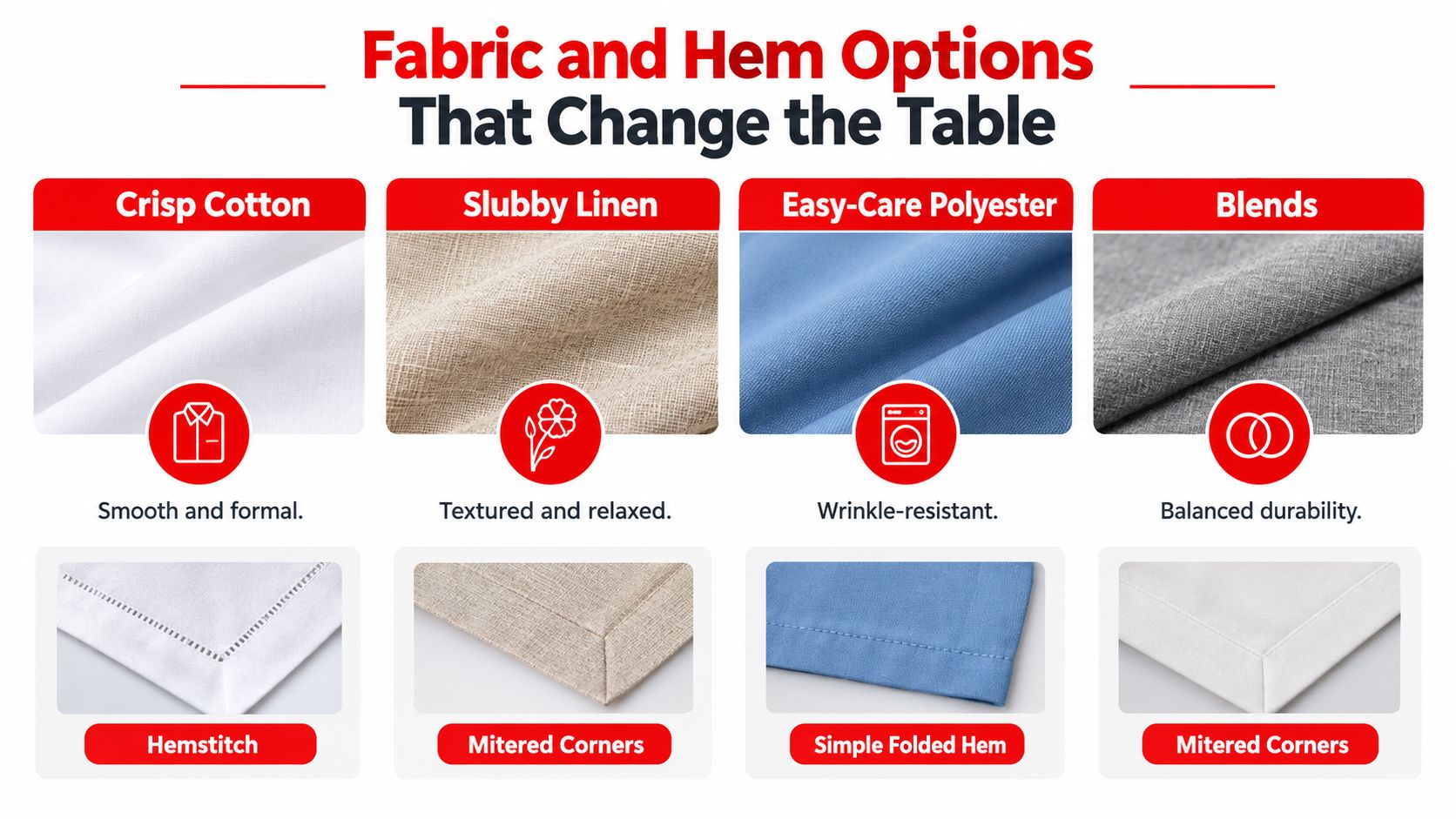
Crisp cotton gives a smooth, orderly appearance that suits family dinners and polished daytime entertaining. It responds well to a simple folded hem or a neat mitered corner.
Slubby linen brings visible texture and a relaxed, collected mood. Its natural irregularity works especially well with understated place settings, handmade ceramics, and an easygoing dinner party.
Easy-care polyester is practical for buffet lines, outdoor dining, and gatherings where spills are likely. It tends to hold a consistent appearance and is widely available in banquet dimensions.
Blends balance softness, durability, and ease of care. They're a sensible choice when one cloth needs to move between ordinary meals and more dressed-up occasions.
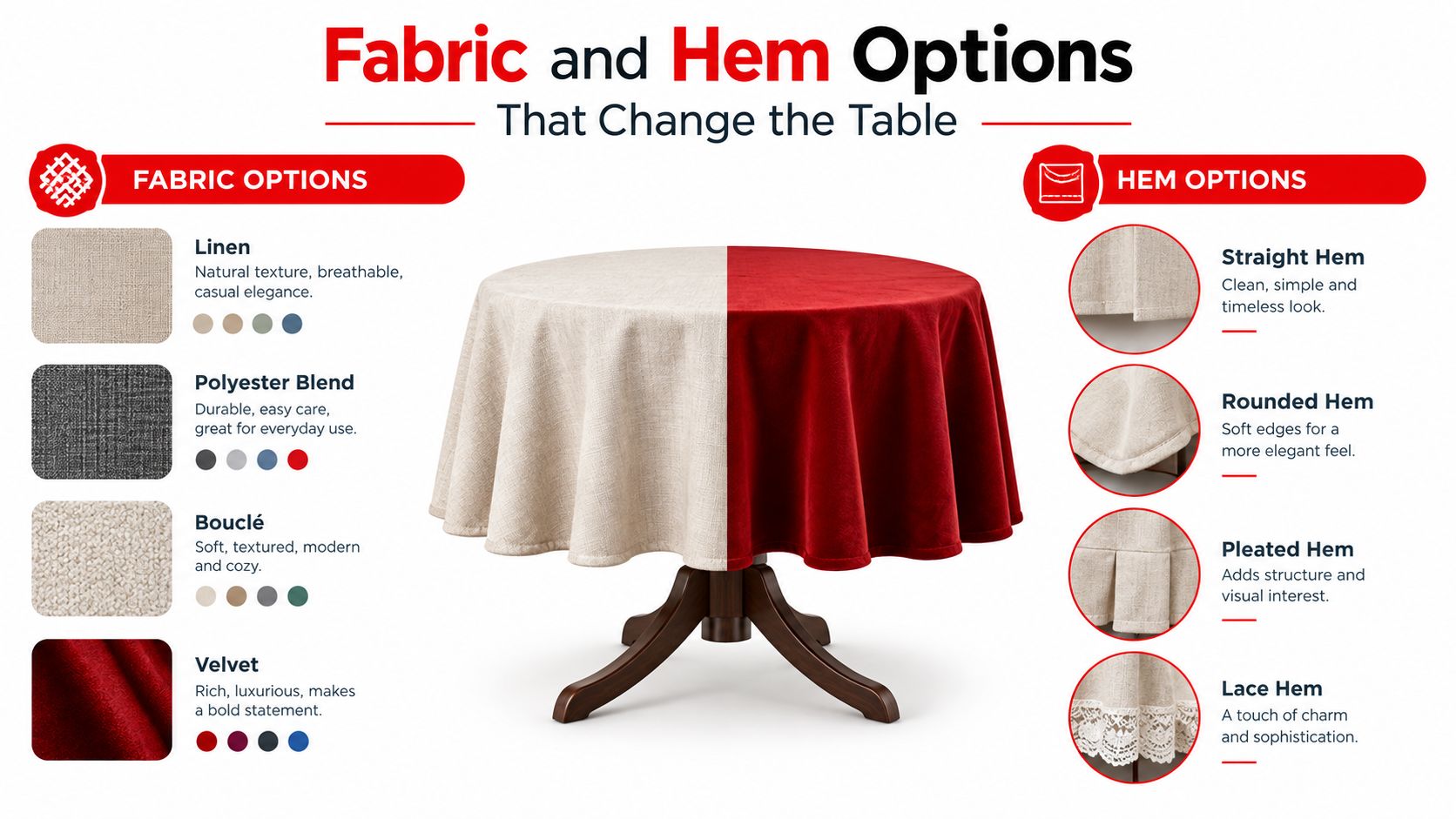
The hem changes the visual finish. A hemstitch edge feels delicate and refined, a mitered corner creates a crisp, well-defined point, and a simple folded hem keeps the look clean and unfussy. Fabric weight also affects how much the cloth swings when guests sit down or walk past the table.
For readers interested in construction details, a designer's guide to tablecloths offers useful context on fabric selection, cutting, and finishing. You don't need to sew your own cloth to benefit from understanding how those choices affect the finished drape.
A restrained tablescape often looks best when the napkins echo the hem rather than match every color. Hemstitch cocktail napkins, for example, can reinforce a fine edge on the tablecloth while adding a small, gift-worthy detail at each place setting. The combination feels intentional without turning the table into a matched set.
Quick Fixes for Common Oblong Tablecloth Problems
Even a correctly sized tablecloth can misbehave. Most issues come from movement, excess fabric, or a change in how the table is being used.
When the cloth slips
Polished wood, outdoor breezes, and busy buffet service can send a loose cloth out of alignment. Use discreet tablecloth clips, a non-slip pad beneath the cloth, or weighted corner accessories. Choose the least visible solution that matches the occasion.
When corners pool
If the long sides look right but the ends gather heavily, don't trim from the sides. Excess at the ends changes the balance of the whole cloth, so adjust the end treatment with discreet clips or have the cloth professionally altered. Mitered clips can create a more controlled corner without changing the main drop.
When the runner looks lost
A runner should relate to the table's full length. On a full cloth, place it along the centerline. On a bare tabletop, let the wood provide contrast. With a contrasting underlay, keep the main runner quiet so the layers don't compete with the centerpiece.
When a fitted cloth makes more sense
Choose an elasticized or fitted style for outdoor meals, children's tables, buffet lines, and display tables where guests or staff will brush against the edges. A draped cloth offers more movement and softness, while a fitted design keeps the surface orderly when the table needs to stay practical.
When the table changes size
Remove or insert every center leaf before measuring again. Each 12-inch leaf adds roughly 24 inches to the total cloth length when you account for the additional tabletop and the desired overhang on the new ends, a sizing rule discussed in this tablecloth measurement guide. Recalculate rather than assuming the original cloth will stretch far enough.
FAQs and a Soft Note Before You Shop
Are oblong and rectangular tablecloths interchangeable?
In everyday retail language, yes. Both terms generally describe a cloth intended for a long tabletop with straight sides. Check the actual dimensions and corner shape, though, because product naming varies between retailers.
How do I measure a table with an extension leaf already inserted?
Set the table exactly as it will be used, including every inserted leaf. Measure the longest tabletop length and the full width, then apply the drop formula to those dimensions. If the table changes frequently, keep separate measurements for the closed and extended configurations.
What drop works for a buffet rather than a seated dinner?
A buffet usually benefits from a longer drop because guests don't need the same leg clearance as seated diners. Floor-length coverage can conceal the frame and stored supplies, while a shorter drop keeps a seated table easier to use.
How can I keep white linens bright through repeated washing?
Follow the care label, treat spills promptly, and avoid storing a damp cloth. Separate white linens from colors, use the recommended washing temperature, and let the fabric dry fully before folding. A well-finished cloth is easier to keep presentable when you handle it consistently rather than waiting for stains to set.
A quality oblong tablecloth also makes a thoughtful housewarming or wedding gift because it supports the recipient's future dinners, brunches, and celebrations. Pair it with coordinated napkins, a bottle gift bag, or another small entertaining accessory to create a useful present that still feels personal.
Jolitee offers joyful entertaining essentials, including polished table accents, hemstitch cocktail napkins, and reusable wine gift bags that make hosting and gifting feel more considered. Once you've chosen the right oblong tablecloth size, visit Jolitee to build a coordinated tablescape or find a charming gift for the next host on your list.